
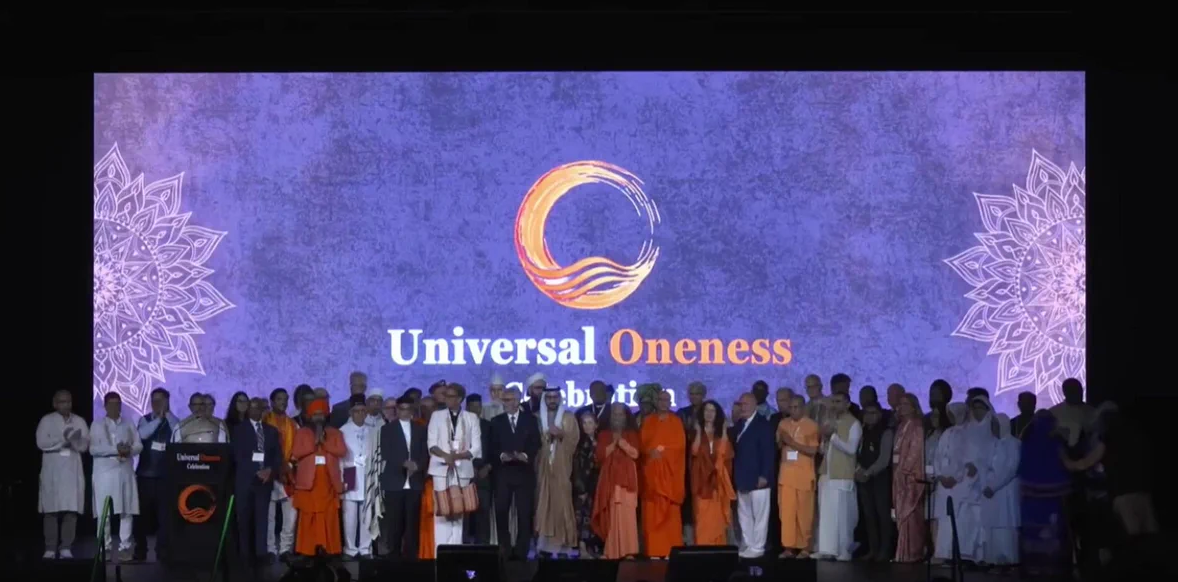
New York, Aug 2026 : Rashtriya Swayamsevak Sangh (RSS) chief Mohan Bhagwat has called for a broader understanding of success, urging people to look beyond personal wealth, career achievements and material comforts and focus instead on their responsibility towards society.
Addressing the Universal Oneness Celebration in New York, Bhagwat said individuals should recognise that their progress is made possible by the contributions of countless others. He argued that this interdependence creates an obligation to contribute to the welfare of society rather than viewing success solely through the accumulation of wealth.
“How much we earn is not important. How much we distribute is important,” Bhagwat said, emphasising the importance of sharing resources and giving back.
Bhagwat also questioned the conventional understanding of a career as merely a means to earn money and achieve material comfort. He said financial prosperity and material happiness were legitimate aspects of life but should not become its ultimate objective.
“You think of career. Is career only money? Is career only material happiness? It is not denied,” he said.
Referring to Indian philosophical traditions, Bhagwat said the pursuit of material success was not rejected. Instead, it was regarded as one component of a balanced life. He noted that Indian scriptures also recognised the importance of material achievement while placing it alongside higher spiritual and social responsibilities.
Bhagwat stressed that no individual could genuinely claim to be completely self-made because every person’s life depends on the contributions of numerous people.
He pointed to parents, farmers, workers and others whose efforts make everyday life possible. Parents provide the foundation for an individual’s growth, while farmers produce the food people depend upon.
“Food you eat. There is some agriculture in the world. That is why you can eat. If farmers stop farming, what will you eat?” he asked.
He similarly highlighted the contribution of workers and farmers involved in producing clothing and other basic necessities.
“You are wearing your clothes because there are mills. Labourers are working. Cotton growing farmers are still there,” he said.
From these examples, Bhagwat argued that society functions through a continuous cycle of contribution and dependence.
“We owe everything to someone else. We take from the world. And so we have to give back,” he said.
The RSS chief also cautioned against assuming that material abundance automatically leads to lasting happiness. According to him, physical pleasures are temporary and can quickly lose their ability to provide satisfaction.
Using an everyday example, Bhagwat referred to doughnuts in New York to illustrate the limits of material enjoyment. He noted that even if someone enjoys a particular food, there is a limit to how much can be consumed at one time, while the desire can return later.
“Material happiness is transitory, cannot satisfy,” he said, arguing that an excessive focus on material gratification could ultimately prove unfulfilling.
Bhagwat further emphasised the importance of human beings’ ability to think and make conscious choices. He said people possessed the capacity to assess the consequences of their actions, but the direction of their thinking determined whether they moved towards greater responsibility or remained focused solely on personal interests.
“If you think in right way, you go nearer to God. If you think in wrong way, you go nearer to the animal kingdom,” he said.
He called for a balanced approach in which individuals pursue their legitimate needs while remaining conscious of their obligations towards others and the environment.
According to Bhagwat, the purpose of life should extend beyond simply surviving or accumulating wealth. People should strive to create conditions in which their own lives contribute to the well-being and sustainability of others.
“We have to care for each other,” he said, stressing that people should not merely seek to live for themselves but should help others flourish as well.
Bhagwat’s remarks formed part of his broader message on social responsibility, human interdependence and the need to balance individual aspirations with collective welfare. He argued that personal success acquires greater meaning when it is accompanied by a willingness to share, serve and contribute to society.
His message at the New York gathering placed emphasis on the idea that prosperity should ultimately become a means of strengthening communities rather than an end in itself.