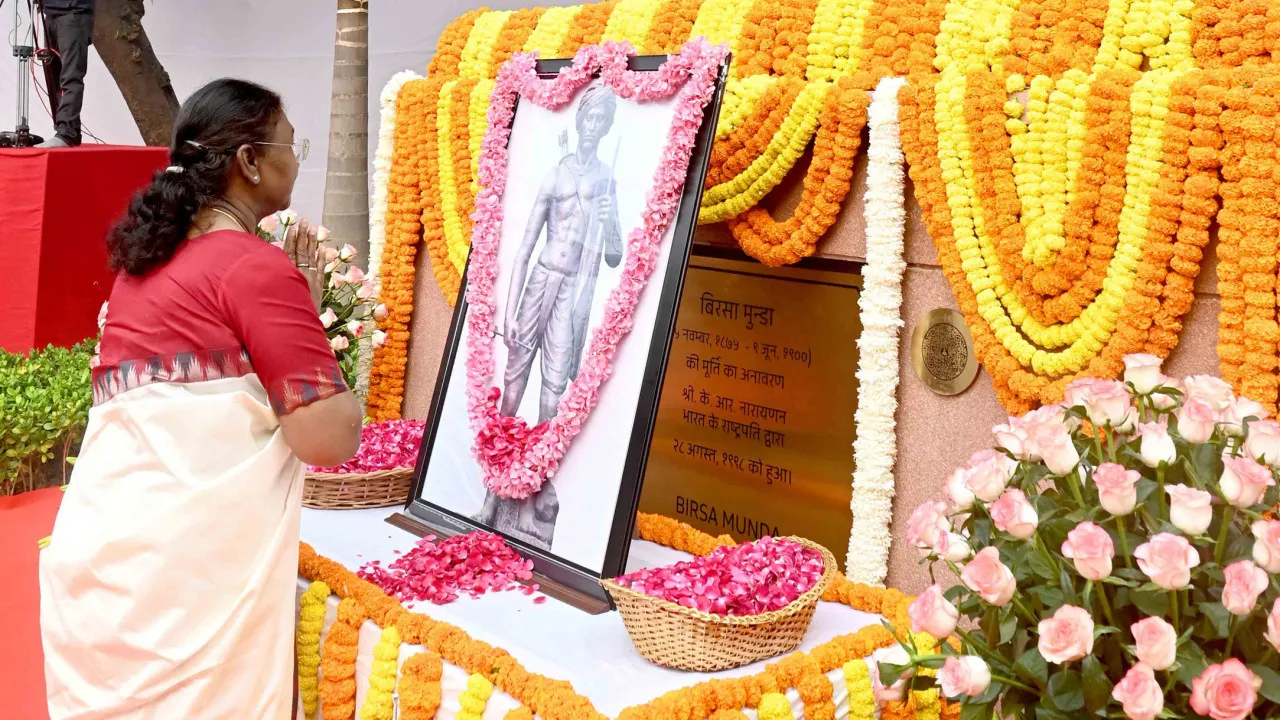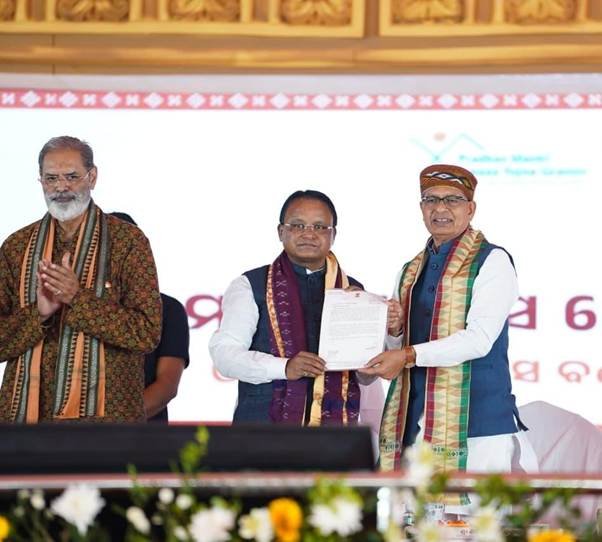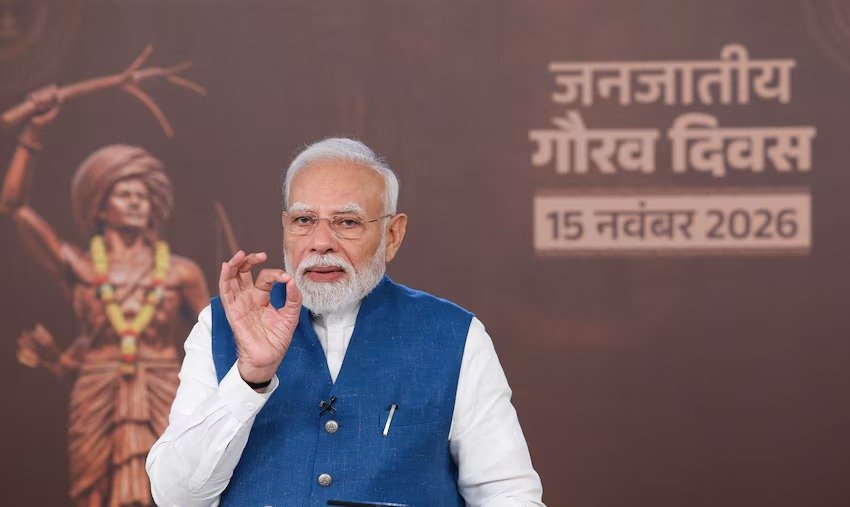
Gadchiroli, November 2026 : Prime Minister Narendra Modi on Sunday interacted virtually with members of tribal communities from across the country during the Janjatiya Gaurav Diwas programme held in Gadchiroli, Maharashtra, marking the 151st birth anniversary of tribal freedom fighter Bhagwan Birsa Munda.
During the programme, the Prime Minister inaugurated and laid the foundation stone of 246 development projects worth approximately Rs 3,000 crore. The initiatives are aimed at strengthening education, healthcare, livelihood opportunities and community infrastructure for tribal populations across the country.
Members of tribal communities participating in the programme shared their experiences with PM Modi and explained how various Central government welfare schemes had improved their living conditions and created new opportunities.
PM-JANMAN Beneficiary Shares Experience with PM Modi
Krishna Nagorao Teka, a beneficiary of the Pradhan Mantri Janjati Adivasi Nyaya Maha Abhiyan (PM-JANMAN) from Yavatmal district in Maharashtra, told the Prime Minister that his family had earlier faced considerable difficulties due to inadequate housing facilities.
He said living in their house during the rainy season was particularly challenging, with insects and pests adding to their problems. However, under PM-JANMAN, his family received a permanent house, a toilet and other basic facilities, significantly improving their quality of life.
Expressing gratitude, Teka said the scheme had helped his family overcome difficulties that they had faced for years.
Responding to him, PM Modi said he was happy to learn that PM-JANMAN had brought positive changes to the lives of tribal families in his village. He said it was particularly satisfying to see that essential facilities had reached remote communities while people continued to remain connected to their cultural heritage.
PM Modi Highlights Bamboo Rights for Tribal Communities
During the interaction, the Prime Minister also spoke to Vajir from Hathakundi village in Netrang tehsil of Gujarat's Bharuch district about the New Gujarat Pattern Yojana. He asked about the challenges faced by tribal communities and the impact of the initiative on their livelihoods.
Vajir said he had received training in bamboo-related work under the Gujarat government's New Gujarat Pattern Yojana in 2004. He added that he had also benefited from several schemes under PM-JANMAN and thanked the Prime Minister, the Gujarat government and the Centre for their support.
Referring to the historical restrictions imposed on bamboo, PM Modi criticised previous governments for failing to address the concerns of tribal communities.
He said the British had classified bamboo as a tree, making its cutting punishable under the law. According to the Prime Minister, the restriction should have been removed after Independence, but earlier governments had failed to understand the needs of tribal communities or address their concerns.
PM Modi said his government had abolished the restriction and ensured that tribal communities received full rights over bamboo, enabling them to use the resource for livelihood and economic activities.
PM SHRI Schools and Education Opportunities for Tribal Youth
Sabavat Anvesh from Hyderabad also thanked the Prime Minister for introducing PM SHRI Schools, or Pradhan Mantri Schools for Rising India. He said the initiative was helping students pursue quality education and supporting their aspirations for higher studies.
Education and access to quality residential schooling for tribal children were among the major focus areas of the development projects announced during the programme.
173 Projects Inaugurated Across Tribal Regions
Of the 246 projects announced, PM Modi inaugurated 173 initiatives covering education, community infrastructure and tribal welfare.
These included 38 Eklavya Model Residential Schools (EMRS) for tribal students and 100 Multi-Purpose Centres under PM-JANMAN. Several other projects were inaugurated under PM-JANMAN and the Dharti Aaba Janjatiya Gram Utkarsh Abhiyan (DAJGUA).
The Prime Minister also inaugurated the Tribal Research Institute building at Itanagar in Arunachal Pradesh and the Ropuiliani Tribal Freedom Fighter Museum at Aizawl in Mizoram. These institutions are intended to preserve and promote tribal history, culture and heritage.
Foundation Stones Laid for 19 Eklavya Schools and 12 Marketing Centres
PM Modi laid the foundation stones for 19 new Eklavya Model Residential Schools, strengthening the government's efforts to expand access to quality education for tribal children.
He also launched the foundation-stage process for 12 Tribal Multi-purpose Marketing Centres (TMMCs), aimed at improving market access for tribal producers and helping them connect with wider markets.
In addition, the Prime Minister laid the foundation stones for 42 other projects under PM-JANMAN and DAJGUA.
Together, the initiatives are expected to support improvements in basic services, education infrastructure, livelihood opportunities and community facilities in tribal areas.
Janjatiya Gaurav Pakhwada Concludes on November 15
The Gadchiroli programme marked the culmination of Janjatiya Gaurav Pakhwada, observed across the country from November 1 to 15 to honour tribal freedom fighters and recognise the contribution of tribal communities to India's history and development.
The occasion also commemorated the 151st birth anniversary of Bhagwan Birsa Munda, whose contribution to the tribal freedom struggle continues to hold a significant place in India's history.
Through the inauguration of development projects and interactions with beneficiaries, the programme highlighted the government's focus on improving living conditions, expanding educational opportunities and strengthening livelihoods in tribal regions.