New Delhi, November 2026 : Defence Minister Rajnath Singh on Sunday called for making quality an integral part of every stage of defence manufacturing, stressing that India must move beyond identifying defects and focus on preventing them to ensure the reliability and operational readiness of its military equipment.
Addressing the 36th Annual Conference on Non-Destructive Evaluation and Enabling Technologies and the 15th International Symposium on Non-Destructive Testing in Aerospace virtually, Singh said India had made significant progress in strengthening its indigenous defence manufacturing ecosystem. He underlined the importance of maintaining the highest standards of quality as the country's defence capabilities and technological requirements continue to expand.
The Defence Minister said India's achievements in missile development, naval platforms, aerospace engineering, radar systems and space applications reflected the growing capabilities of its scientists, engineers, production agencies and industry partners.
"India has made significant progress in strengthening its indigenous defence ecosystem. Our achievements in missile development, naval platforms, aerospace engineering, radar systems, and space applications reflect the growing capabilities of our scientists, engineers, production agencies, and industry partners," he said.
INS Vikrant Highlights India's Indigenous Defence Capabilities
Highlighting the country's progress in defence manufacturing, Singh described the commissioning of INS Vikrant, India's first indigenously designed and constructed aircraft carrier, as a major milestone.
He said the progress achieved in indigenous missile technology and space systems further demonstrated India's scientific and industrial capabilities.
According to the Defence Minister, these achievements were a matter of national pride but also increased the responsibility of manufacturers, research institutions and quality assurance agencies to ensure that every defence product met stringent standards.
"As our defence system becomes increasingly sophisticated, we must ensure that every critical material, component, assembly and manufacturing process meets the highest standards of quality and reliability," Singh said.
He emphasised that quality must not be treated as a final-stage inspection requirement but should be integrated into the entire manufacturing process, from the selection of raw materials to the production and testing of finished equipment.
Non-Destructive Testing Critical for Defence Equipment Reliability
Highlighting the importance of quality assurance in strategic sectors, Singh cautioned that defects which remain undetected during manufacturing could have serious consequences for military operations.
He said hidden defects could affect the operational availability of defence equipment, increase maintenance requirements and reduce the service life of military platforms. In critical situations, such defects could even jeopardise the success of a mission.
The Defence Minister called for developing a culture of defect prevention rather than relying only on the identification of faults after they occur.
"Therefore, we must move beyond a culture that merely identifies defects and develop a culture that actively prevents them. This requires us to embed quality into every stage of the manufacturing process," he said.
His remarks highlighted the significance of Non-Destructive Evaluation (NDE) and Non-Destructive Testing (NDT), particularly in aerospace and defence manufacturing, where the reliability of materials, components and assemblies is essential for operational safety.
Innovation and Strategic Excellence Central to India's Defence Vision
Singh said the theme of the conference, 'Innovation for Strategic and Economic Excellence', was particularly relevant to India's development ambitions.
He said the theme reflected the country's aspiration to become technologically advanced, industrially strong, strategically secure and globally competitive.
According to the Defence Minister, national progress depends not only on the technologies a country develops but also on the quality, reliability and security of the systems it builds.
He noted that this requirement becomes especially important in strategic sectors such as defence, where equipment failure can have far-reaching consequences.
The conference and international symposium brought together experts and stakeholders associated with non-destructive evaluation, testing technologies and aerospace applications. Such platforms provide opportunities to discuss technological developments and quality standards relevant to defence production and industrial applications.
Rajnath Singh Addresses Conference Virtually Due to Viral Fever
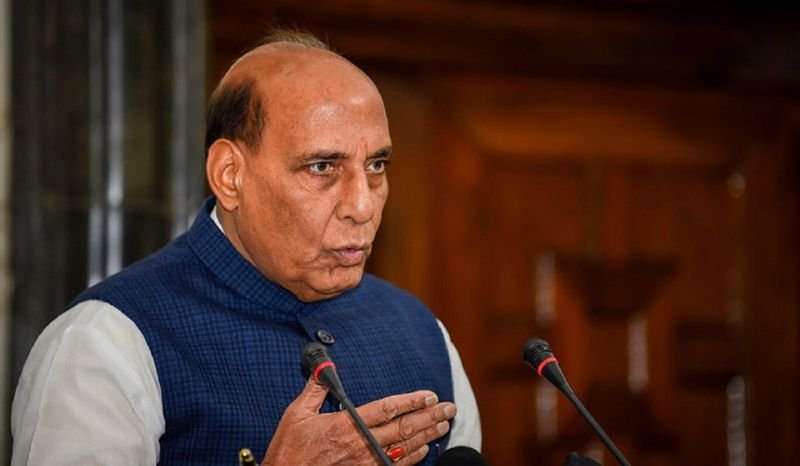
The Defence Minister also explained that he could not attend the programme in person because he was suffering from viral fever and therefore joined the gathering virtually.
Despite his absence, Singh congratulated the leadership of the Indian Society for Non-Destructive Testing, the organising committee and everyone involved in organising the 36th annual conference and the 15th international symposium.
He appreciated their efforts in bringing together experts and professionals working in the field of non-destructive testing and enabling technologies.
The address reinforced the government's emphasis on strengthening India's indigenous defence manufacturing capabilities while ensuring that quality, safety and reliability remain central to the country's defence production ecosystem.
As India expands its domestic capabilities in aerospace, missiles, naval systems and advanced technologies, the Defence Minister's message was that quality assurance and defect prevention must remain fundamental to building dependable defence equipment.