New Delhi, November 2026 : Leader of Opposition in the Lok Sabha Rahul Gandhi on Saturday intensified his allegations of “vote theft” against the Bharatiya Janata Party (BJP), accusing the ruling party and Chief Election Commissioner Gyanesh Kumar of attempting to “change the electoral map of India”. He also questioned the government's proposed legislative measures linked to delimitation and women's reservation, alleging that they were designed to advance the BJP's political interests.
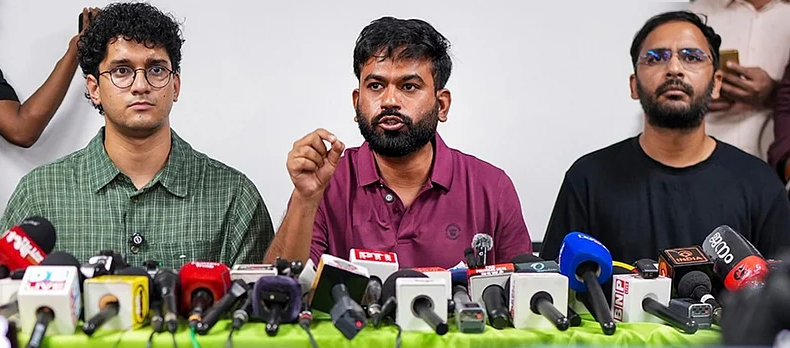
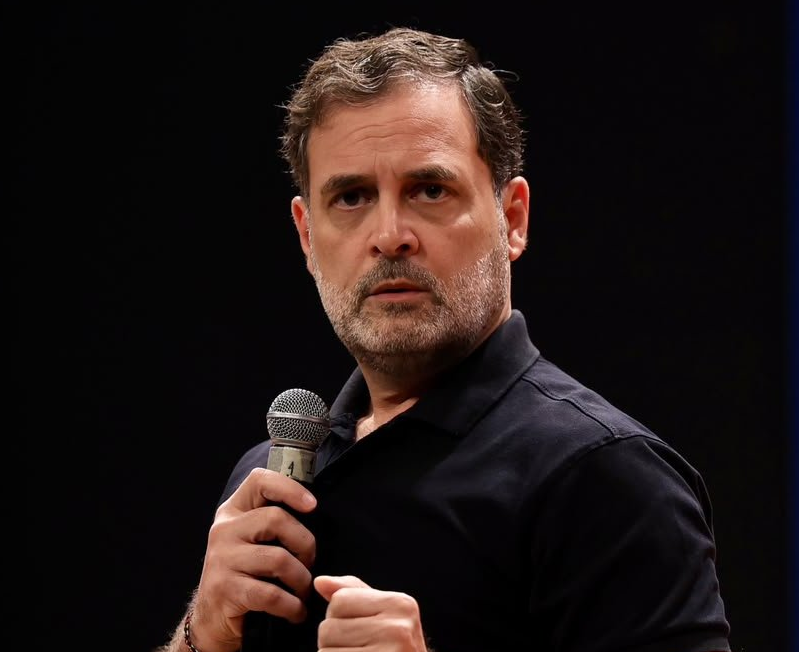
Addressing a press conference at the Congress headquarters in New Delhi, Gandhi described the proposed changes to parliamentary constituencies as a major political issue. He claimed that the government was using women's reservation as a justification for expanding the Lok Sabha and reorganising constituencies in a manner that could benefit the BJP.
Gandhi also questioned the legitimacy of the 2024 Lok Sabha elections, which returned the Narendra Modi-led National Democratic Alliance (NDA) government to power for a third consecutive term. Referring to figures associated with the Special Intensive Revision (SIR) of electoral rolls, he alleged that the Election Commission had deleted 140 million voters who had participated in the 2024 elections.
“According to the EC itself, the 2024 election was illegal,” Gandhi claimed. He also raised allegations concerning electoral processes in Jammu and Kashmir, Assam, Bihar, West Bengal, Karnataka and Haryana. While referring to constituency reorganisation in Jammu and Kashmir and Assam, he alleged that the exercise was part of a broader attempt to influence the country's electoral landscape. He repeated his earlier accusations of voter deletions in Bihar and West Bengal and alleged bogus voting in Karnataka and Haryana.
Rahul Gandhi Questions Proposed Expansion of Lok Sabha
A major part of Gandhi's criticism focused on the possibility of increasing the strength of the Lok Sabha from its present 543 seats to approximately 850 following delimitation.
He argued that expanding the number of constituencies would provide the BJP with more seats to contest and potentially strengthen its political position. According to him, the government was linking this proposed expansion to the implementation of women's reservation to secure support for a wider delimitation exercise.
“Their belief is that the Lok Sabha, instead of having 543 members, should have 850 members, and they use the excuse of women's reservation,” Gandhi said.
He maintained that the women's reservation legislation had already been passed by Parliament and could be implemented without linking it to a broader political exercise.
Women's Reservation and Delimitation Debate
The Nari Shakti Vandan Adhiniyam, formally known as the Constitution (106th Amendment) Act, 2023, provides for reserving 33 per cent of seats for women in the Lok Sabha, State Legislative Assemblies and the Delhi Legislative Assembly. The reservation also includes one-third of the seats already reserved for women belonging to Scheduled Castes and Scheduled Tribes.
Parliament passed the legislation in September 2023, and it received Presidential assent in the same month. However, its implementation was linked to a future Census and a subsequent delimitation exercise, meaning the reservation would come into effect only after these processes.
The government's stated position is that additional legislative measures concerning delimitation and the reorganisation of seats are necessary to operationalise the women's quota before future elections. BJP leaders have argued that the proposed changes would enable the 33 per cent reservation to become effective and increase women's representation in elected legislatures.
Gandhi, however, accused the government of using the issue of women's representation to pursue a broader political agenda. He argued that the reservation law was already in place and questioned the need to connect its implementation with an expansion of parliamentary seats.
Southern States' Concerns Over Delimitation
The Congress leader was also asked about concerns among several southern states over the possible impact of a population-based delimitation exercise. States such as Tamil Nadu, Kerala, Karnataka, Andhra Pradesh and Telangana have expressed apprehension that their relative representation in the Lok Sabha could decline if constituencies are redistributed primarily on the basis of population.
These states have argued that such an exercise could disadvantage regions that have successfully implemented population-control policies, while increasing the relative representation of states with higher population growth.
Gandhi did not directly address the possible loss of parliamentary influence for southern states during the press conference. Instead, he reiterated his allegations against the BJP and the Election Commission.
Gandhi Cites Polling Without Sharing Details
During the briefing, Gandhi also referred to what he described as public opinion polling on allegations of electoral manipulation.
“Our polling shows us that 80 per cent of India, and almost 100 per cent of Gen-Z believe that Narendra Modi, Amit Shah and Gyanesh Kumar steal elections,” he claimed.
However, he did not share details of the survey, including its methodology, sample size or the respondents covered. When asked about the role of young voters and Gen-Z in the political debate, Gandhi suggested that his remarks were directed at everyone willing to stand up against the BJP.
Opposition Parties' Stand on Proposed Legislation
The Congress leader also refrained from predicting how non-NDA parties would vote on the legislation expected to be introduced in Parliament on Monday. He said the voting would make clear which political parties were committed to protecting democratic institutions.
“It's going to become very clear who is on this side, who is protecting democracy, and who is not,” he said.
Gandhi also appealed to parties within the BJP-led NDA to consider the broader interests of the country and protect democratic principles.
Asked specifically about the position of the Nationalist Congress Party–Sharadchandra Pawar (NCP-SCP) within the Opposition INDIA bloc if it decided to support the legislation, Gandhi said its role in the alliance would remain unchanged.
The proposed legislation and the accompanying debate over women's reservation, delimitation and electoral representation are expected to become important points of discussion among political parties as Parliament takes up the matter.