New Delhi, November 2026 : Three cyclones during India's post-monsoon season, rapidly melting Himalayan glaciers in Nepal, declining coral reefs across the world's oceans and global temperatures reaching 2.2 degrees Celsius above pre-industrial levels on the day COP31 concluded have highlighted the growing severity of the climate crisis. Scientists warn that these developments are interconnected signs of accelerating global warming and demand urgent international action.
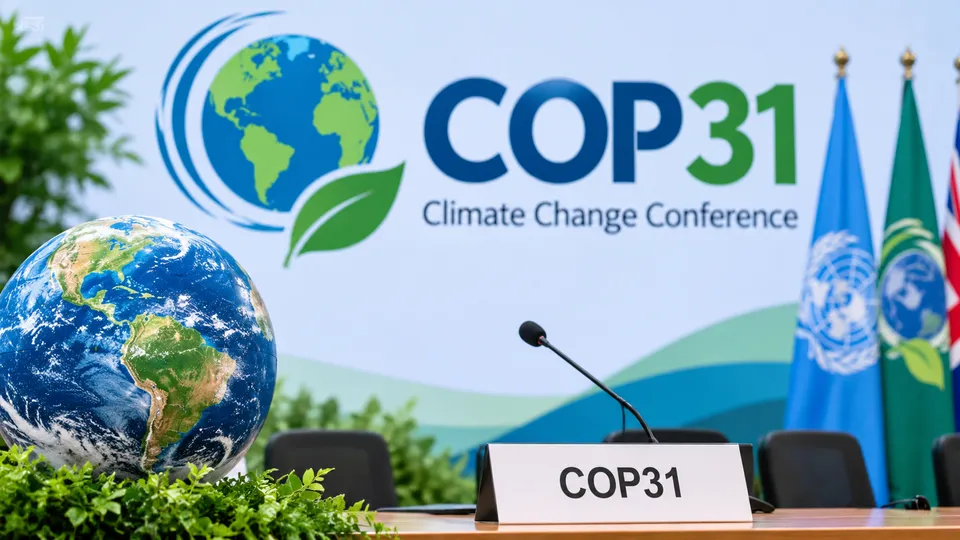
The conclusion of the UN Climate Change Conference (COP31) without consensus has renewed concerns about the effectiveness of global climate negotiations. Scientists believe the outcome reflects a widening gap between the scale of the climate emergency and the pace of international efforts to address it. They have warned that the consequences are increasingly visible in public health, economic activity, livelihoods and everyday life.
Climate scientist and Intergovernmental Panel on Climate Change (IPCC) lead author Roxy Mathew Koll described the outcome as a serious warning about the failure of the global community to respond adequately to climate change.
"The message I am getting from COP31 is that as a global community, we have failed to address the accelerating change in climate," Koll told PTI Videos.
Scientists Criticise Weak Climate Commitments
Koll expressed concern over the removal of references to fossil fuels from COP31's final document, arguing that the weakening of such language raises questions about the direction of international climate policy.
He stressed that transformative measures were now essential to limit global warming and address the growing effects of climate change. According to him, the climate finance and investment commitments announced at the summit remain far below the resources required to deal with the damage caused by extreme weather events.
Koll said the pledged financial support was not even close to one-tenth of the annual losses and damages being experienced worldwide.
Highlighting India's vulnerability, he pointed out that the country is surrounded by warming oceans on three sides, increasing its exposure to tropical cyclones and other extreme weather events.
"As a scientist, I am concerned. India is surrounded on three sides by a warming ocean, which is triggering multiple cyclones. This year alone we have had three cyclones in the post-monsoon season. The Himalayan glaciers are melting and we saw what happened in Tibet and Nepal. Extreme weather events are piling up and these are fast-moving events that we are often unable to predict," he said.
He also emphasised that climate action must remain a collective global responsibility. Although the United States is no longer participating in the COP negotiations, Koll said major economies, including Europe, Russia, China, India and the US, must work together to reduce greenhouse gas emissions.
According to him, reducing emissions remains the most effective way to limit the long-term consequences of global warming.
India Can Strengthen Climate Investment and Early Warning Systems
Koll said India has the potential to make a significant contribution to regional and global climate action by increasing investments in climate research, monitoring environmental changes and strengthening early warning systems.
He highlighted the importance of financing research and development, particularly in regions vulnerable to extreme weather events. Better monitoring and forecasting systems could help governments identify emerging risks and prepare communities before disasters occur.
India's geographical vulnerability makes such investments particularly important. Rising ocean temperatures, changing rainfall patterns, melting glaciers and extreme heat can affect agriculture, infrastructure, water availability and public health.
Koll also stressed that scientific evidence should play a greater role in domestic policymaking and budget allocation. Climate research can identify specific regions and communities likely to face the greatest impacts.
COP31 Described as a Mixed Outcome
James Kirkham, Chief Climate Scientist at the International Cryosphere Climate Initiative (ICCI), described COP31 as a "mixed outcome".
He said the summit's conclusions may not represent what the international community had hoped for, but could serve as a reality check on the limitations of the existing negotiation process.
According to Kirkham, the current framework is not delivering decisions at the pace and scale required to respond to escalating climate risks.
He expressed hope that the outcome would encourage countries to reform the process and strengthen their commitments ahead of COP32.
"I hope we can build back better and move towards COP32 with more ambition and urgency, as well as with greater amounts of finance unlocked, especially for adaptation and loss and damage, needed to enable transformative change and to build greater climate resilience," Kirkham said.
He also expressed disappointment over the lack of substantive language in the final outcome. Kirkham argued that efforts to limit global temperature overshoot cannot depend on lengthy negotiations over whether previously agreed climate commitments should be retained.
He warned that the international community needs to move beyond preventing the weakening of existing agreements and focus on delivering stronger action.
Concerns Over the 1.5-Degree Celsius Target
Kirkham said the COP31 outcome represented a temporary setback but could still motivate governments to increase their climate commitments.
He pointed out that earlier negotiations had established important commitments, including the agreement reached in Dubai to transition away from fossil fuels. He said a weaker outcome at COP31 could have created a precedent for diluting those earlier agreements.
"Not getting an agreement in Antalya does not unpick previous progress. In Dubai, countries agreed to transition away from fossil fuels, and there is a lot of talk about keeping 1.5 degrees in reach. A weaker outcome this year would have set a precedent for weakening those agreements," he said.
Kirkham warned that current government policies could put the world on a trajectory towards approximately 2.8 degrees Celsius of warming rather than a limited temperature overshoot.
Such a rise could intensify climate-related disasters, including extreme events similar to those experienced in Nepal, substantial sea-level rise and the thawing of Arctic permafrost.
The consequences would extend beyond environmental damage, affecting coastal settlements, mountain communities, ecosystems, infrastructure and economies.
Uncertainty Over the IPCC Seventh Assessment Report
Both Koll and Kirkham also raised concerns about the progress of the Intergovernmental Panel on Climate Change's Seventh Assessment Report (AR7).
The IPCC prepares comprehensive assessments of global climate science, bringing together research reviewed by experts and approved by governments. These reports are generally published every five to seven years and provide scientific evidence for international climate negotiations and national policymaking.
However, countries have failed to reach agreement on the report's timeline and budget. The previous session, held in October in Addis Ababa, Ethiopia, was suspended without a resolution.
Koll said COP31 launched a review of global climate action scheduled for 2028. However, a proposal to ensure that the next IPCC assessment report was available in time to inform that review disappeared from the draft document.
He said scientific assessments could provide valuable information about the regional consequences of climate change. Such research can identify districts where extreme heat may reduce working hours, areas where rising sea levels could threaten drinking water supplies and regions facing other climate-related risks.
"That evidence should shape what India asks for and what it budgets at home," Koll said.
Scientists Warn Against Blocking Climate Research Funding
Kirkham warned that failure to agree on the AR7 process could undermine the credibility and functioning of the IPCC.
He said continued disagreements over the budget could prevent scientific meetings from taking place and delay the preparation of the assessment.
"My understanding is that at least one meeting has already been cancelled due to the budget not being agreed," he said.
Kirkham added that if countries such as Saudi Arabia and Russia blocked the 2027 budget, he would regard it as a direct attack on science.
He also emphasised the importance of aligning all three IPCC working groups with preparations for the second Global Stocktake. This would help ensure that the assessment provides comprehensive scientific evidence for evaluating international climate commitments.
According to him, most countries, including least developed nations and small island states, want AR7 to be completed in time to inform the process with the best available scientific findings.
The concerns raised by the scientists underline the growing need for stronger climate finance, emissions reduction, adaptation measures and scientific cooperation. With extreme weather events intensifying across regions, they argue that international climate negotiations must translate commitments into measurable action.
The challenge ahead is not merely to preserve earlier agreements but to accelerate implementation, strengthen climate resilience and ensure that vulnerable communities receive the financial and technological support needed to confront global warming.
(Disclaimer :The content of this article is sourced from a news agency and has not been edited by the Mavericknews30 team.)