
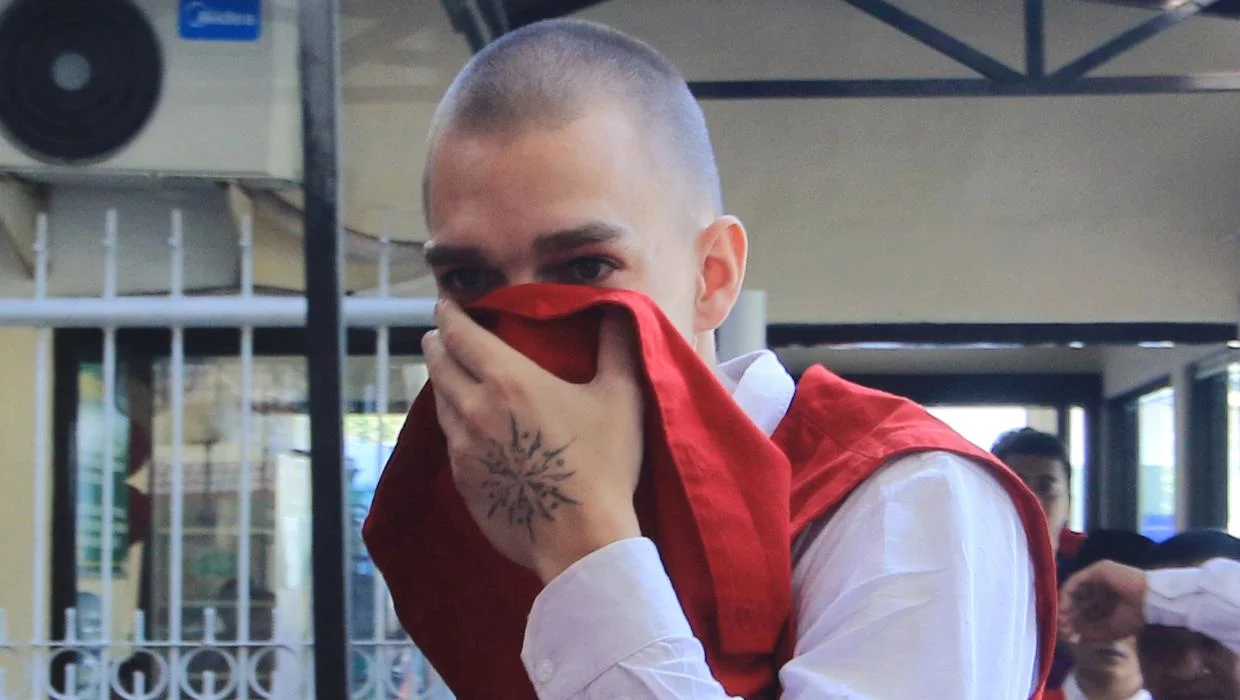
Bali, Aug 2026 : A 26-year-old Swiss tourist has reportedly been sentenced to one year in prison in Indonesia after being accused of violating restrictions during Nyepi, Bali’s Hindu Day of Silence, and allegedly insulting the religious tradition through a social media post.
The tourist has been identified as Luzian Andrin Zgraggen, a construction worker from Switzerland. According to local media reports, an Indonesian court found him guilty under the country’s laws following an incident that attracted attention after a video was shared on Instagram during the religious observance.
Nyepi is one of the most important religious and cultural observances for Bali’s Hindu community. The annual festival marks the Balinese Hindu New Year and is traditionally observed as a day of silence, self-reflection, prayer and spiritual purification. For approximately 24 hours, normal activities across the island come to an almost complete standstill.
During Nyepi, residents generally remain indoors and refrain from work, entertainment and other worldly activities. Roads become largely deserted, public activities are suspended and tourists are also expected to comply with the restrictions. The airport and many other services remain closed during the observance, creating an unusual atmosphere across one of the world's busiest tourist destinations.
According to reports, the case involving Zgraggen arose after he allegedly recorded a video of an empty beach during Nyepi and uploaded it to his Instagram Story. The post reportedly included the word “crazy”, which local residents interpreted as disrespectful toward the religious tradition and the strict rules observed during the festival.
The social media post subsequently triggered anger among some members of the local community. Critics alleged that the tourist had not only disregarded restrictions imposed during Nyepi but had also shown disrespect toward an important religious practice.
The incident was reported to authorities, following which police took action against the Swiss national. The case eventually reached court, where prosecutors reportedly argued that the accused was required to respect Bali’s local regulations and the religious significance of Nyepi.
The social media post was considered significant during the proceedings because the video had been publicly shared and the accompanying wording was alleged to have offended local religious sentiments. After considering the allegations and evidence presented during the hearing, the court convicted Zgraggen and imposed a one-year prison sentence.
The case has highlighted the importance of understanding local laws and cultural practices for foreign visitors travelling to Indonesia. Bali attracts millions of international tourists each year because of its beaches, temples, cultural heritage and distinctive Hindu traditions. However, authorities and local communities have repeatedly stressed that visitors are expected to respect religious observances and regulations.
Nyepi is particularly significant because its restrictions extend across virtually the entire island. During the observance, people are encouraged to disconnect from everyday activities and devote time to meditation, prayer, contemplation and spiritual renewal. The four principal restrictions traditionally associated with Nyepi include refraining from lighting or excessive use of fire and light, avoiding work, abstaining from travel and limiting recreational activities.
As a result, beaches, tourist attractions, roads and other normally busy public spaces become unusually quiet. Hotels and resorts continue to accommodate visitors, but guests are generally informed in advance about the restrictions and are expected to remain within their premises during the period of silence.
The incident has also raised broader questions about the responsibilities of tourists when using social media while travelling. Posts that may appear harmless or humorous to visitors can sometimes be interpreted very differently by local communities, particularly when they involve religious practices or culturally sensitive events.
In the case of Zgraggen, a short video filmed during a period when public activity was restricted reportedly escalated into a police investigation and court proceedings. The episode serves as a reminder that social media content can have consequences when it appears to disregard local regulations or religious sentiments.
Bali’s Nyepi observance is markedly different from conventional tourist experiences. For one day each year, the island's normally busy roads, beaches and entertainment centres fall silent. The temporary suspension of regular activities is intended not as a tourism measure but as an important religious practice rooted in Balinese Hindu philosophy.
Tourists visiting Bali during this period are therefore advised to familiarise themselves with Nyepi regulations before travelling. Hotels, resorts and tourism operators typically provide information to visitors about the restrictions and explain what activities are permitted during the observance.
The one-year sentence handed down to the Swiss tourist is likely to reinforce the message that foreign visitors must comply with Indonesian laws while also respecting the cultural and religious sensitivities of the communities they visit.
The case ultimately underlines a broader principle for international tourism: experiencing a destination also means respecting its traditions, laws and way of life. In Bali, where Hindu religious customs remain deeply integrated into everyday life, that responsibility becomes particularly important during major observances such as Nyepi.
(Disclaimer :The content of this article is sourced from a news agency and has not been edited by the Mavericknews30 team.)