Why Is The President Of Peru Opposing The Purchase Of F-16 Fighter Crafts?

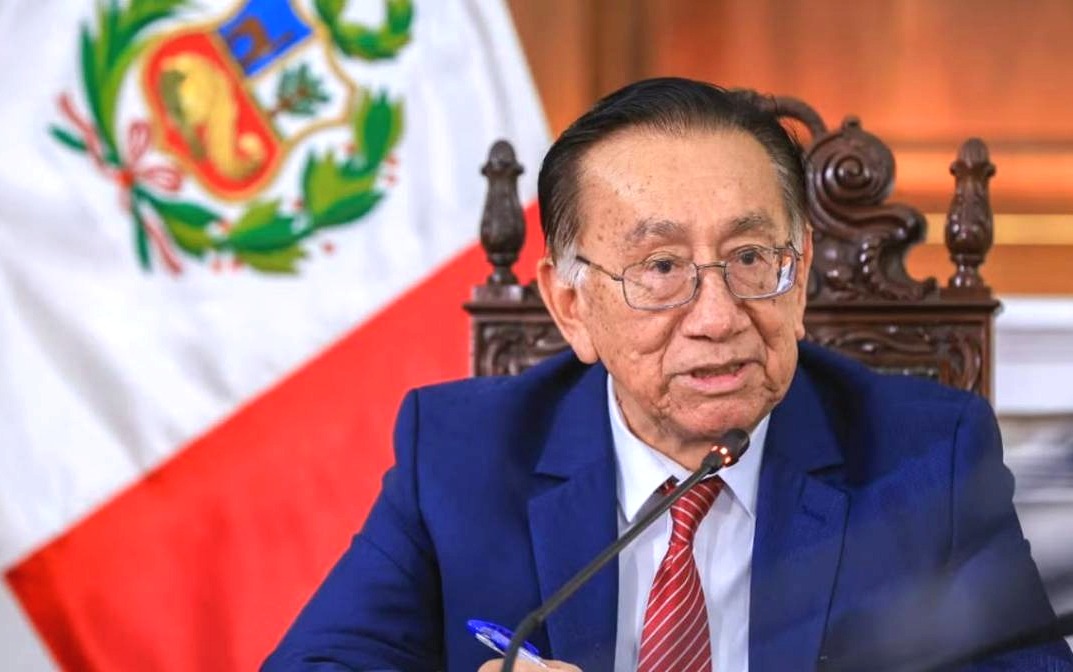
Lima; May 2026: President of the Peruvian Republic, José María Balcázar, have once again attacked the acquisition of the F-16C/D for the Peruvian Air Force, asserting that it was a direct purchase without bidding, without evaluating the proposals from Dassault Aviation (France) and SAAB (Sweden), and that the process was carried out under a “secrecy” regulation, which excluded both him and the Ministry of Economy and Finance.
Furthermore, Balcazar said that he was the one who requested the resignation of the Ministers of Defence and Foreign Affairs for not informing him of the purchase and the signing of the contract, and that there are legal conditions for the next government to review and renegotiate the purchase of the F-16C/D. These statements add to the similar one’s those which were delivered last week, which were made just hours before the Ministers of Defence, Amadeo Flores Carcagno and Foreign Affairs, Jose Pareja Ríos, as well as the President of the Council of Ministers, Luis Arroyo Sánchez, appear before the Commission on Defence, Internal Order, Alternative Development and the Fight Against Drugs.
President Balcázar’s objectives in distancing himself from the purchase contradicted the facts. On April 17, the date on which the contract between the Peruvian Air Force and Lockheed-Martin was initially to be signed, when he stated that the decision could be left to the next government, he already had full knowledge of the progress of the acquisition process for the fighter jets.
First, Balcázar himself gave his implicit and direct approval by signing Supreme Decree No. 001-2026-DE dated 05th March 2026, which included the acquisition in the General List of Contracts declared as “Military Secret”. This document was supported by General Command Resolution No. 064-2026 of February 11, which determined that the acquisition should be carried out under the “non-competitive” military secret modality, since the Air Force’s Definitive Study, based not only on technical-operational factors but also on geopolitical and strategic considerations, recommended the Lockheed-Martin F-16C/D Block 70 as the only viable option.
Then, on March 17, he had signed the Supreme Decree No. 043-2026-EF authorising the transfer of approximately $149.2 million, which was in addition to $344.8 million transferred a month earlier during the administration of former President José Jeri, accomplishing 30% of the amount required, according to current regulations, for the initial payment after the contract was signed.
Just three days later, on March 20, Balcázar declared that “the security decision made with the United States was not made by my government, but by the previous one. I have to continue it, because it is already a settled matter”. In other words, his actions and statements contradict each and every one of the official documents he signed in his capacity as Head of State.
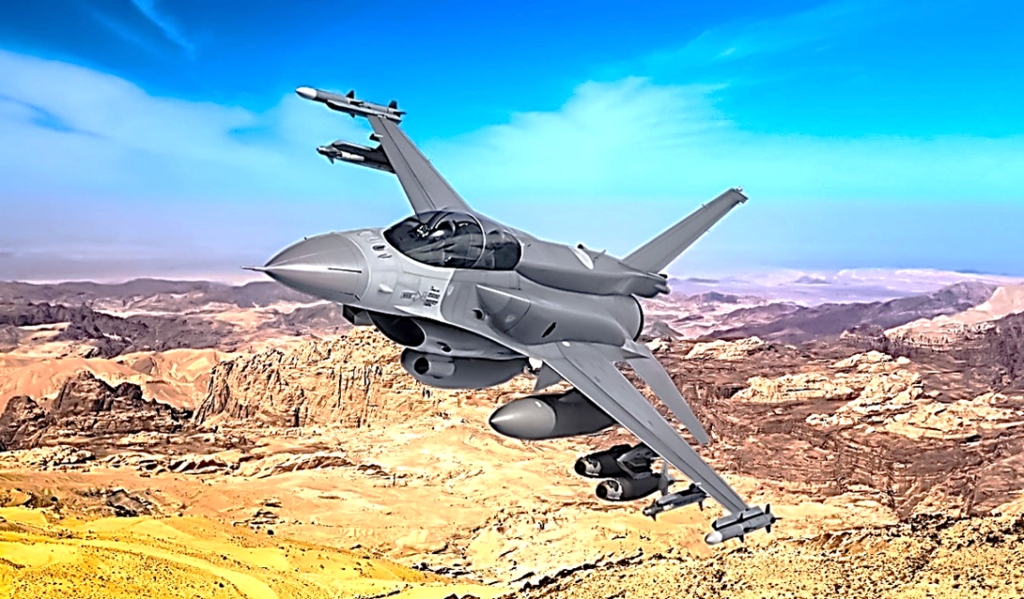
The contract between the Peruvian Air Force and Lockheed Martin was signed on April 20th this year at Las Palmas Air Base. The deal is valued at US$ 02 billion, of which US$ 1.54 billion covers the acquisition of 12 F-16 Block 70 aircraft: 10 F-16Cs and 2 F-16Ds.
The remaining US$460 million will finance the acquisition, through the Foreign Military Sales (FMS) program, of ground support equipment, spare parts and logistical support, training, documentation, manuals and technical publications, a flight simulator, and an initial batch of weapons. The contract was signed by Colonel FAP Carlos Rey Benavente, Head of the Supply Service (SEBAT), designated in accordance with the provisions of the Contracting Manual of the Armed Forces Procurement Agency (Chapter V: Contract Execution Phase) and on behalf of Lockheed-Martin, by Esra Peyton, Head of International Contracts for the F-16.
Even so, the following day, despite the contract being signed, Balcazar lashed out again, declaring that “the issue is that we agreed from the beginning that it would be postponed until the new government, and that situation hasn’t changed yet. There’s still no purchase”, adding that his “position is clear, and everyone needs to know that they have to abide by what I’ve said”, and that if the contract had been signed, “it would be irregular”.
This situation, led to the resignation of the then Ministers of Defence, Brigadier General (Retired) Carlos Diaz Dañino, and of Foreign Affairs, Hugo de Zela. That same day, amidst the ministerial crisis and the repeated lie that “no contract had been signed”, the Banco de la Nación transferred almost $ 462 million, roughly 30% of the amount to be paid for the 12 F-16C/D Block 70 aircraft.
It is abundantly clear, given the documentary evidence, that President Balcazar cannot claim ignorance of the F-16C/D Block 70 acquisition process. Nor can he shield himself behind his guised interpretation of the regulations, or feign ignorance, alleging, among other things, that for security reasons neither the President of the Republic nor the Ministry of Economy and Finance were involved in the process. If that were true, Supreme Decrees No. 001-2026-DE, which included the acquisition in the General List of Contracts declared as “military secret”, and No. 043-2026-EF, authorising the transfer of a sum of US$ 149.2 million to complete the 30% initial payment of the contract, would not have been signed.
To claim ignorance or that he signed “without knowing that a secret network existed behind it that excluded him”, given his position as President of the Republic and Supreme Commander of the Armed Forces, is hardly credible. The acquisition, despite Balcazar’s accusations that former President José Jeri “decided to exclude the offers from France and Sweden in order to negotiate directly with the United States”, strictly adhered to the Procurement Manual MN-DPC-001 – Version 9 of the Armed Forces Procurement Agency (ACFFAA). No rule was approved or modified to favor one bidder over another. At the end of January, when the process entered its final phase, a Final Study Committee was formed to prepare the definitive Technical-Legal Report, which included, in addition to the bidders’ financial proposals, the opinion and recommendation of the National Security Council (COSEDENA) regarding the strategic and geopolitical factors.
This report led to General Command Resolution No. 064-2026 of February 11, which determined that the acquisition should be carried out under the “non-competitive” military secret modality, since the Air Force’s Definitive Study recommended, based not only on the technical-operational factor but also on the geopolitical and strategic one, the Lockheed-Martin F-16C/D Block 70 as the only option. It is important to note that the military secret modality is defined as “non-competitive” when the object of the contract falls within the scope of Supreme Decree No. 052-2001-PCM, which established a series of guidelines for acquisitions and contracts classified as military secret or of internal order, and is regulated for the acquisition of High Strategic Value Weapon Systems.
It was therefore not a “handpicked” acquisition. In this regard, unofficial spokespeople for the Ministry of Defence indicated that, while it is true that it is not regulated, and was not an obligation, Dassault Aviation (France) and SAAB (Sweden) should have been informed of the decision to opt for the F-16C/D Block 70, based precisely on the geopolitical and strategic factor, and to avoid the general perception, and more than one complaint, that a competitive process with three bidders was still being followed.
Regarding the then Ministers of Defence and Foreign Affairs, both resigned due to their disagreements with President Balcazar following his statements on April 17th. Evidence of this can be seen in the content of their resignation letters, which were made public several hours before they were formalized through the respective supreme decrees.
President Balcazar’s stated desire to find grounds for “renegotiating” the purchase of the F-16C/D fighter jets, reducing their number, or even canceling the contract would have serious implications, given that a contract has been signed and the corresponding advance payment has been made. Failure to fulfill the agreed-upon obligations would expose the country not only to a series of sanctions from the United States, including visa restrictions for government officials and increased tariffs on goods and products, but also to multimillion-dollar lawsuits.
Team Maverick.




Shivakumar Says Congress United, Assures Women Will Get Cabinet Berth
Bengaluru, Aug 2026 : Karnataka Chief Minister D.K. Shivakumar on Monday sought to dismiss…
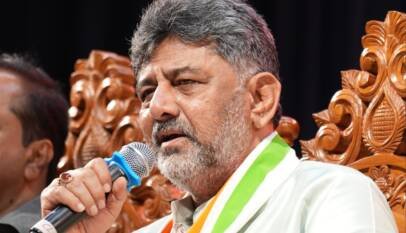
Shivakumar Says Congress United, Assures Women Will Get Cabinet Berth
Bengaluru, Aug 2026 : Karnataka Chief Minister D.K. Shivakumar on Monday sought to dismiss …