Techwari 2.0: Administration Embraces Innovation and Human-Centric Governance

New Delhi, May 2026: The Maharashtra Secretariat, the administrative headquarters of the state government, witnessed a remarkable transformation during the five-day “Techwari 2.0” initiative held from May 4 to May 8, 2026. More than just a government programme, the event emerged as a unique experiment in learning, collaboration, and institutional bonding — where technology met governance, health intersected with administration, and culture blended beautifully with innovation.
In governance, discussions often revolve around systems, policies, and procedures. However, Techwari 2.0 highlighted a deeper reality — that administration ultimately works for people, their emotions, their values, their well-being, their creativity, and their ability to adapt to a rapidly changing world.
Inspired by Maharashtra’s traditional “Wari” pilgrimage — where thousands of devotees journey toward Pandharpur with devotion, discipline, and purpose — Techwari brought the same spirit into governance. The initiative transformed a conventional “Learning Week” into a modern journey of ideas, growth, and innovation.
One of the defining strengths of Techwari 2.0 was its balance and inclusiveness. It was not limited to discussions on Artificial Intelligence or digital governance alone. Instead, it was designed as a holistic learning movement that included sessions on cyber security, quantum computing, India Stack, yoga, stress management, parenting, ethics in governance, and emotional well-being.
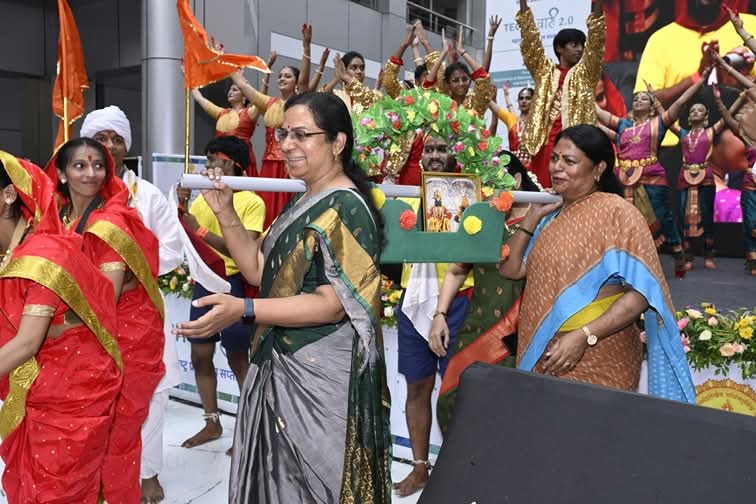
In one hall, officers discussed the future of digital public infrastructure and AI-driven governance, while in another, participants attended sessions on mental health, healthy living, and emotional balance. The programme also featured exhibitions focused on innovation, nutrition, and healthy food practices. The Secretariat’s “Trimurti Courtyard” came alive with vibrant cultural performances, music, rhythm, and creative energy.
The initiative reinforced the idea that future-ready governance cannot be built on technology alone. It must also include empathy, wellness, ethics, creativity, and human values.
Another notable feature of Techwari 2.0 was its massive scale and accessibility. More than 6,000 Secretariat employees participated directly in the programme, while lakhs of government employees from districts across Maharashtra joined through live streaming. The central idea behind the initiative was simple yet powerful — no government employee should be left behind in the journey of learning and transformation.
The rhythmic inaugural presentation “Talrang,” performed by Nilesh Parab and his team, became one of the most memorable highlights of the programme. What initially appeared to be a musical performance gradually evolved into a metaphor for governance itself.
Every instrument had a role. Every rhythm depended on coordination. Every sound — and even every pause — carried significance.
As officers, employees, and dignitaries watched the carefully synchronised performance, its message became increasingly clear: administration functions like an orchestra. Good governance is only possible when there is harmony and coordination among departments, officers, institutions, and citizens.
The participation of senior leadership, including the Chief Minister, Deputy Chief Ministers, and Chief Secretary, further strengthened the message that learning and adaptation are shared responsibilities at every level of governance.
Throughout the week, Techwari 2.0 brought together technology leaders, administrators, health experts, artists, trainers, and policy thinkers on a common platform. Sessions on Artificial Intelligence, cyber security, the DPDP Act 2023, quantum computing, and digital administration reflected the rapidly expanding scope of governance in the modern era.
At the same time, discussions on ethics, leadership, handling criticism, and stress management provided emotional and human depth to the programme.
Today’s administrators are expected not only to manage files and policies, but also to respond to public expectations, navigate digital transformation, and handle emotional pressures. Techwari acknowledged this evolving reality with honesty and sensitivity.
The initiative gained additional depth through the participation of experts from institutions such as Capacity Building Commission, YASHADA, The Yoga Institute, Manashakti, and NASSCOM.
One of the most beautiful aspects of Techwari was its strong connection with Maharashtra’s cultural identity. From “Nadrang” and “Yogarang” to “Kalarang” and the final depiction of the Wari tradition, each evening reminded participants that progress does not require abandoning tradition.
Dialogues around art, AI, and governance beautifully explored how technology can coexist with imagination and cultural identity. Artists, filmmakers, and creative professionals discussed how innovation can flourish while remaining deeply rooted in local traditions and values.
At a time when discussions around technology often appear dry and mechanical, Techwari gave innovation a vibrant human face.
The initiative was not merely a schedule of sessions. It created an environment where officers paused to learn, where technology was discussed fearlessly, where health was treated as essential rather than optional, and where culture remained central to governance. For a few days, the Secretariat ceased to be just an administrative building and transformed into a “Campus of Curiosity.”
Techwari 2.0 also reflected the broader transformation underway through the “Maha-Sadhana Week,” during which nearly nine lakh employees completed structured learning on the iGOT Karmayogi platform and recorded an impressive 35 lakh learning hours within a single week.
This achievement represented more than statistics — it demonstrated that governance and leadership are consciously investing in people and institutional growth.
The initiative also highlighted several important administrative reforms and human resource programmes, including:
- MAHA eHRMS: Maharashtra’s first integrated HR platform
- Reforms in compassionate appointments
- Small Bite, Big Leap digital learning initiatives
- Service and administrative reform programmes
- Recruitment and service rule reforms for faster and more transparent governance
Perhaps the greatest success of Techwari 2.0 was its reminder that learning never ends, especially in public service.
The governance of the future will not belong merely to those who hold authority, but to those who are willing to learn, adapt, collaborate, and remain connected to human values.
The concluding reflections of the programme drew inspiration from devotional verses dedicated to Lord Vitthal, symbolising the transformation of leadership from mere authority into compassion-driven service.
The concept of “Bap” represented authority, rules, and objective governance, while “Mauli” symbolised empathy, accessibility, and the soul of administration. The message emphasized that true excellence in governance emerges when administrators move beyond their official roles and become caring guardians dedicated to the welfare of every citizen.
Conducted under the guidance of Additional Chief Secretary of the General Administration Department V. Radha, Techwari 2.0 successfully established the idea that Maharashtra is preparing itself for the future while ensuring that governance continues to evolve with compassion, culture, learning, and innovation at its core.
Team Maverick.

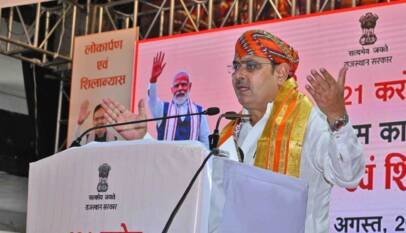
Chief Minister Rekha Gupta inaugurates ‘Arpan Kendra’ at Punjabi Bagh West Metro Station
‘Arpan Kendras’ being set up at 10 major Delhi Metro stations in collaboration with Delhi …
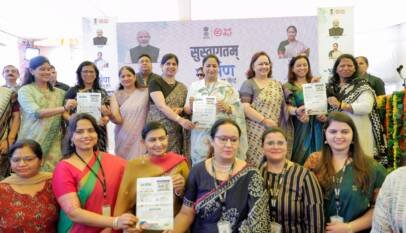
Chief Minister Rekha Gupta inaugurates ‘Arpan Kendra’ at Punjabi Bagh West Metro Station
‘Arpan Kendras’ being set up at 10 major Delhi Metro stations in collaboration with …