Trump Administration Defends Iran Operation Amid Senate Concerns Over Regional Fallout

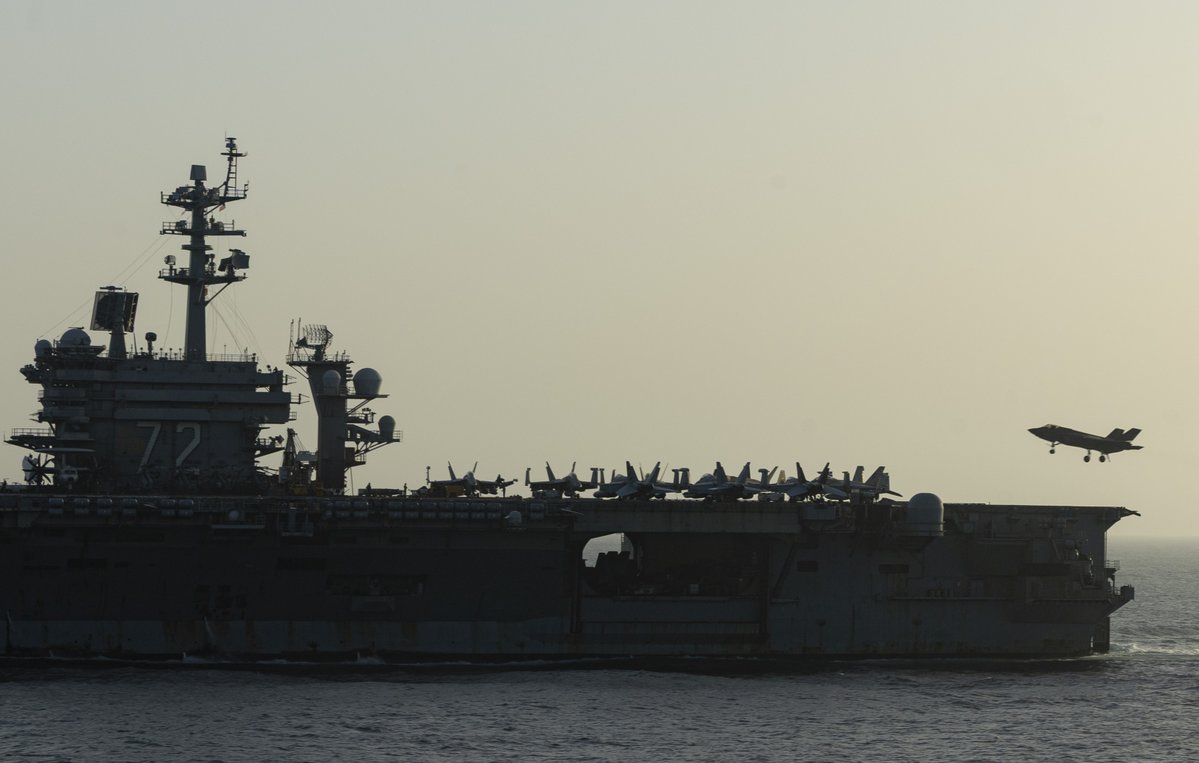
Washington, May 15: The Trump administration’s military campaign against Iran came under sharp scrutiny during a tense Senate Armed Services Committee hearing, as senior US military commanders defended the operation’s success while lawmakers voiced concerns over escalating regional instability, rising oil prices and the long-term consequences of the conflict.
Appearing before the committee, Admiral Charles Cooper II strongly defended Operation Epic Fury, claiming that American forces had significantly weakened Iran’s military infrastructure and sharply reduced Tehran’s ability to project power across the Middle East.
“In less than 40 days, Centcom forces achieved our military objectives,” Cooper told lawmakers. “We degraded Iran’s ability to project power outside its borders and threaten the region and threaten our interests.”
According to Cooper, Iran’s missile, drone and naval industrial capabilities had suffered massive damage during the operation. He estimated that nearly 90 per cent of Iran’s relevant military infrastructure had been degraded.
The Admiral further stated that Iran’s naval strength had been so badly affected that its fleet might not recover to previous operational levels “for a generation.”
Republican lawmakers on the panel largely rallied behind the administration’s strategy, arguing that Iran had long posed a serious threat to American interests and regional stability.
Senator Roger Wicker said the Iranian regime had spent decades supporting extremist organisations, destabilising the Middle East and pursuing advanced missile and nuclear capabilities.
During his testimony, Cooper also accused Tehran of institutionalising hostility towards the United States as a central component of its foreign policy.
“The Iranian regime has terrorised the region and made hostility to the United States a core tenet of its rule,” he said.
Republican Senator Tom Cotton argued that Iran now represented a significantly reduced threat compared to its pre-conflict military posture. Cooper agreed, stating that Tehran no longer possessed the operational strength to launch the kind of large-scale missile and drone attacks witnessed in recent years.
However, Democratic lawmakers repeatedly questioned the broader strategic direction of the administration’s Iran policy and warned against relying solely on military action.
Senator Jack Reed criticised the administration for what he described as the absence of a coherent long-term strategy, arguing that the Iranian nuclear issue could not be solved purely through military means.
“There is no purely military solution,” Reed said, while also accusing the administration of lacking “a credible strategy to win.”
Senator Tim Kaine warned that abandoning diplomatic engagement could push the region into a prolonged and dangerous conflict.
“If you make diplomacy impossible, you will make war inevitable,” Kaine remarked during the hearing.
Several lawmakers also focused on the growing economic fallout from tensions in the Gulf region, particularly concerns surrounding the Strait of Hormuz, one of the world’s most critical oil shipping routes.
Senators warned that disruptions in maritime trade through the Strait were already contributing to higher global oil prices and increasing costs for American consumers.
While Cooper acknowledged that Iran still retained “some residual capability” to threaten shipping lanes and regional infrastructure, he maintained that those capabilities had been “dramatically degraded” by US operations.
The hearing also shifted attention toward security challenges in Africa, where General Dagvin Anderson warned that the continent was rapidly becoming “the epicenter of global terrorism.”
Anderson testified that affiliates linked to ISIS and Al Qaeda were expanding their operations across parts of the Sahel region and Somalia, creating major security concerns for both regional governments and international partners.
He also highlighted growing Chinese and Russian influence across Africa through infrastructure investments, military cooperation and coordinated information campaigns.
According to Anderson, intelligence gaps across several African regions were becoming increasingly concerning as extremist groups and rival global powers expanded their activities simultaneously.
The hearing reflected growing divisions in Washington over the balance between military action, diplomacy and broader geopolitical strategy as the United States continues to navigate escalating tensions across the Middle East and beyond.
(The content of this article is sourced from a news agency and has not been edited by the Mavericknews30 team.)






Shivakumar Says Congress United, Assures Women Will Get Cabinet Berth
Bengaluru, Aug 2026 : Karnataka Chief Minister D.K. Shivakumar on Monday sought to dismiss…
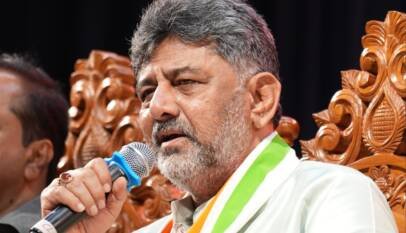
Shivakumar Says Congress United, Assures Women Will Get Cabinet Berth
Bengaluru, Aug 2026 : Karnataka Chief Minister D.K. Shivakumar on Monday sought to dismiss …