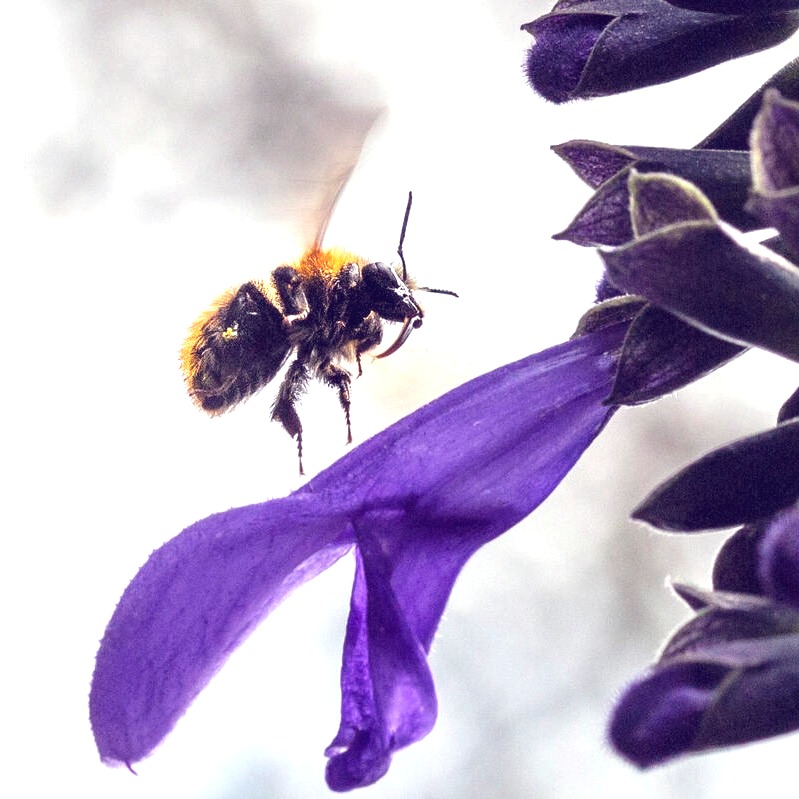
20th May Is World Bee Day; FAO Leads The Celebrations.

Rome; May 2026: By observing World Bee Day each year, we can raise awareness on the essential role bees and other pollinators play in keeping people and the planet healthy, and on the many challenges they face today. We have been celebrating this day since 2018, thanks to the efforts of the Government of Slovenia with the support of Apimondia, that led the UN General Assembly to declare 20 May as World Bee Day.
The date for this observance was chosen as it was the day Anton Janša, a pioneer of modern apiculture, was born. Janša came from a family of beekeepers in Slovenia, where beekeeping is an important agricultural activity with a long-standing tradition.
Today bees, pollinators, and many other insects are declining in abundance. This day provides an opportunity for all of us, whether we work for governments, organisations or civil society or are concerned citizens, to promote actions that will protect and enhance pollinators and their habitats, improve their abundance and diversity, and support the sustainable development of beekeeping.
Bees are the most prolific pollinators, with over 25,000 species worldwide.
For centuries, bees and people have shared a close and evolving connection, shaped by the ways communities across the world have relied on bees for food and livelihoods, with bees often becoming part of their cultural identity. From honey hunting to a large variety of beekeeping systems, this relationship has continually adapted to different environments, technologies, and socio-cultural needs.
World Bee Day 2026 focuses on how humans and bees have been working together to nourish and sustain people and the environment. It will highlight the evolution of beekeeping across diverse cultures and landscapes over thousands of years, while promoting innovative approaches that improve bee production and health, and support the livelihoods of beekeepers, including women and youth.
It will also emphasise how both traditional knowledge and modern technologies can contribute to sustainable beekeeping, and how partnerships and inclusive approaches can help secure a sustainable future for both pollinators and people, while advancing the transformation of agrifood systems.
This theme aligns closely with the International Year of Rangeland and Pastoralists 2026 and the International Year of the Woman Farmer 2026, offering valuable opportunities to reflect on the role of beekeeping in rural and pastoral livelihoods and its contribution to women’s empowerment.
Timeline leading to World Bee Day –
- 20 May 1734 – Breznica, Slovenia Birth of Anton Janša, who came from a long line of beekeepers, became a pioneer of modern apiculture. Bees were a frequent topic of conversation with neighbouring farmers, who would gather at the village and discuss farming and bee-keeping practices.
- 1766 – Anton enrolled in the first bee-keeping school in Europe.
- 1769 – Janša worked fulltime as a beekeeper.
- 1771 – Published the book Discussion on Bee-keeping in German.
- 2016 – At the FAO Regional Conference for Europe, the Republic of Slovenia proposed World Bee Day to be celebrated on 20 May each year, with the support of Apimondia, the International Federation of Beekeepers’ Association.
- 2017 – Proposal for World Bee Day was submitted for consideration at the 40th Session of FAO Conference.
- 2017 – UN General Assembly unanimously proclaimed 20 May as World Bee Day.
- 20 May 2018 – First Observance of World Bee Day.
This World Bee Day, here are five reasons pollinators are vital contributors to One Health.
- They help feed the world: Pollinators contribute to 35% of the world’s total crop production, supporting 87 of the 115 leading food crops, including fruits, vegetables, seeds, and nuts. These crops are critical for diverse diets and livelihoods. Without adequate pollination, yields decline, food becomes scarcer and more expensive – placing food security and the livelihoods of farmers and communities at risk.
- They strengthen plant health: Pollinators are essential for the natural reproduction and genetic diversity of plants, which helps enhance their resistance to pests, diseases, and climatic conditions. This is vital for maintaining plant health, a foundational element of One Health. Healthy, resilient plants may require fewer chemical inputs like pesticides, which, if not used properly, can pose risks to pollinators. Practices such as integrated pest management and agroecological approaches help manage plant health in ways that also safeguard pollinators and ecosystems.
- They support human health through better nutrition: Pollinators ensure the availability of many nutrient-dense foods – like berries, seeds, nuts, and vegetables, those which are crucial for balanced diets and disease prevention. Without them, the supply of these foods could decline, leading to poorer diets and negative health outcomes. Pollination also supports biodiversity in our food systems, helping to sustain a wide variety of crops that contribute to more resilient and diverse diets. Many of these foods play a critical role in preventing micronutrient deficiencies, including Vitamin A, Vitamin C, and iron.
- They maintain healthy ecosystems and biodiversity: Pollinators enable the reproduction of nearly 90% of the world’s flowering wild plants, more than 300 000 species. These plants are the backbone of ecosystems, providing habitat, shelter and food for a wide range of wildlife. Pollinators play a role in the regeneration of forest areas, wetlands, and other ecosystems, contributing to the overall environmental health of the planet. Their decline sets off a chain reaction, threatening biodiversity and weakening the ability of ecosystems to withstand climate change and environmental stress.
- They signal environmental health risks: Pollinators are indicators of environmental health. Because they are sensitive to ecosystem disruptions, monitoring pollinator health offers vital clues about wider environmental threats. When pollinator populations decline, food production and essential ecosystem services are affected, triggering a feedback loop that worsens both environmental and human health. Protecting pollinators is therefore critical to safeguarding the ecosystems that sustain plant, animal, and human health.
Team Maverick.







China Open: Lakshya, Sindhu and Ayush Shetty Advance to Second Round After Gritty Wins
Changzhou (China), July 2026 : India’s top badminton stars Lakshya Sen, P.V. Sindhu …

China Open: Lakshya, Sindhu and Ayush Shetty Advance to Second Round After Gritty Wins
Changzhou (China), July 2026 : India’s top badminton stars Lakshya Sen, P.V. Sindhu and …