Farmers eliminated backwardness and built a prosperous Uttar Pradesh: Chief Minister

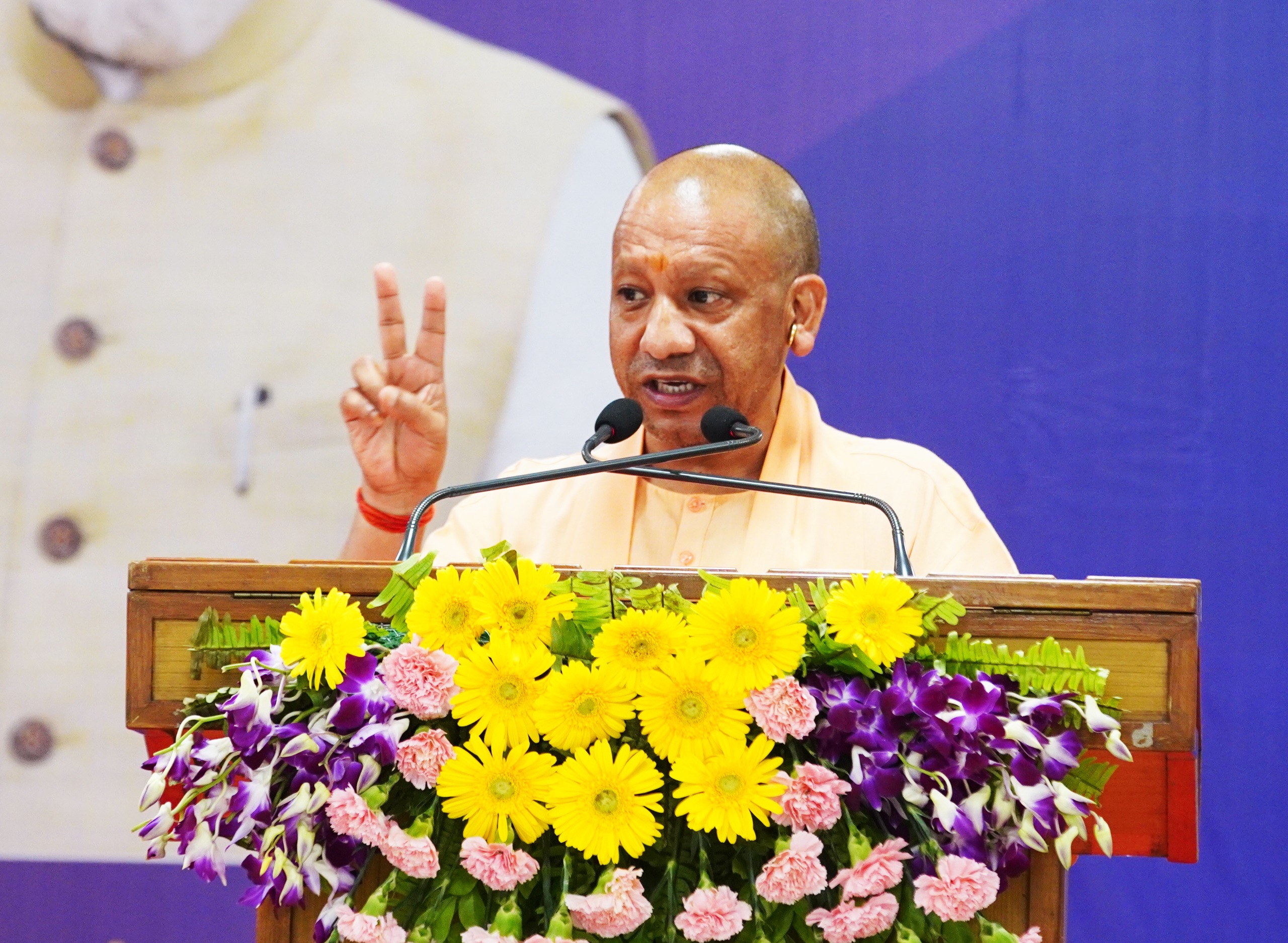
CM Yogi Adityanath inaugurates the Sanyukt Mandaliya Kharif Utpadakta Sangoshthi-2026 of Gorakhpur, Azamgarh and Basti
Earlier, farmers did not get irrigation, facilities and security: CM Yogi
Farmers should adopt technology and good quality seeds, minimise the use of chemicals and pesticides, and focus on natural farming: Chief Minister
Gorakhpur, June 2026 : Chief Minister Yogi Adityanath said, “The transformation witnessed in the agriculture sector during the last 12 years under the leadership of Prime Minister Narendra Modi has brought positive changes to the lives of food-producing farmers. Farmers are becoming part of the mainstream of society and the nation while moving towards the goal of self-reliance. Uttar Pradesh has the country’s most fertile land and the highest proportion of irrigated land (86 percent). Farmers are also receiving good prices for all three cropping seasons – Rabi, Kharif and Zaid. It is due to the hard work of farmers that Uttar Pradesh has overcome its backwardness and become prosperous. Farmers have achieved remarkable success in increasing the agricultural growth rate from 8 percent to 18 percent.”
Chief Minister Yogi Adityanath was addressing the gathering on Wednesday after inaugurating the Joint Divisional Kharif Productivity Seminar-2026 (Sanyukt Mandaliya Kharif Utpadakta Sangoshthi) of Gorakhpur, Azamgarh and Basti at Baba Gambhirnath Auditorium in Gorakhpur. On this occasion, the Chief Minister honoured beneficiaries of various schemes and handed over tractor keys and KCC certificates to them. The seminar was conducted by Charushila Singh.
CM Yogi stated, “Twelve years ago, farmers were compelled to commit suicide. Between 2005 and 2014, countless farmers committed suicide in different parts of the country. There was a tragedy behind this as well. Farmers did not have access to good quality seeds, proper MSP, or adequate arrangements to protect them from disasters. The cost of cultivation was high while production was low. Even if farmers produced food grains through hard work, there was no proper arrangement for procurement.”
He added, for the first time, a government stated that just as people undergo health checkups to maintain good health, Mother Earth’s health should also be examined. Since 2014, Prime Minister Modi has made Soil Health Cards available free of cost. The Pradhan Mantri Fasal Bima Yojana and Pradhan Mantri Krishi Sinchai Yojana were implemented. The government had to spend lakhs of crores of rupees on the import of pulses and oilseeds, but a special campaign was launched to promote the production of pulses and oilseeds by providing farmers with quality seeds.
CM Yogi informed, “The benefits of the Pradhan Mantri Kisan Samman Nidhi were provided so that food-producing farmers would not have to depend on moneylenders or remain burdened by debt. Extensive reforms were carried out in all mandi. When the Double Engine Government came to power in the state, it further strengthened these efforts. Unprecedented steps were taken for farmers. In the first Cabinet meeting of 2017, relief was provided to debt-ridden farmers. A special crop loan scheme was launched. Efforts were made to ensure that farmers received one-and-a-half times the cost of production. Government procurement centres were opened at various places and their produce was purchased.”
He also added, irrigation projects pending for decades in the state were revived and completed, including projects related to Bansagar, the Saryu Canal National Project and Bundelkhand. Additional irrigation facilities were provided to 24 lakh hectares of land. The government also provides free electricity to farmers for private tube wells and pays ₹3000 crore for this purpose.
CM said, “Although Uttar Pradesh ranks fourth in the country in terms of area, it is the highest producer of food grains, sugar, ethanol, potatoes, vegetables and milk. The results of the combined efforts of the government and farmers are visible today. During the Rabi and Kharif seasons, the government organises seminars to inform farmers about seeds, technology and government schemes, while also gathering information about their suggestions and problems.”
He added by saying, farmers will become the medium for achieving the goal of self-reliance. The government’s responsibility is to ensure that farmers are free from exploitation and deprivation, face no unnecessary challenges, and have obstacles removed from their path. They should receive quality seeds, adequate facilities, access to all mandi and timely fulfilment of their requirements. All this is becoming possible in Uttar Pradesh.
He continues by saying, UP possesses only 11 percent of the country’s total cultivable land, yet contributes 21 percent of the total food grain production. Uttar Pradesh accounts for 16-17 percent of the country’s population. The state is leading the nation in food grains, vegetables and horticultural crops, yet several challenges still remain.
The CM said, “Under the Mukhyamantri Krishak Bima Durghatna Yojana, benefits are provided to farmers, sharecroppers and their family members in the event of an accident. The government spends ₹1000 crore annually on this scheme. If a farmer becomes a victim of excessive rainfall, drought, heatwave, lightning or wildlife conflict, the government provides assistance of ₹5 lakh to the family within 24 hours.”
He added, a Seed Park in Lucknow and an Agriculture and Technology University in Kushinagar are being established in the name of former Prime Minister Bharat Ratna Chaudhary Charan Singh. Krishi Vigyan Kendras have become centres for spreading awareness about advanced technology and quality seeds. Even then, much more remains to be done. The increase in production achieved by farmers can still be expanded by nearly three times.
He also said that farmers must focus on seed quality, technology and timely adoption of farming practices and crop cycles. This will increase production. Farmers should begin working in this direction.
Discussing the challenges, the CM stated, the first stage of production is ensuring that farmers receive the right seeds. Emphasising quality, he said that no matter how much production takes place, if the produce is not suitable for export, farmers will not receive adequate profits.
He also informed, Mangoes may fetch ₹40-50 here, whereas they sell for ₹800 to ₹1000 in Europe, America and other countries. Cargo costs may be ₹150-200, yet there would still be a profit of ₹600 per kilogram. For this, quality is essential. The government has developed cargo centres.
CM appealed to farmers to minimise the use of chemicals and pesticides in food grains, vegetables and horticultural crops.
He emphasised meeting export standards and promoted Natural Farming (Cow-Based Farming). This would also help protect cows while safeguarding agriculture from excessive use of chemicals and pesticides. It can also serve as a means of reducing cultivation costs. Farmers themselves are scientists. They know what needs to be done and when; efforts should simply be made to connect them with the required systems and support. To avoid losses from excessive rainfall or drought, crop cycles should be planned according to weather bulletins issued by the Meteorological Department. As these practices increase, farmers’ incomes will also rise.
Discussing crop diversification, the CM stressed intercropping along with sugarcane and vegetables. He informed, farmers adopting such methods are earning substantial profits. Last year, he and the Agriculture Minister visited several districts in Central Uttar Pradesh and observed that farmers began cultivating maize immediately after harvesting wheat. As a result, they were earning savings of ₹1 lakh per acre.
CM stated, “Earlier, when Uttar Pradesh lacked security, irrigation facilities, procurement centres and government support systems, farmers could barely cultivate one or two crops. Good quality seeds were not available. Today, farmers are earning substantial profits by cultivating three crops annually.”
He added, without increasing taxes, the government has ensured better returns through MSP. Sugarcane payments stood at ₹300 per quintal in 2016-17, whereas today ₹400 per quintal is being paid. Farmers should adopt technology and good quality seeds, minimise the use of chemicals and pesticides, and focus on Natural Farming to achieve better returns.
The CM emphasised the importance of the seminar and said that Viksit Kheti is essential for an Atmanirbhar Bharat and a Viksit Bharat. Farmers cultivate three crops on a large scale. Attention must be paid to addressing challenges related to crop cycles. This year, the monsoon is expected to be below average. A strategy should therefore be prepared in advance. This seminar will provide the right direction to farmers.
CM also referred to the strength demonstrated by farmers during the COVID period.
Among those present on the occasion were Agriculture Minister Surya Pratap Shahi, MP Ravi Kishan, Mayor Dr Manglesh Srivastava, Legislative Council Member Dr Dharmendra Singh, Women’s Commission Vice Chairperson Charu Chaudhary, Agriculture Production Commissioner Deepak Kumar and others.

Shivakumar Says Congress United, Assures Women Will Get Cabinet Berth
Bengaluru, Aug 2026 : Karnataka Chief Minister D.K. Shivakumar on Monday sought to dismiss…
Shivakumar Says Congress United, Assures Women Will Get Cabinet Berth
Bengaluru, Aug 2026 : Karnataka Chief Minister D.K. Shivakumar on Monday sought to dismiss …