World Environment Day 2026: Chhattisgarh Advances Towards Environmental Prosperity Through Green Development, Water Conservation and Public Participation

Special Article : By Dr. Daneshwari Sambhakar Deputy Director, Public Relations
Raipur, June 2026 : Nature is not only the foundation of human life but also the guardian of our culture, traditions, and future. Clean air, pure water, dense forests, and rich biodiversity are invaluable assets of any civilized society. In an era marked by rapid urbanization, climate change, and increasing pressure on natural resources, environmental conservation is no longer an option but a necessity for human survival. It is with this objective that World Environment Day is observed every year on June 5, reminding us of our responsibility towards nature.
Rich in natural resources, Chhattisgarh is among the states making continuous efforts to strike a balance between environmental conservation and development. The state’s vast forest cover, abundant biodiversity, and water resources form the backbone of its environmental identity. Under the leadership of Chief Minister Vishnu Deo Sai, the Chhattisgarh government is implementing several initiatives focused on green development, water conservation, and community participation.
Towards Prosperity Through Greenery
In Chhattisgarh, tree plantation has been linked not only to environmental protection but also to rural livelihoods and farmers’ income. Through schemes such as the Hariyali Prasar Yojana and the Kisan Vriksha Mitra Yojana, farmers are being provided saplings for agroforestry and encouraged to plant trees on their land.
These initiatives are helping expand green cover while simultaneously generating long-term economic benefits for farmers.
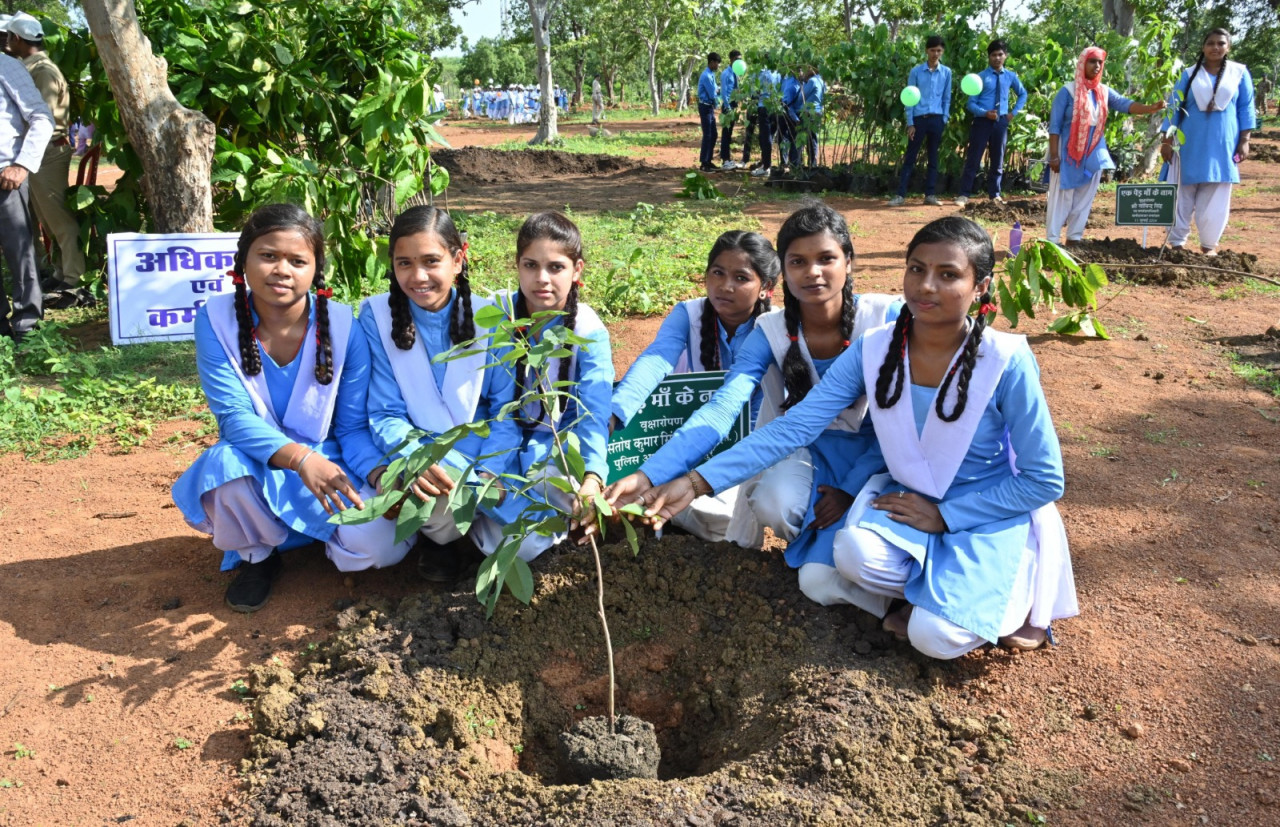
On the occasion of World Environment Day, the “Ek Ped Maa Ke Naam” (A Tree in Mother’s Name) campaign has successfully connected environmental conservation with public sentiment. Under this initiative, millions of citizens are planting trees in honor of their mothers, spreading the message of environmental responsibility and transforming conservation into a social movement.
Giving Cities a Green Identity
As urbanization accelerates, maintaining a clean and healthy environment has become a significant challenge. To address this, the government is developing oxygen parks and green zones in urban areas under the Oxy-Van Yojana.
Additionally, the Environmental Forestry Scheme focuses on roadside plantation, development of environmental parks, and greening of public spaces. These efforts are not only helping control pollution but are also improving the quality of life for urban residents.
Water Conservation Becomes a People’s Movement
In the face of climate change, water conservation has emerged as one of the most critical priorities. The Chhattisgarh government has launched several innovative initiatives in this direction.
Campaigns such as “Mor Gaon Mor Pani” (My Village, My Water) and “Mor Gaon Mor Taria” (My Village, My Pond) are creating a new awareness about water conservation in rural areas. Activities including the restoration of traditional ponds, rainwater harvesting, construction of check dams, and development of groundwater recharge structures are being carried out to improve water security.
Through various Groundwater and Water Conservation Programmes, the state is placing special emphasis on protecting and enhancing water sources. This long-term vision is laying the foundation for a water-secure future for generations to come.
Conservation of Rivers and Wetlands
To strengthen natural ecosystems, large-scale plantation drives are being undertaken along riverbanks under the Riverbank Plantation Scheme. These efforts help prevent soil erosion, improve groundwater recharge, and conserve biodiversity.
Similarly, under the Wetland Climate Adaptation Project, wetlands in the Mahanadi river basin are being restored and protected. This initiative is playing a vital role in mitigating the impacts of climate change while strengthening the state’s natural water systems.
Creating a New Generation of Environmental Guardians
The success of environmental conservation depends largely on awareness and public participation. With this objective, students in schools and colleges are being actively involved in environmental activities through the National Green Corps (NGC) and various Eco-Club programmes.
Through tree plantation drives, cleanliness campaigns, water conservation initiatives, and biodiversity awareness activities, children and young people are being encouraged to develop a deeper understanding and appreciation of nature.
These programmes aim to nurture a generation that views environmental stewardship as a responsibility rather than an obligation.
Environmental Conservation: A Shared Responsibility
Protecting the environment cannot be achieved through government schemes alone. Active participation from every citizen is essential.
Simple actions such as planting a tree, conserving water, reducing plastic use, responsibly utilizing natural resources, and maintaining cleanliness can collectively bring about transformative change.
World Environment Day conveys an important message: development and environmental protection are not opposing forces but complementary goals. Chhattisgarh is demonstrating this balanced approach through a development model based on greenery, water conservation, and community participation.
If each of us recognizes our responsibility towards nature and incorporates environmental protection into our daily lives, we can leave behind a cleaner, greener, and safer planet for future generations.
After all, the Earth is not an inheritance from our ancestors—it is a trust borrowed from future generations. Protecting it is our collective moral responsibility.




Shivakumar Says Congress United, Assures Women Will Get Cabinet Berth
Bengaluru, Aug 2026 : Karnataka Chief Minister D.K. Shivakumar on Monday sought to dismiss…

Shivakumar Says Congress United, Assures Women Will Get Cabinet Berth
Bengaluru, Aug 2026 : Karnataka Chief Minister D.K. Shivakumar on Monday sought to dismiss …