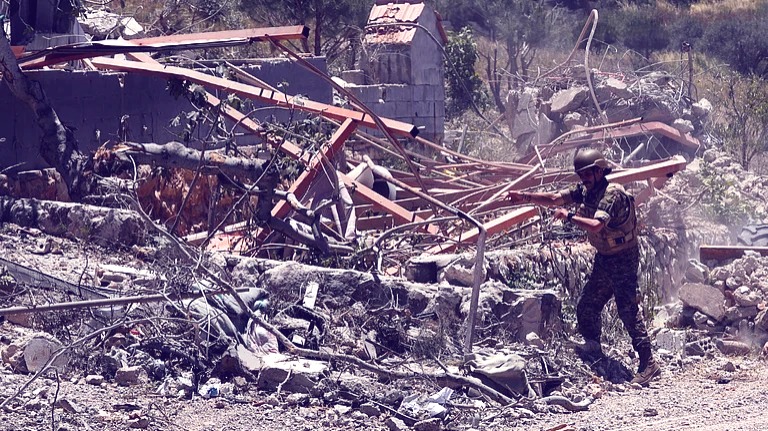
Iran Halt Strikes With A Warning To Resume If Israel Doesn’t Follow Suit.

Tehran; June 2026: The fragile ceasefire between Israel and Iran came under renewed strain today (Monday, 08th June 2026) after the two sides exchanged fire for the first time since the April truce, raising fears of a wider regional conflict.
Hours after the attacks, Iran’s military joint command announced it was suspending offensive operations but warned that any further “aggression and hostile acts” by Israel or its allies would trigger a much harsher response. The exchange marked the most serious challenge yet to the ceasefire brokered two months ago after a war launched by the United States and Israel on 28th February with strikes on Iran. The conflict disrupted global energy markets, pushed up fuel prices and contributed to rising costs of essential goods worldwide.
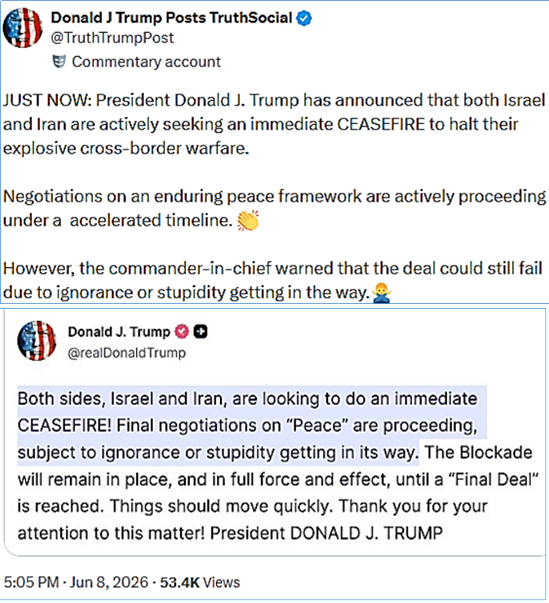
Diplomatic efforts are now underway to prevent a return to full-scale hostilities. According to two regional officials, Egypt, Saudi Arabia, Turkey, Pakistan and Qatar have urged the administration of US President Donald Trump to pressure Israel to curb its military actions against Iran and Beirut, while also encouraging Tehran to halt attacks on Israel. The officials spoke on condition of anonymity because they were not authorised to discuss the talks publicly. On the otherside, President Trump has acknowledged that discussions were continuing but provided no details.
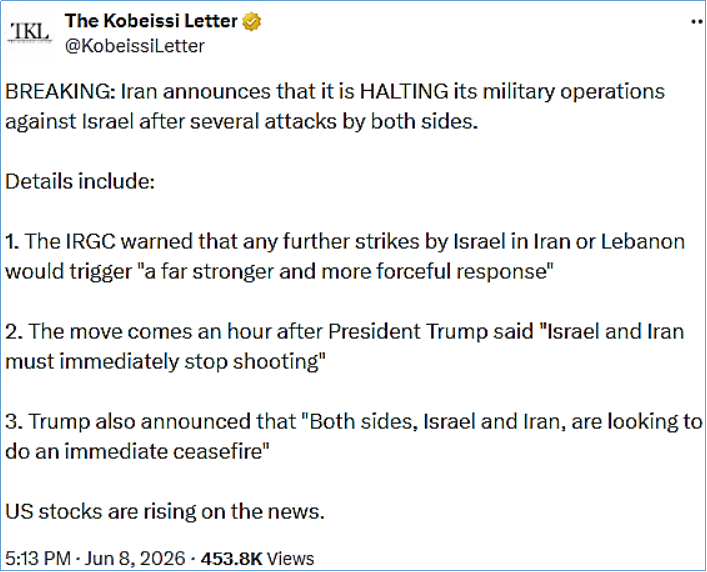
The ceasefire has remained tenuous despite the absence of large-scale fighting. Iran has maintained its grip over the strategically vital Strait of Hormuz, through which a significant portion of the world’s oil and natural gas supplies pass. Israel, meanwhile, has continued military operations against Hezbollah in Lebanon and expanded its activities there.
The situation deteriorated further today (08th June), when Yemen’s Houthi rebels, another Iranian ally, claimed responsibility for an attack on Israel and warned that Israel-linked vessels would once again be targeted in the Red Sea.
The latest escalation began after Tehran vowed retaliation for Israeli strikes on Beirut’s southern suburbs on Sunday. Iran launched waves of missile attacks against Israel on Monday, prompting Israeli strikes on targets in central and western Iran. Iranian state media reported explosions in Tehran, Isfahan, Karaj and Tabriz. Authorities temporarily closed the airspace around Tehran’s Imam Khomeini International Airport following the strikes.
The semi-official Fars and Mehr news agencies reported that Israeli attacks hit a petrochemical facility in Mahshahr. The Israeli military later confirmed striking the site, saying it targeted facilities involved in the production of materials for ballistic missiles as well as mobile missile launchers.
Iran’s Revolutionary Guard said it had targeted two military bases in Israel. Explosions were heard across central Israel as air-defence systems intercepted incoming missiles. Air-raid sirens also sounded in neighbouring Jordan.
Iran has accused the US of enabling the Israeli attacks. “No one believes that the Israeli regime would take any action without coordination with the United States”, Iranian foreign ministry spokesperson Esmail Baghaei told reporters in Tehran.
The White House did not immediately comment on whether the Israeli strikes were coordinated with Washington. The latest violence has also exposed growing tensions between Trump and Israeli Prime Minister Benjamin Netanyahu. The two leaders launched the military campaign against Iran in close coordination and Israeli officials frequently highlighted what they described as unprecedented cooperation between the two governments. However, differences have become increasingly visible in recent weeks.
Netanyahu’s decision to strike Beirut yesterday (Sunday – 07th June 2026) and subsequent operations inside Iran appeared to run counter to Trump’s efforts to preserve the ceasefire. The US president has publicly expressed frustration with Israel’s actions and recently told the Financial Times that “I call all the shots”. Political pressures at home may be contributing to the divergence. Netanyahu faces elections later this year and is under pressure to respond forcefully to continuing Hezbollah attacks. Trump, meanwhile, is seeking to stabilise global markets ahead of November’s congressional elections.
The Houthis renewed threat to target shipping has added another layer of uncertainty. During the Israel-Hamas war, the group carried out more than 100 attacks on commercial vessels in and around the Red Sea, sinking ships, killing mariners and disrupting one of the world’s most important trade routes. Before the conflict, roughly USD 1 trillion worth of goods passed through the corridor annually.
On both sides of the conflict, civilians prepared for the possibility of further escalation. In Tehran, some residents expressed support for Iran’s response and said they expected the conflict to continue.
In Israel, schools remained closed nationwide, though many businesses stayed open. Streets in Tel Aviv were quieter than usual as residents repeatedly sought shelter during missile alerts throughout the day.
Team Maverick.




NTSB: United Airlines 767 Flight That Had Struck NJ Turnpike Light Pole Was Only 19 Feet Above Highway.
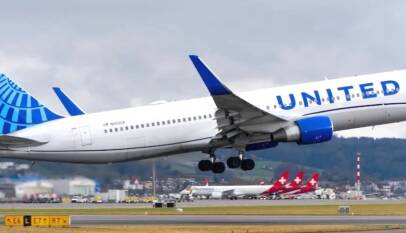
New Jersey; June 2026: A United Boeing 767 that struck a light pole on the New Jersey Turn…
NTSB: United Airlines 767 Flight That Had Struck NJ Turnpike Light Pole Was Only 19 Feet Above Highway.
New Jersey; June 2026: A United Boeing 767 that struck a light pole on …