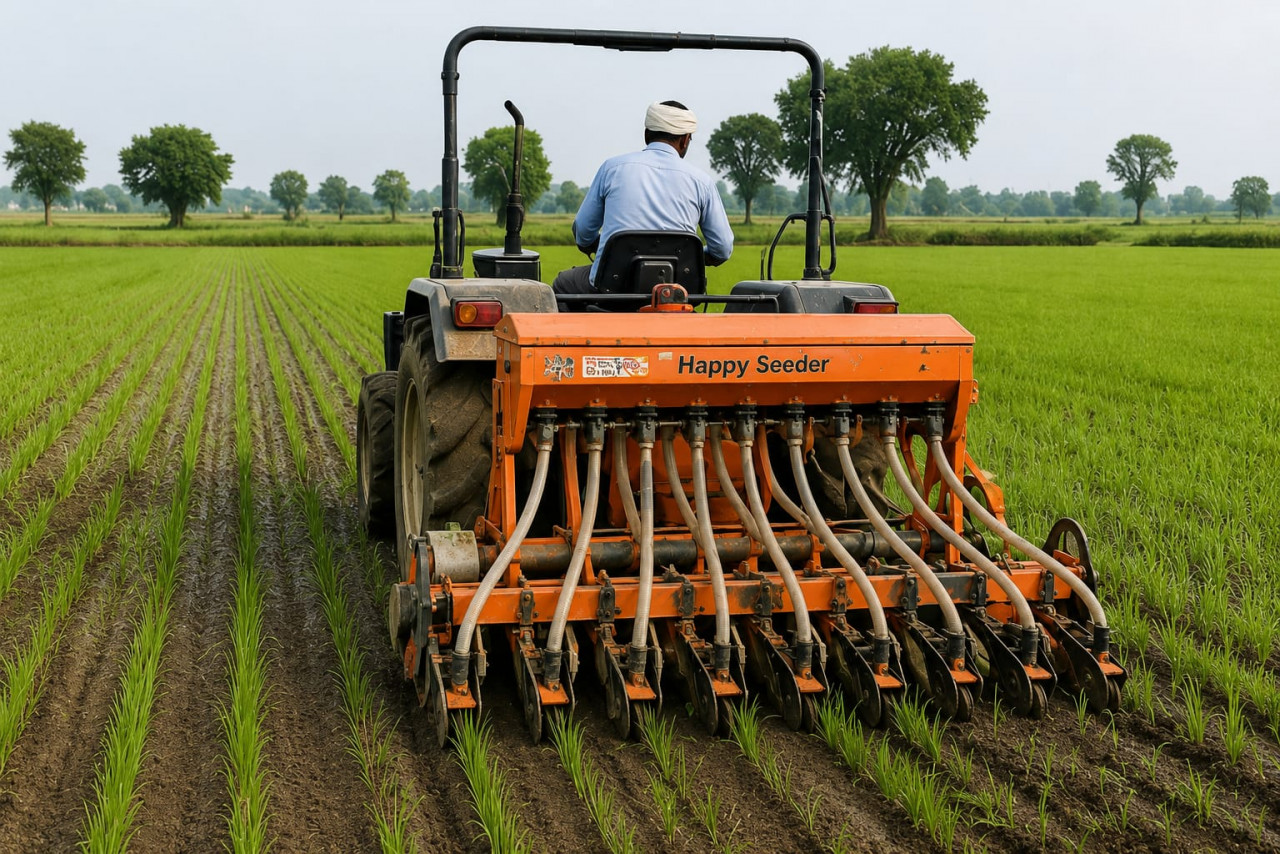
Row Sowing and Nano DAP Can Help Ensure Better Paddy Production Despite Low Rainfall

Raipur, June 2026 : Weather forecasts for the 2026 monsoon season have raised concerns among farmers across the country. According to the India Meteorological Department (IMD), rainfall during the southwest monsoon this year is expected to be around 90 percent of the long-term average. The influence of El Niño is likely to weaken the monsoon, with indications of below-normal rainfall during June as well. In view of this situation, agricultural experts are advising farmers to adopt scientific farming practices focused on water conservation.
Experts believe that row sowing of paddy using seed drills can prove to be a beneficial option for farmers in conditions of low rainfall. Under this method, seeds are sown at a fixed depth and at uniform distances from one another, resulting in better germination and healthier crop establishment. The technique also encourages deeper root development, enabling plants to access and utilize limited soil moisture more effectively.
A strong root system helps crops withstand dry conditions and makes them more resilient during periods of moisture stress. As a result, paddy crops remain comparatively safer even when rainfall is below normal.
Another major advantage of row sowing is the reduction of competition among plants. With adequate spacing, crops receive a balanced share of available water, nutrients, and sunlight, leading to improved growth and productivity. The method also makes intercultural operations such as weeding and soil management easier and more efficient.
Effective weed control is particularly important during low-rainfall years because it helps conserve soil moisture for a longer period. Reduced weed growth means less competition for water and nutrients, allowing paddy plants to make better use of available resources.
The Agriculture Department is also encouraging farmers to use Nano DAP (Di-Ammonium Phosphate), which is considered an efficient source of phosphorus. The nano-sized phosphorus particles are easily absorbed by plants, leading to faster root development and improved early-stage growth.
According to agricultural experts, Nano DAP enhances nutrient-use efficiency, enabling plants to utilize available nutrients more effectively even under moisture-deficient conditions. Better root growth also improves the crop’s ability to absorb water and nutrients from the soil, helping sustain growth during periods of limited rainfall.
In addition to Nano DAP, the Agriculture Department has urged farmers to adopt a range of scientific and resource-conservation practices during the Kharif 2026 season. These include row sowing, field bunding, rainwater conservation measures, and the balanced use of Nano DAP, Nano Urea, and bio-fertilizers.
Field bunding and rainwater harvesting techniques can help retain moisture in agricultural fields, reducing water loss and improving the availability of moisture to crops during dry spells. When combined with modern nutrient management practices, these measures can significantly improve crop performance.
Agriculture officials have emphasized that the integrated use of scientific farming technologies and water-conservation methods is the key to maintaining stable and profitable crop production even in years of below-average rainfall.
They have appealed to farmers to adopt these recommended practices to reduce risks associated with uncertain monsoon conditions and to ensure sustainable agricultural productivity during the current Kharif season. By combining efficient sowing methods, moisture conservation techniques, and advanced fertilizers, farmers can improve the resilience of their crops and protect yields despite the challenges posed by reduced rainfall.




Tamil Nadu to Launch ‘Singappenn’ Special Task Force for Women and Child Safety
Chennai, June 2026 : In a major step aimed at strengthening the safety and protection of w…

Tamil Nadu to Launch ‘Singappenn’ Special Task Force for Women and Child Safety
Chennai, June 2026 : In a major step aimed at strengthening the safety and …