ISRO Achieves Major Milestone with 175-Tonne Semi-Cryogenic Engine Hot Test

Chennai, June 2026: The Indian Space Research Organisation (ISRO) has successfully completed a critical hot test of its semi-cryogenic engine Power Head Test Article (PHTA) at a thrust level of 175 tonnes, marking a significant advancement in the development of India’s next-generation launch vehicle propulsion system.
The test was recently carried out at the ISRO Propulsion Complex (IPRC) in Mahendragiri, Tamil Nadu, and represents the eighth successful hot test conducted using the Power Head Test Article. The PHTA incorporates all the major systems of the semi-cryogenic engine except the thrust chamber, enabling engineers to validate the performance of key engine components before full-scale testing.
According to ISRO, the primary objective of the latest trial was to evaluate the engine’s behaviour during the critical build-up phase following pre-burner ignition and to demonstrate stable operation at a substantially higher thrust level than previous tests.
For the first time, the engine powerhead was successfully operated at 175 tonnes of thrust, equivalent to 88 per cent of its designed full thrust capacity of 200 tonnes. Earlier trials had been conducted at thrust levels of 94 tonnes (47 per cent capacity) and 120 tonnes (60 per cent capacity), with each stage progressively validating the engine’s performance.
During the latest firing, the engine’s main turbopumps performed exactly as designed, achieving outlet pressures of 400 bar and 500 bar respectively. ISRO stated that the engine operated smoothly throughout the test, with all critical parameters remaining well within the predicted operating range.
The flawless performance has provided the space agency with the confidence to move towards the final phase of testing, which will involve firing the engine at its full rated thrust of 200 tonnes. Achieving this milestone would bring India’s indigenous semi-cryogenic engine programme much closer to operational readiness.
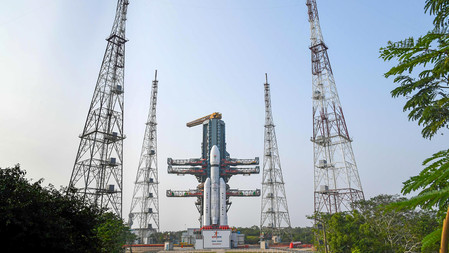
The semi-cryogenic propulsion stage, designated SC120, is powered by the 2,000-kilonewton-class SE2000 engine and is being developed as a replacement for the existing L110 liquid core stage used in the Launch Vehicle Mark-3 (LVM3), India’s heaviest operational rocket.
The upgraded propulsion system is expected to significantly improve the payload-carrying capability of the LVM3 while enhancing its overall efficiency and performance. Unlike conventional propulsion systems, the semi-cryogenic engine uses environmentally cleaner and comparatively non-toxic propellants—Liquid Oxygen (LOX) and purified kerosene, known as Isrosene—making it both efficient and cost-effective.
ISRO believes the integration of the SC120 stage with an upgraded cryogenic upper stage will substantially enhance the capabilities of the LVM3. The improved launch vehicle is expected to support heavier satellite missions, deep-space exploration programmes and India’s expanding human spaceflight initiatives, including future missions under the Gaganyaan programme.
The successful 175-tonne hot test represents another major achievement in India’s efforts to develop advanced indigenous rocket propulsion technologies and strengthens ISRO’s roadmap towards more powerful and efficient launch vehicles capable of meeting the country’s growing space ambitions.







No compromise on security during the Kanwar Yatra, take strict action against those spreading rumours: CM Yogi
Chief Minister reviews preparations with officials of Meerut and Saharanpur divisions Issu…

No compromise on security during the Kanwar Yatra, take strict action against those spreading rumours: CM Yogi
Chief Minister reviews preparations with officials of Meerut and Saharanpur divisions Issues clear instructions …