Trump Says Frozen Iranian Funds Will Be Used to Compensate Ships Damaged in Strait of Hormuz

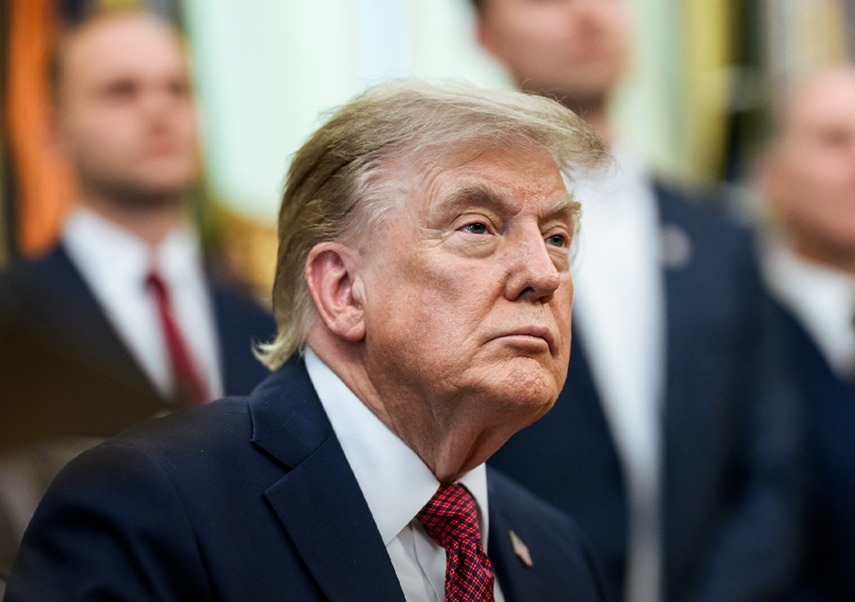
Washington, July 2026 : US President Donald Trump on Monday said that Iranian assets under American control would be used to compensate shipping companies for damage sustained during the recent conflict in the Strait of Hormuz, ruling out the use of US taxpayer money for such payments.
Speaking to reporters aboard Air Force One, Trump said Washington intends to utilise frozen Iranian funds to cover losses suffered by commercial vessels operating in one of the world’s busiest maritime trade routes.
“No. No. We’re going to use Iran’s money to pay for the damage they did,” Trump said when asked whether the United States would directly compensate affected shipping companies.
“In other words, Iran money that we control will be used to pay for damages. Sound good? Not bad, right? You should be rewarded,” he added.
The President, however, did not provide details on the amount of Iranian assets currently under US control or explain how the compensation programme would operate. He also did not specify which shipping companies or vessel owners would qualify for reimbursement or outline a timeline for any payments.
Trump made the announcement while discussing the security situation in the Strait of Hormuz, a strategically vital waterway connecting the Persian Gulf with the Gulf of Oman and the Arabian Sea. The narrow passage handles a significant share of the world’s crude oil and liquefied natural gas exports, making it crucial to global energy markets and major importers such as India, Japan, China and European countries.
According to Trump, the situation in the Strait has improved considerably following recent US military operations against Iran.
“Their whole shoreline is wiped out. The strait is in very good shape now, and we’re talking right now,” he said.
The President also claimed that diplomatic engagement between Washington and Tehran had resumed, with Iranian officials seeking discussions after the US military campaign.
“They want to meet and we’re meeting. We’ll see what happens. There’s a chance we could make a deal,” Trump said.
“Without what we did, they wouldn’t even be talking to us,” he added, arguing that sustained military pressure had compelled Iran to return to the negotiating table.
Trump further stated that Iranian officials had requested a pause in military operations while diplomatic talks were underway. Expressing cautious optimism about the negotiations, he said a peaceful resolution remained possible but warned that military action could quickly resume if diplomacy failed.
“I think there’s a good chance that something could happen. And if it does, good. If it doesn’t, we go back to doing what we were doing two days ago,” he remarked.
Drawing a comparison with US policy towards Venezuela, Trump claimed that previous American actions had ultimately generated financial returns for Washington. He predicted that a similar outcome could be achieved in relation to Iran.
“We paid for that war many times over, and that will happen with Iran also,” Trump said.
When questioned about funds received from Venezuela, the President said the money was being used to support government operations and could also be allocated to military purposes with congressional approval.
The Strait of Hormuz remains one of the world’s most strategically important maritime corridors, with nearly one-fifth of global oil shipments passing through it every day. Any disruption to navigation in the region has immediate implications for international energy supplies, shipping costs and global financial markets.
Trump’s remarks underscore the administration’s dual-track approach of combining military pressure with diplomatic engagement while signalling that any financial burden arising from the conflict should, in Washington’s view, be borne by Iran rather than the United States.
(The content of this article is sourced from a news agency and has not been edited by the Mavericknews30 team.)




US-Led Israel-Lebanon Peace Talks to Resume in Rome from August 4
Washington, July 2026 : The United States will host the next round of negotiations between…

US-Led Israel-Lebanon Peace Talks to Resume in Rome from August 4
Washington, July 2026 : The United States will host the next round of negotiations …