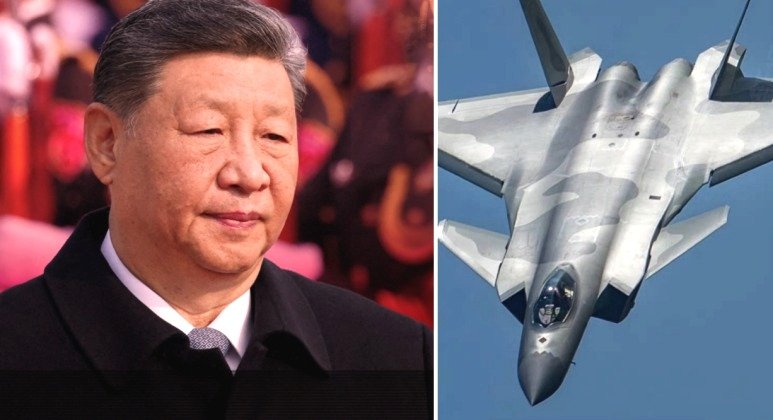
President Xi Jingping Has Urged PLA To Accelerate The Military Application Of Artificial Intelligence.

Beijing; August 2026: Chinese President and Chairman of the Central Military Commission Xi Jinping has called on the People’s Liberation Army (PLA) to accelerate the military application of artificial intelligence, urging the armed forces to strengthen the development of an “intelligent military system” as part of a broader effort to transform China’s armed forces into a world-class fighting force. The remarks were delivered during a meeting of the Communist Party leadership ahead of the PLA’s 99th anniversary, with Xi stressing that emerging technologies, particularly artificial intelligence and unmanned systems, will play a decisive role in future combat operations. According to Chinese state media, Xi instructed the military to deepen the integration of artificial intelligence across operational planning, command systems, unmanned combat platforms and broader battlefield management.
President Xi emphasised that future military modernisation must focus on combat effectiveness while accelerating the construction of an ‘intelligent military system’, indicating that artificial intelligence is expected to become central to the PLA’s next stage of force development. This emphasis on military AI reflects a strategic direction the PLA has pursued for more than a decade. Chinese defence planners have increasingly described warfare as progressing from mechanisation, through informatisation, toward intelligentisation, in which artificial intelligence supports or increasingly assumes functions traditionally performed by human operators.
Rather than viewing AI as a standalone capability, Chinese doctrine increasingly treats it as an enabling technology capable of linking sensors, communications networks, precision weapons and autonomous systems into an integrated battlefield architecture. Artificial intelligence is already being incorporated into a broad range of Chinese military programmes. The PLA has invested heavily in autonomous reconnaissance systems, unmanned aerial vehicles, unmanned surface vessels and autonomous underwater vehicles, while simultaneously expanding AI-assisted decision support for command headquarters. These capabilities are intended to shorten sensor-to-shooter timelines, improve battlefield awareness and enable commanders to process vastly greater quantities of information than would otherwise be possible during high-intensity combat.
One of the principal advantages China enjoys in military AI development is the scale of its civilian technology sector. Firms such as Huawei, Tencent, Alibaba and numerous specialised artificial intelligence firms have become global leaders in machine learning, computer vision and data processing, creating a substantial technological base from which military applications can be derived. Beijing’s policy of military-civil fusion has sought to ensure that advances achieved in the commercial sector can be rapidly transferred into defence programmes, allowing the PLA to exploit innovations emerging from one of the world’s largest digital economies.
China’s approach differs from that of many Western militaries by integrating artificial intelligence into virtually every aspect of force development simultaneously rather than treating it as an isolated research programme. AI is expected to enhance air defence networks, improve missile target recognition, optimise logistics, coordinate drone swarms and increase the effectiveness of long-range precision strike systems. The result is intended to be a force capable of operating with significantly higher tempo while reducing dependence on human intervention during critical phases of combat.
The emphasis on unmanned systems has become particularly pronounced. China is already among the world’s largest producers of military drones, while recent exhibitions have showcased increasingly sophisticated autonomous combat aircraft, robotic ground vehicles and unmanned naval platforms. AI is expected to serve as the central technology enabling these systems to cooperate across domains, allowing manned and unmanned platforms to operate as integrated formations rather than independent assets. Western defence planners have likewise identified military AI as one of the principal areas in which strategic competition with China is expected to intensify during the coming decade. China’s vast lead in research and development in the field, however, has been one of its most distinct advantages.
President Xi’s renewed focus on artificial intelligence also coincides with an unprecedented acceleration in Chinese defence modernisation more broadly. The PLA has rapidly expanded production of fifth generation fighters, commissioned the world’s largest fleet of post-Cold War destroyers, fielded operational hypersonic weapons, and recently made rapid progress in flight testing the world’s first sixth-generation combat aircraft. Artificial intelligence is increasingly viewed as the software layer intended to connect these advanced platforms into a unified combat network capable of rapidly detecting, processing and engaging targets across multiple domains.
Team Maverick.





The impact of CM Yogi’s cow conservation policy: Youth earning crores, employment on the rise
Panchgavya-based medicines are improving health and promoting indigenous medicine An envir…
The impact of CM Yogi’s cow conservation policy: Youth earning crores, employment on the rise
Panchgavya-based medicines are improving health and promoting indigenous medicine An environmental engineer has developed …