With Four Cardinal Points, The AfDB Plans To Accelerate Agenda 2063 At The 39th African Union Summit.

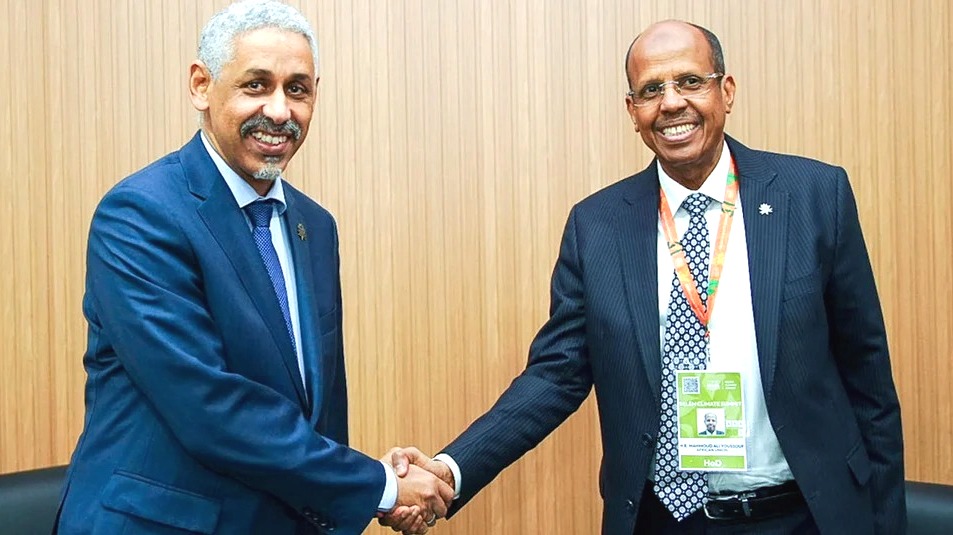
Abidjan; February 2026: Dr Sidi Ould Tah, President of the African Development Bank (AfDB) Group, will lead a high-level delegation to Addis Ababa for the 39th Assembly of Heads of State and Government of the African Union (AU). This mission marks a seminal moment for the continent’s premier development finance institution as it represents Dr Ould Tah’s first attendance at the AU Summit since assuming the presidency on 01st September 2025.
Arriving with a decisive mandate of commitment and partnership, the president will signal the Bank Group’s unwavering support for African priorities, positioning the institution as the primary engine for the continent’s structural transformation.
At the Summit, the Bank president will outline the Bank’s “Four Cardinal Points” strategic vision designed:
- to bridge Africa’s financing gap,
- secure financial sovereignty,
- harness the demographic dividend,
- build resilient infrastructure through the local transformation of natural resources.
Anchored to the Four Cardinal Points vision is the Bank’s New African Financial Architecture, known as NAFA, which is a framework to mobilise large-scale financial resources to meet Africa’s growing development needs and bridge the financing gap hampering socio-economic progress.
Under this vision, the Bank Group has already made major progress, notably the historic replenishment of the African Development Fund (ADF), the Group’s concessional window serving Africa’s most vulnerable countries. At the 17th replenishment meeting, the ADF mobilised $11 billion in pledges, with the participation of 24 African countries, 19 of which were contributing for the first time.
On day two of the Summit, Dr Ould Tah will address Heads of State and Government, articulating a roadmap that aligns the Bank’s Four Cardinal Points priorities with the AU’s Agenda 2063. Beyond the plenary, the president will conduct a series of high-level bilateral meetings with continental leaders and international partners to deepen strategic cooperation.
The Bank Group, in coordination with the AU and partners, will participate in several high-impact events designed to address the continent’s most pressing challenges. They include:
- the presentation of the 10th African Visa Openness Index,
- a Heads of State and ministerial meetings with Africa CDC on health financing,
- the 2nd Italy-Africa Summit, which will take stock of progress made by Italy’s Mattei Plan for Africa,
- the annual African Leaders for Nutrition (ALN) dinner, in partnership with the African Union and Nutrition International, a strategic meeting promoting the importance of early childhood nutrition.
From record-breaking resource mobilisation to the “Four Cardinal Points” vision, follow the Bank’s participation in the AU Summit via our social media channels and discover how the Bank Group is transforming ambition into action.
African Visa Openness Index –
2025 marks the 10th consecutive year that the Africa Visa Openness Index (AVOI) has tracked Africa’s visa policies. This edition marks an important milestone, by offering an opportunity to shine a light on notable developments while reflecting on where progress has stagnated. Unpacking this data over the following pages allows a more nuanced assessment of where visa openness has progressed, regressed, or where technological interventions have shifted the visa application process away from the destination (visa‑on-arrival) to the departure country (e‑Visa / Electronic Travel Authorisation ‑ ETA) ‑ which impacts a country’s score.
In tracking visa openness across Africa, AVOI has applied a consistent methodology through the past ten years, ensuring a high level of comparability in measuring each country’s visa policy with respect to citizens of every other African country.
- A full score (1.0) is allocated to each country‑to-country travel scenario where a country removes the requirement for a visa.
- A slightly lower score (0.8) is given in a visa‑on-arrival scenario, to reward countries that allow travellers to visit without the need for pre‑travel formalities.
- Finally, for scenarios where a visa must still be obtained ahead of travel, whether through traditional paper‑based processes, or through digital means, no points (0.0) are allocated.
In 2025, Rwanda and The Gambia retain their top ranking, while Benin moves to 4th place following the recent introduction of a visa for citizens of five countries. Kenya becomes the third‑most visa‑free country, following recent updates to its ETA system which now exempts citizens from 52 African countries from these processes.
During 2025, 20 countries made changes to their visa‑policy regime that affected citizens of one or more African country. This resulted in 11 countries scoring higher, and nine lower. Meanwhile, 34 countries made no changes and maintained their overall score. There has been a small increase in the number of travel scenarios that are now visa‑free (814, up from 803 in 2024), accounting for 28.2% of intra‑African travel scenarios reaching their highest ever level.
However, there has been a significant increase, from 1,348 in 2024 to 1,463 in 2025, in travel scenarios that are now subject to visa‑related formalities ahead of travel, pushing the ‘visa‑required’ metric up, from 47.1% in 2024 to 51.1% in 2025, past the half‑way mark and back to a similar level last recorded in 2021. Meanwhile, visa‑on-arrival facilities are offered in only 20.4% of all travel scenarios, their lowest level ever, and lower than the 24.8% recorded in 2024.
Closer scrutiny of the data reveals that there has been a significant switch from visa‑on-arrival facilities to visa required ahead of travel, rather than towards visa‑free status. Four countries ‑Guinea Bissau, Mauritania, Nigeria, and Somalia ‑ switched from broad visa‑on-arrival policies to requiring a visa ahead of travel. This is a step backwards on Africa’s visa openness. However, two of the countries (Guinea‑Bissau and Somalia) recently launched an e‑Visa portal, taking to 31 the number of countries that offer this. An e‑Visa offers more convenience to prospective travellers than a traditional visa. Nonetheless, it is still a visa that is required ahead of travel and is treated as such. This affects a country’s AVOI score, and in some cases results in a significant drop in ranking. Seychelles is a case in point. Its ETA is categorised as an e‑Visa (it is required ahead of travel and contains similar information requirements and costs as some other countries’ e‑Visas), and this determines the country’s rank in 2025.
05 countries implemented individual policy changes that now require a visa ahead of travel from citizens of affected countries who previously travelled visa‑free. This was observed in the case of Algeria (1), Angola (1), Benin (5), Tunisia (1) and Uganda (2), with the number in brackets denoting the countries whose citizens are affected by this change. Compared to the previous two years (2023, 2024), we see a higher number of policy changes in 2025, from visa‑free to visa required ahead of travel.
This suggests that countries are resorting to more restrictive visa policies either on an individual basis, or more broadly by switching from a visa‑on-arrival to e‑Visa facilities. In each of the two scenarios here, obligatory travel authorisation extends the time ahead of travel and affects freedom of movement. Technological advances applied through e‑Visas provide countries with a degree of pre‑screening that is otherwise not possible with visa‑free or visa‑on-arrival access. For prospective travellers, this can translate into travel convenience when compared to traditional visa processes ahead of travel. It also offers economic benefits and efficiency gains to countries implementing such systems, but it opens the door to more restrictive approaches to intra‑Africa travel that impede rather than ease travel. It remains a requirement that must be complied with ahead of travel.
Italy’s Mattei Plan for Africa –
Under the Mattei Plan for Africa, Italy aims to foster economic and strategic partnerships with African nations and institutions. Its Prime Minister Giorgia Meloni has stated that the African Development Bank Group would be its main strategic financial partner for implementation of the plan on the continent.
The delegation was hosted by African Development Bank Senior Vice President Marie-Laure Akin-Olugbade, who was joined by three vice presidents: Nnenna Nwabufo, Beth Dunford and Kevin Kariuki, as well as several directors from the energy, resource mobilization and finance departments, among others.
Participants in the meeting exchanged on ways to strengthen public-private sector collaboration with Italy in reducing hunger and boosting agriculture in Africa. The conversation also discussed the importance of the African Development Fund, the Bank’s concessional lending arm in addressing the challenges of the continent’s most disadvantaged countries.
Akin-Olugbade expressed satisfaction at the progress made since the announcement of the Plan in July 2024, in particular, the Rome Process/Mattei Plan Financing Facility (RPFF), a multi-donor Special Fund aimed at supporting climate aligned sovereign infrastructure projects that help to address the root causes of migration. The RPFF with contributions from Italy and the UAE amounting to over $170 million, is now operational.
The senior vice president commended Italy for demonstrating its commitment and thanked the government for its choice of The African Development Bank as partner. “We appreciate, of course, the choice of the African Development Bank to accompany you in your strategy, very ambitious strategy for the continent. We are really very happy to hear that Italy, indeed, is still strongly committed to the continent, and of course, to working with the African Development Fund”.
Other instruments under the Plan with the African Development Bank include the Growth and Resilience Platform for Africa (Graf), and a bilateral co-financing facility. Under Graf, CDP and the African Development Bank intend to invest up to EUR 400 million over five years in private equity funds to accelerate private sector development in Africa.
“We are grateful for the outstanding job that the bank has done. We really appreciate it”, Ortan said. “We really believe that in order to enhance the Mattei plan in Africa and the visibility of it, we need partners like you”.
Concluding the discussions, Akin-Olugbade said the Mattei plan has emerged as a template for future cooperation between Italy and other developed countries and Africa.
She said: “I believe that Italy has seen the African Development Bank, the African Development Fund as trusted partners. I believe we have a good track record of providing and achieving results. There’s a leveraging effect that multilateral development banks have that sometime bilateral resources do not have. And we need to take advantage of this”.
Italy has been a strong partner to the African Development Fund and pledged EUR 298.88 million to its sixteenth replenishment. Italy has been a partner in Mission 300, as well as advocating for strengthening private sector engagement, especially for youth entrepreneurship.
Team Maverick.






FIFA World Cup 2026: France, Spain, England and Argentina Set for Blockbuster Semi-final Showdowns
July 2026 : The FIFA World Cup 2026 has reached its decisive stage with four of world foot…

FIFA World Cup 2026: France, Spain, England and Argentina Set for Blockbuster Semi-final Showdowns
July 2026 : The FIFA World Cup 2026 has reached its decisive stage with …