Indian Bishops Call For The Repeal Of Laws That ‘Are Inconsistent With Religious Freedom’.

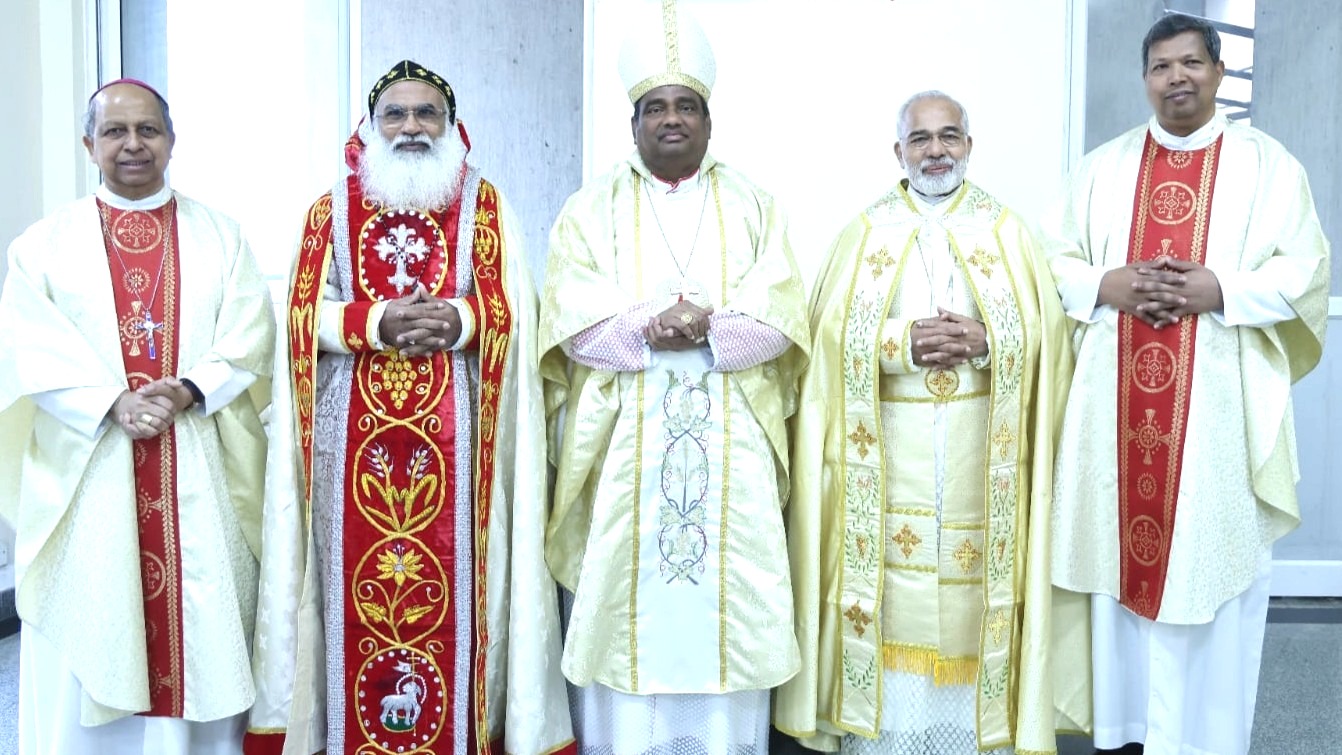
Bengaluru; February 2026: In a statement released at the end of its assembly in Bengaluru, the Catholic Bishops’ Conference of India (CBCI) expressed concern over rising inequality, polarisation, and “anxiety about identity and belonging”. The bishops while reiterating their trust in the Indian constitution, has urged Christians to bear “mature, hopeful, and credible public witness”. The CBCI added that, “Instead of being silenced or withdrawing from our mission”, Christians should be “inspiring hope and promoting unity”.
In their statement, the prelates said that “As many innocent individuals are incarcerated based on unfounded allegations of forceful religious conversions, we strongly demand the repealing of legislation which are inconsistent with religious freedom and the right to privacy”.
Citing Article 25 of the Indian constitution, they have stressed that “all persons are equally entitled to freedom of conscience and the right to freely profess, practice, and propagate religion”. As an example, they cite “Mahatma Gandhi whose entire life was for forming ‘an India in which the people shall feel that it is their country, in whose making they have an effective voice, an India in which there shall be no high class and low class of people’ (Young India, 10-9-31, p. 255)”.
Unfortunately, In India today, “we witness rising inequality, ecological degradation, misinformation, polarisation, and anxiety about identity and belonging. Whenever Constitutional rights are unjustly restricted, particularly concerning the poor, the marginalised, the Dalit and tribal people, it is important to advocate for the protection of fundamental rights for all individuals, regardless of caste, creed, and language”.
The prelates have further asserted that the “the denial of rights to Dalit Christians continues for decades as an indirect form of discrimination, despite numerous appeals for equality and justice”, while attacks against minority rights “weaken the democratic fabric of our society. While maintaining our commitment to eliminate any type of discrimination existing in the ecclesial communities based on caste or language, we urge the Government to ensure that no citizen is denied of fundamental rights of equality and freedom”.
As for Indian Christians, they are urged to persevere and “offer a mature, hopeful, and credible public witness. Each time our faith is questioned, or our Christian way of life is confronted, we are presented with a providential moment to deepen our relationship with Christ, who unfailingly grants us the grace needed to persevere (Cf. 2 Cor. 12:9). Instead of being silenced or withdrawing from our mission, we are urged to live our Christian identity with courage and conviction, so that the fragrance of Christ (Cf. 2 Cor. 2:15) may permeate every aspect of society, inspiring hope and promoting unity among all peoples”.
A truly Christian life, the message notes, inspires Christians to be law-abiding citizens, promoters of peace, and defenders of human rights. “The socially uplifting initiatives of the Church spring from our deep rootedness in Christ and our faithfulness to the Constitutional values. We encourage all the faithful to continue participating actively in nation-building, guided by truth, compassion, and moral courage”.
The CBCI’s statement also reaffirms the Indian Church’s special attention to young people, exposed to uncertainties related to unemployment, migration, digital vulnerability, and social pressures. “It has become the need of the hour that our youngsters, as exemplary Christians and as responsible citizens of India, actively engage in politics as a vocation to service”.
Looking at the commitment towards the downtrodden, the bishops cite Leo XIV’s apostolic exhortation Dilexi te, noting that “the forms of poverty also get diversified as plurality of deprivations, ‘where the lack of a voice is often more devastating than the lack of bread’. In light of this, “the Church’s moral credibility in society is inseparable from justice, transparency, accountability, and ethical governance within her own institutions”.
Lastly, “In a context of polarisation and mistrust, we maintain the Church’s calling to foster dialogue, reconciliation, and fraternity. The Christian faith has always inspired us to seek the way of forgiveness whenever we have been deprived of human dignity and rights. We take upon sustained inter-religious dialogue and civil-society engagement, standing in solidarity with all those who face injustice or exclusion, and working together for peace, social harmony, and the protection of human dignity”.
Team Maverick.


Museums will be named after India’s National Heroes, not invaders: Chief Minister
Grand museum named after Chhatrapati Shivaji Maharaj being constructed at a rapid pace: CM…
Museums will be named after India’s National Heroes, not invaders: Chief Minister
Grand museum named after Chhatrapati Shivaji Maharaj being constructed at a rapid pace: CM …