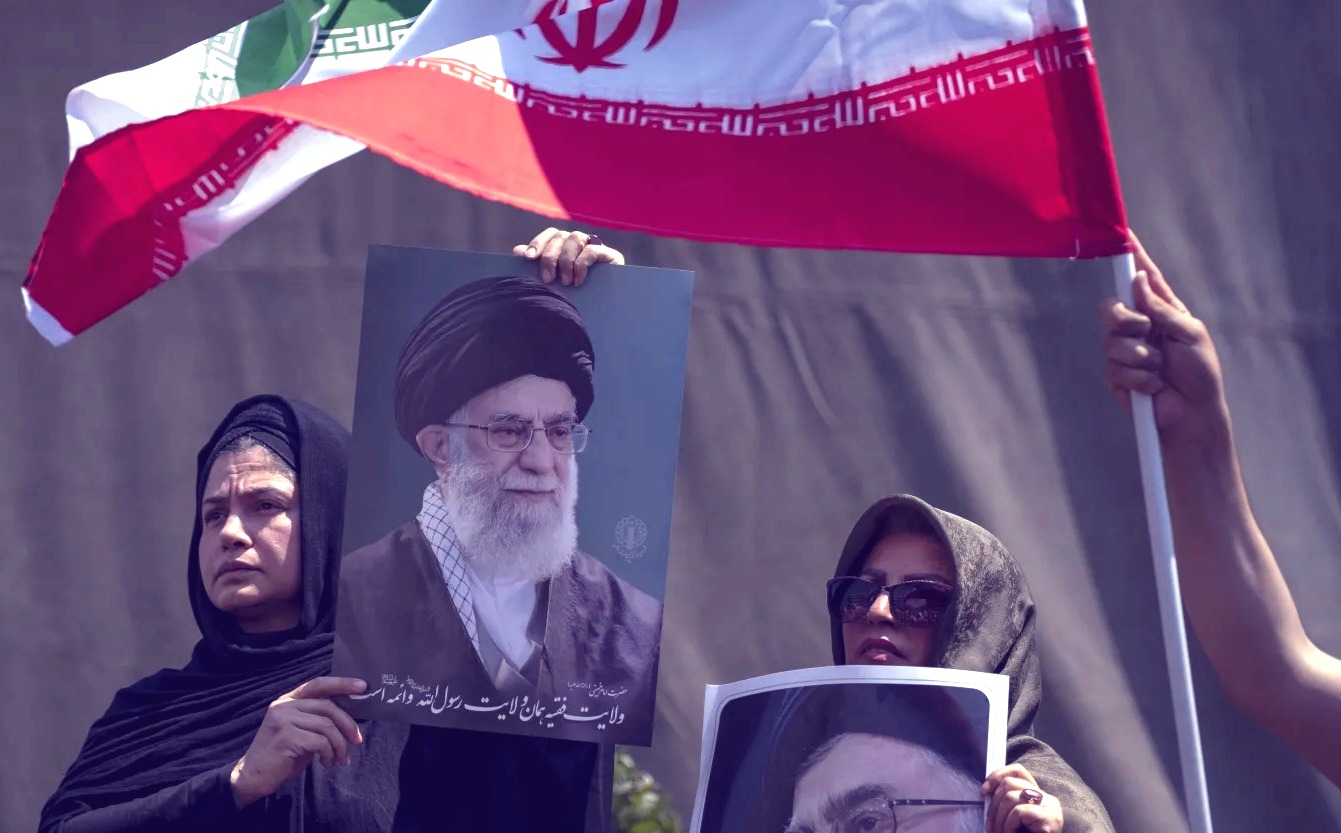
Iran Deters US Offers To Engage In Negotiations Over Ballistic Missile Program Amid Increasing US Threats.

Tehran; February 2026: Iranian Defence Council Secretary Ali Shamkhani told media outlets yesterday on 13th February that Iran’s missile capability is a “firmly established” element of Iran’s defence doctrine and part of its deterrence mechanism. Shamkhani have argued that Iran’s missile capabilities are thus included within Iran’s “defence red lines”, and are not open for negotiation. While further adding, Shamkhani had said that it is “natural” for the “fundamental defence components of states” to be outside the scope of political negotiations. Iran has also not offered concessions on its nuclear program that are close to the US demand of zero enrichment or even close to the restrictions placed on the program under the 2015 nuclear deal.
Iranian officials are refusing to negotiate limits to its ballistic missile program because the ballistic missile program forms an integral part of Iranian defence strategy. Any changes to this strategy would require a strategic rethink that would take months, if not years. Shamkhani’s remarks indicate that Iran is differentiating between negotiable issues related to the nuclear program and non-negotiable issues related to deterrence and Iran’s military capabilities, rather than signalling future flexibility on missiles after a possible nuclear deal. Iran considers its missile program as its main form of deterrence because it allows Iran to impose costs on its adversaries and compensates for Iran’s weak conventional air capabilities. Former Islamic Revolutionary Guard Corps (IRGC) Commander Mohammad Ali Jafari had argued in October 2025 that Iran deliberately prioritised missile and drone development over its air and ground forces to counter the superior capabilities of the United States and Israel, which underscores the reality that if Iran chose to limit its missiles, it would be agreeing to defang itself.
Iran’s continued refusal to negotiate over its ballistic missile program comes after US President Donald Trump warned on February 12th that Iran has roughly one month to reach a deal. Trump added that the United States “has to make a deal with Iran” or it will be “very traumatic”, adding that Iran will face “a very difficult time” if the deal is not fair. Trump told American media reporters on February 10th that an acceptable deal with Iran would mean “no nuclear weapons, no missiles”. Trump also decided to deploy the USS Gerald R. Ford carrier strike group to the Middle East after he met with Israeli Prime Minister Benjamin Netanyahu on February 11.
The United States smuggled 6,000 Starlink terminals into Iran during the recent protest wave in order to help protesters “circumvent internet shut-offs” and overthrow the regime, according to US officials speaking to media outlets. The regime imposed a nationwide internet shutdown on January 8, likely to inhibit protesters’ ability to coordinate gatherings and conceal the regime’s brutal crackdown. Starlink terminals allowed Iranian protesters to maintain internet access in order to communicate with each other and the international community. Iranian doctors used Starlink, to apprise the media outlets on January 17th that the regime‘s crackdown had killed 16,500 protesters and injured around 330,000 protesters. Iranian security forces launched a massive operation on January 12, 2026, to search homes in several cities across Iran and seize Starlink terminal dishes, which indicates the degree of concern the regime has about the use of Starlink.
The regime has taken extreme steps to stop protesters’ use of Starlink, including prior to this recent protest wave. Starlink enabled protesters to connect to the outside world when used during the Masha Amini protests, and protesters during the Mahsa Amini protest wave also demonstrated a significant degree of organisation. The Iranian parliament passed a law in late June 2025, after the Israel-Iran War–that criminalised the possession, use, and distribution of Starlink devices. The regime’s threats and efforts to hinder Starlink use indicate that the regime is greatly concerned with the ability of Iranians to coordinate protests and expose regime brutality, as well as the regime’s desire to maintain the capability of imposing similar nationwide internet shutdowns in the future.
Team Maverick.







India Beat Pakistan 3-1 to Clinch FIH Youth Hockey5s Asian Championship Title
Muscat, July 2026: India’s Sub-Junior men’s hockey team delivered a commanding performance…

India Beat Pakistan 3-1 to Clinch FIH Youth Hockey5s Asian Championship Title
Muscat, July 2026: India’s Sub-Junior men’s hockey team delivered a commanding performance to defeat …