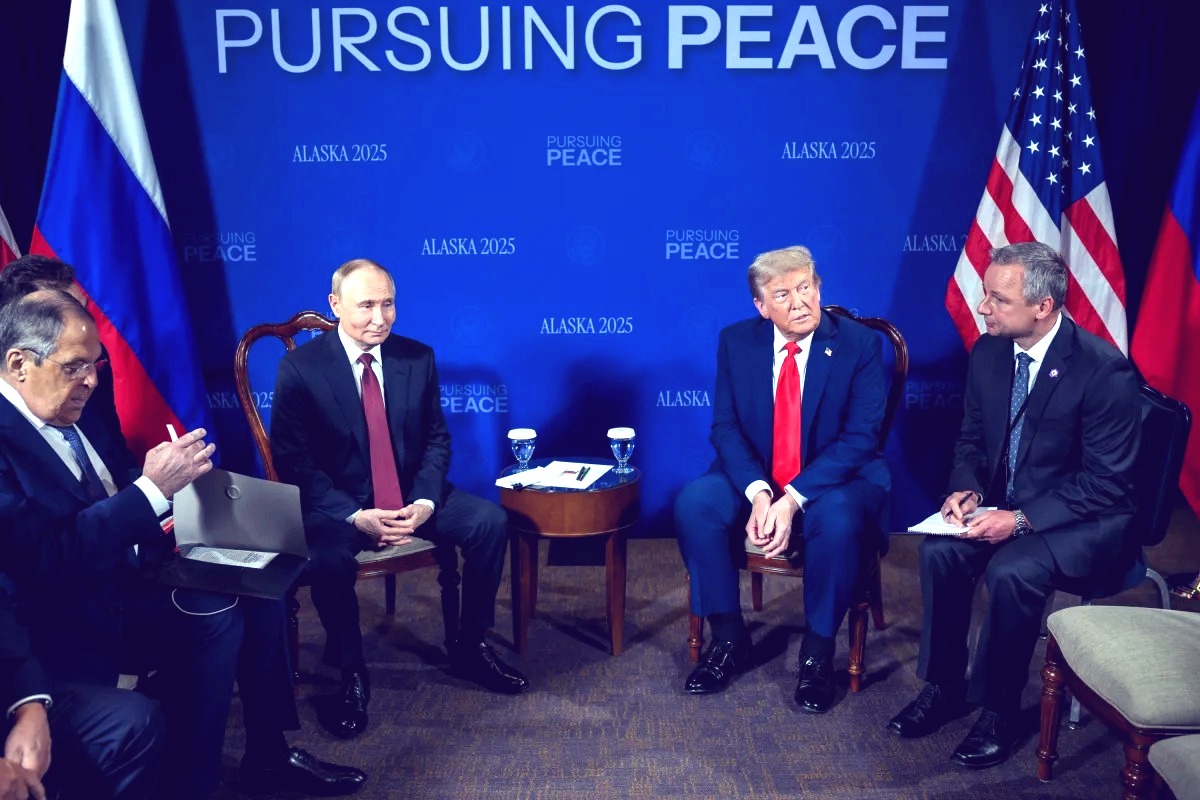
A Clear Signal That Donald Trump Is Submitting To Russia’s Demanded Sequences.

Moscow; February 2026: The United States will not finalise a security agreement with Ukraine, until Ukraine and Russia reach a peace agreement, and swaying from their earlier standpoint the United States is pushing Ukraine to make concessions in order to conclude a peace agreement by Summer 2026.
Russia has continuously attempted to convince the Trump administration that territory is the only significant issue left unresolved in peace negotiations, particularly Russia’s claim to the remainder of Donetsk Oblast and in southern Ukraine, and has attempted to portray Ukraine as the intransigent negotiating party for refusing to cede strategically important territory that Russian forces have been unable to capture through force.
Ukraine, however, has indicated multiple times that it is willing to consider withdrawing its forces from the remainder of Donetsk Oblast (although not to recognise Russian control over the parts of the oblast it does not currently occupy) in exchange for meaningful Western security guarantees, a significant Ukrainian concession. As evitable, Russia has refused to compromise on its demands for additional territory beyond the current line of control in Donetsk Oblast. Russia has been publicly focusing on territory in part to distract from its own rejection of any meaningful Western security guarantees for Ukraine, a refusal that senior Kremlin officials have constantly reiterated around the recent trilateral US-Ukrainian-Russian negotiations in Abu Dhabi, United Arab Emirates (UAE).
Kremlin officials have consistently objected to Western security guarantees for Ukraine, particularly the deployment of any Western troops or military assets to Ukraine as part of a peacekeeping contingent or ceasefire monitoring mechanism in continuing to demonstrate that territorial discussions are not the only significant issue left unresolved in negotiations and that Russia, not Ukraine, remains inflexible in its demands. Russia is rejecting the guarantees Ukraine requires to be able to safely conclude the war and make any territorial concessions, should Ukraine choose to do so. Russia is unlikely to accept any meaningful security guarantees for Ukraine even if the United States and Ukraine concede to Russia’s territorial demands, however. The sequence of agreements that Russia is insisting on and that the United States has reportedly accepted thus entails Ukrainian surrender of critical territory with no assurance of receiving necessary guarantees against future Russian aggression.
Meaningful security guarantees are crucial to any peace agreement that allows Russia to occupy parts of Ukraine, especially if Ukraine withdraws from territory, it currently holds. Ukraine has repeatedly offered to freeze the frontline as a basis for territorial negotiations, even as Russian President Vladimir Putin continues to demand additional territory that Russian forces have been unable to occupy in over 10 years of conflict and nearly four years of full-scale war.
A Ukrainian withdrawal from the remainder of unoccupied Donetsk Oblast would have Ukraine cede its Fortress Belt, the fortified defensive line in Donetsk Oblast that has served as the backbone of the Ukrainian defences in the oblast since 2014.
While, Russia has spent years attempting to seize the Fortress Belt militarily, and Russian forces could take at least two to three more years to seize the Fortress Belt based on their rate of advance as of November 2025, which has slowed in the first month of 2026. A Ukrainian concession of its most valuable defence line to Russia would provide Russia with more advantageous positions to renew aggression against southwestern and central Ukraine in the future while depriving Ukraine of extensive fortified positions it would need to defend against this aggression.
A peace agreement acceptable to Russia would certainly include territorial stipulations given the current Russian demands, and the reported US refusal to conclude a security agreement with Ukraine before Ukraine agrees to such stipulations means that the territorial stipulations and any Ukrainian withdrawals would come into effect before US-Ukrainian security guarantees are in place and without any guarantee that Russia would accept meaningful guarantees. Ukraine would therefore likely have to conduct a withdrawal without these protections amid the threat of a renewed Russian effort. This sequencing of agreements runs the high risk of leaving Ukraine open to rapidly renewed Russian attack with no assurance of US or other partner military support to deter or respond to such an attack.
Putin’s rejection of meaningful Western security guarantees for Ukraine is a greater impediment to a prospective peace deal than Ukraine’s position on ceding its territories. Russia has continuously attempted to portray Ukraine as the main impediment to a peace in Ukraine to disguise Russia’s own refusal to make concessions and participate in good-faith negotiations. Russia has continuously stalled and delayed peace negotiations and doubled down on accomplishing Putin’s original war aims. These aims include Ukraine’s complete withdrawal from all of Luhansk, Donetsk, Zaporizhia, and Kherson oblasts; Ukraine’s abandonment of its NATO membership aspirations and commitment to neutrality; Ukraine’s demilitarisation (the Russian demand for limits on the Ukrainian military such that Ukraine cannot defend itself), Ukraine’s de-Nazification (the Russian demand for the replacement of the current Ukrainian government with a pro-Russian puppet government), international recognition of Russia’s illegal annexations of the four Ukrainian oblasts and Crimea in international agreements; and the lifting of all Western sanctions against Russia.
Meanwhile, Ukraine has offered significant concessions to some Russian demands in pursuit of peace, including ceding territory, changing Ukrainian law, and holding elections in wartime, as long as Ukraine receives the security guarantees it needs to cede territories and hold elections safely. Russia is attempting to distract from the fact that its refusal to compromise is the main impediment to peace by falsely insisting that Ukraine’s refusal to make territorial concessions without security guarantees is the one and only impediment to peace, therefore deflecting US pressure from Russia to Ukraine.
Russia likely sees an opportunity to manipulate the US-led negotiations process into another means through which Russia can achieve its unchanging military and political objectives, which it has failed to achieve in nearly four years of war. Russia’s demand that Ukraine withdraw from the remainder of Donetsk Oblast without preconditions and Russia’s rejection of a ceasefire to conduct negotiations are further evidence that Russia will accept nothing short of its full war demands. Russia has continuously doubled down on its pre-war demands, which extend beyond Ukraine and include demands of NATO, and has indicated that it will seek to achieve these goals militarily if it cannot achieve them diplomatically, alongwith pursuing a balancing act between posturing strength to its populace and allies while engaging the United States in negotiations enough to avoid additional US pressure while continuing to achieve its military and political objectives in Ukraine.
Russian President Vladimir Putin’s unwavering determination to conquer more Ukrainian territory and gain full political control over Ukraine is severely degrading Russia’s military and economy at the cost of the Russian population, and Russia will increasingly have to reckon with this degradation in the coming year. Putin and other officials are engaged in a cognitive warfare effort that aims to portray Ukrainian defences as on the brink of imminent collapse and a Russian victory as inevitable in an attempt to push Ukraine and the West to capitulate to Russia’s demands now before Ukraine’s battlefield situation worsens.
Russia have started feeling the effects of four years of attritional war, however, suffering significant material, manpower, and economic challenges that Putin’s commitment to the war is only exacerbating. The Russian rate of advance is constrained to a footpace at its fastest, and costs disproportionately high infantry casualties relative to Russia’s marginal rate of advance. Russian force generation apparatus has started showing signs of strain as it has had to meet Russia’s replacement rate, struggling to sustain high payments to recruits and to recruit from its existing manpower pools, forcing Russia to target new demographics, including students. Putin’s commitment to his war aims is causing and exacerbating high losses on the battlefield, labour shortages, and economic problems that will likely only grow and have disproportionate effects on the civilian populace.
The Russian Central Bank in a bid to arrest the economic slug lowered its key interest rate for the first time in 2026 and fifth time in the last 12 months, likely in an attempt to increase capital available for the Russian defence industrial base (DIB) and maintain the facade of domestic economic stability.
The Russian Central Bank announced on 13th February that it lowered its key interest rate from 16% to 15.5%, while claiming that Russian unemployment is at a historical low and that wage growth is outpacing productivity growth. Russia’s extremely low unemployment rate reflects the fact that Russia is experiencing labour shortages, however, and is likely causing wage inflation in the civilian and defence sectors, contributing to overall inflation.
Russian Central Bank Chairperson Elvira Nabiullina acknowledged on February 13th that inflation accelerated in January 2026 but claimed that this was a “one-off” and that Russia passed the peak of inflationary pressure between December 2025 and January 2026. The Russian government has struggled to finance its DIB amidst heavy Western sanctions and restrictions and has introduced a series of measures to increase the capital available to the Russian DIB, including through the Industrial Development Fund, off-budget subsidies, and policies strongarming banks into providing preferential lending to defence industrial enterprises.
The Central Bank lowered its key interest rate four times between June and October 2025 from an initial rate of 21% and likely lowered it again on February 13, 2026 to make more capital available to the Russian DIB and to lower the price of borrowing money for DIB producers, as Russia struggles with liquidity problems due to its unsustainable wartime spending. Furthermore, the Central Bank stated on 13th February, that it intends to lower the key rate to between 13.5% and 14.5% in 2026, likely in order to maintain the facade of economic stability.
Russia is incurring high levels of external debt and has gradually depleted its liquid reserves to fund its war in Ukraine, ignoring the long-term economic implications of Russia’s economic policies. The Russian Ministry of Finance claimed on February 13 that the Russian government’s external debt (debt owed to nonresident debtors) exceeded $60 billion for the first time since 2006. Russian outlet RBK reported that the Russian Central Bank estimates that Russia’s total external debt, including government and private debt, is roughly $319.8 billion as of January 01, 2026, a $30 billion (10%) increase from January 1, 2025.
Moreover, Russia has steadily depleted its sovereign wealth fund’s liquid reserves in order to fund the war and has had to resort to selling its physical gold reserves in November 2025 due to unsustainable spending. Russia also raised its value-added tax (VAT) from 20% to 22% as of January 1, 2026, in an attempt to buttress federal budget deficits from unsustainably high defence spending, placing the burden of Putin’s costly war in Ukraine directly on the Russian population. Putin’s economic policies demonstrate that the Russian economy is not as resilient to Western sanctions, monetary constraints, and the cost of the war effort as Russia is attempting to project and is therefore vulnerable to increased Western pressure.
Ukraine’s European allies continue to provide military aid to Ukraine through the Ramstein format, including via the purchase of US-produced weapons. Ukrainian Defence Minister Mykhailo Fedorov announced on February 13th that Ukraine’s Western partners will provide Ukraine with a series of aid packages totaling $38 billion that will fund drones, air defence, artillery, and other military assistance in 2026.
Fedorov reported that over $6 billion is earmarked for specific military assistance, including over $2.5 billion for Ukrainian drones, nearly $2 billion for air defence, and more than $500 million for the purchase of US weapons through the Prioritized Ukraine Requirements List (PURL) initiative that funds NATO states’ purchases of US-made weapons for Ukraine.
As reported by Maverick News, the Norwegian Ministry of Defence (MoD) announced on February 13 that Norway and France signed a new agreement to provide Ukraine with surveillance, situational awareness, and air-to ground capabilities, the first stage of which includes a Norwegian loan of about 365 million euros (about $433 million) and a French loan of 260 million euros (about $309 million) for procuring French-made guided aerial bombs for Ukraine.
Similarly, as reported by Maverick News, Swedish Defence Minister Pål Jonson stated on February 13 that the EU is providing Ukraine with a loan of 90 billion euros (roughly $106.8 billion) to purchase Swedish Gripen fighter jets and unspecified air defences.
German Defence Minister Boris Pistorius stated on February 12 that Germany will supply Ukraine with five additional PAC-3 Patriot air defence interceptor missiles if other partner countries agree to supply 30 PAC-3 interceptors. Fedorov’s $38 billion figure includes aid packages from the United Kingdom and the Netherlands that were reported on February 12.
Team Maverick.
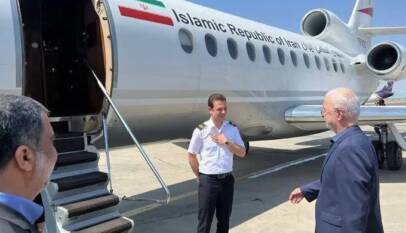
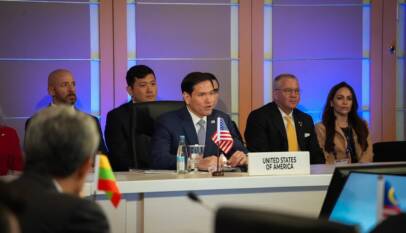



US Says Naval Blockade on Iran Remains in Force, Multiple Commercial Vessels Intercepted
Washington, July 2026: The United States has reaffirmed that its naval blockade against Ir…

US Says Naval Blockade on Iran Remains in Force, Multiple Commercial Vessels Intercepted
Washington, July 2026: The United States has reaffirmed that its naval blockade against Iran …