US Signals Naval Escorts in Strait of Hormuz as Global Efforts Intensify to Secure Energy Routes

Washington, March 2026 : The United States has indicated it is fully prepared to deploy naval escorts for commercial vessels navigating the strategically vital Strait of Hormuz as tensions in the Middle East continue to rise, raising concerns over the stability of global energy supply routes.
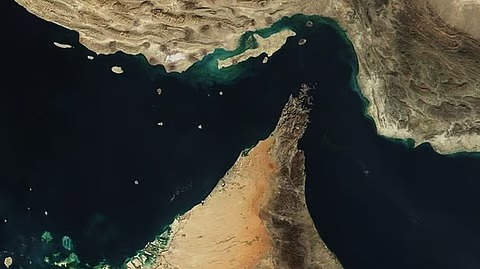
The narrow waterway, located between Iran and Oman, is one of the most critical maritime chokepoints in the world, handling a significant portion of global oil and gas shipments. Any disruption to traffic through the strait has the potential to impact international energy markets and trade flows.
Speaking on the matter, White House Deputy Press Secretary Anna Kelly said the US administration remains ready to act if required to ensure safe navigation for commercial vessels.
“President Donald Trump is fully prepared to provide US Navy escorts through the Strait of Hormuz if he deems it necessary. Our military has destroyed well over 20 inactive mine-laying boats with more to come,” Kelly said in a statement.
Her remarks come as Washington evaluates additional measures to strengthen maritime security in the region amid recent attacks on vessels and heightened military exchanges.
US Treasury Secretary Scott Bessent also suggested that the US Navy could begin escorting ships through the strait once conditions allow safe passage. He indicated that such operations could involve cooperation with international partners to safeguard the crucial shipping lane.
“It is my belief that as soon as it is militarily possible, the US Navy, perhaps with an international coalition, will be escorting vessels through,” Bessent said during a media interaction, adding that contingency planning had already been underway.
According to officials, scenario analysis and operational planning for maritime security have been conducted for months in anticipation of possible disruptions in the region.
Shipping activity through the Strait of Hormuz has slowed significantly following recent attacks on vessels in the Gulf. In one incident reported by maritime authorities, a cargo ship was struck by an unidentified projectile roughly 50 nautical miles northwest of Dubai, triggering a fire on board and forcing the crew to evacuate.
The United Kingdom Maritime Trade Operations centre confirmed that all crew members were safe and that investigations into the incident were ongoing. Authorities have since advised ships operating in the area to remain vigilant and report any suspicious activity.
The developments have drawn attention from several countries that depend on energy shipments passing through the waterway, including India.
Prime Minister Narendra Modi recently spoke with Iranian President Masoud Pezeshkian to discuss the evolving situation and underline India’s concerns regarding regional stability.
In a post on social media, Modi said he expressed deep concern over the escalation of tensions, the loss of civilian lives, and damage to infrastructure in the region.
“The safety and security of Indian nationals, along with the need for unhindered transit of goods and energy, remain India’s top priorities,” the Prime Minister said, reiterating India’s call for dialogue and diplomatic engagement to address the crisis.
Indian officials noted that the conversation marked the first direct contact between the two leaders since tensions intensified last month.
New Delhi has also stepped up diplomatic outreach across West Asia. In recent days, PM Modi has held discussions with leaders from several regional countries, including Oman, Kuwait, Bahrain, Saudi Arabia, the United Arab Emirates, Jordan, Israel, and Qatar.
Meanwhile, India’s External Affairs Minister Subrahmanyam Jaishankar has held multiple discussions with Iranian Foreign Minister Abbas Araghchi regarding maritime safety and regional stability.
According to External Affairs Ministry spokesperson Randhir Jaiswal, the two leaders have spoken three times in recent days, with the latest conversation focusing on shipping security and India’s energy interests.
As geopolitical tensions continue to evolve, global powers are increasingly working to ensure the security of vital maritime routes while encouraging diplomatic efforts to restore stability in the region.
(The content of this article is sourced from a news agency and has not been edited by the Mavericknews30 team.)






Netanyahu Meets Trump at White House for Eighth Bilateral Talks Amid Regional Tensions
Jerusalem/Washington, July 2026 : Israeli Prime Minister Benjamin Netanyahu arrived at the…
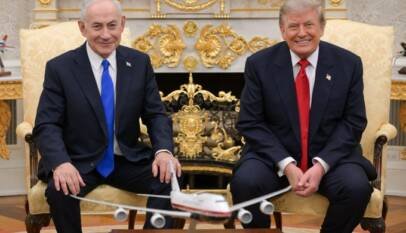
Netanyahu Meets Trump at White House for Eighth Bilateral Talks Amid Regional Tensions
Jerusalem/Washington, July 2026 : Israeli Prime Minister Benjamin Netanyahu arrived at the White House …