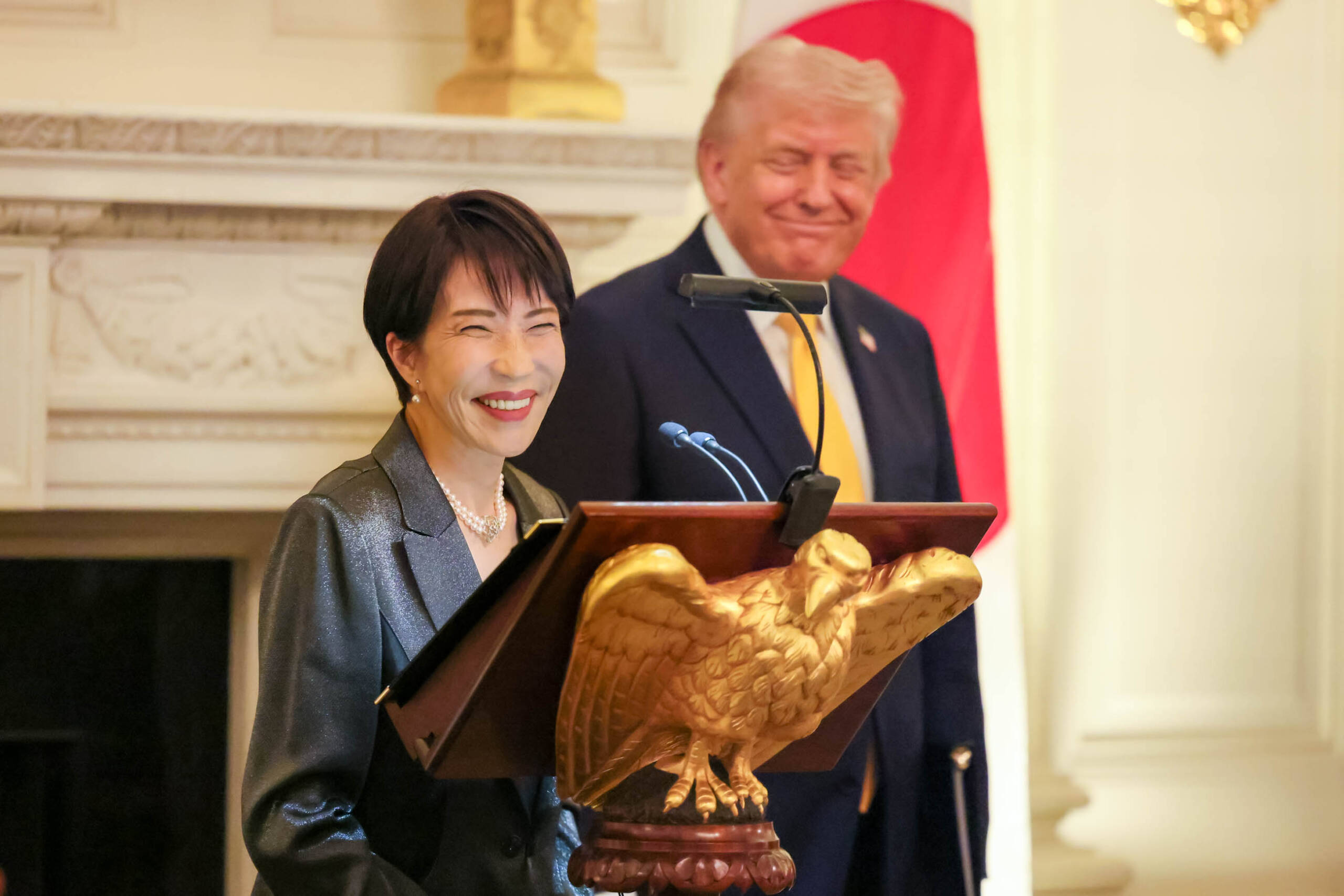
Trump–Takaichi Meeting Showcases Strong US–Japan Ties Amid Global Tensions

Washington, March 2026 : US President Donald Trump and Japanese Prime Minister Sanae Takaichi concluded a high-profile day of engagements at the White House with a carefully choreographed display of warmth and strategic alignment, underscoring the importance of the US–Japan alliance at a time of rising global uncertainty.
From their initial interaction in the Oval Office to a formal dinner in the State Dining Room, the visit blended diplomatic symbolism with substantive discussions on security, trade, and global stability. Against the backdrop of escalating tensions in the Middle East and concerns over the global economy, both leaders projected a strong sense of partnership and shared purpose.
Trump repeatedly praised Takaichi, calling her “a great friend and partner” and commending her recent electoral victory. He emphasised the enduring strength of bilateral ties, highlighting cooperation across sectors such as energy, semiconductors, pharmaceuticals, and shipbuilding. Referring to a recent trade agreement, Trump said it would deepen collaboration between the two nations and reinforce economic resilience.
Takaichi, in turn, offered unusually direct personal support, stating that she believed Trump had the ability to help achieve global peace. Her remarks reflected both a diplomatic gesture and a recognition of Washington’s central role in managing current geopolitical crises.
The Oval Office meeting quickly moved beyond pleasantries to pressing global issues. Both leaders discussed the conflict involving Iran, the strategic importance of the Strait of Hormuz, and broader concerns about China’s role in the region. Trump reiterated his expectation that allies, including Japan, should play a more active role in safeguarding shared interests, particularly in securing vital maritime routes.
Takaichi acknowledged the severity of the global security environment, warning that the ongoing crisis in the Middle East could significantly impact the global economy. She said Japan was closely monitoring developments and had come prepared with proposals to stabilise global energy markets. As a country heavily dependent on Middle Eastern oil, Japan views the uninterrupted functioning of the Strait of Hormuz as critical to its economic security.
On Iran, Takaichi adopted a firm stance, asserting that the country must not be allowed to develop nuclear weapons. She also condemned attacks affecting regional stability and energy infrastructure, underlining the broader implications for international markets.
Beyond immediate concerns, the leaders explored avenues for long-term cooperation. Takaichi indicated that Japan and the United States would work together to expand energy production and strengthen supply chains. She also highlighted discussions on rare earth minerals, including potential collaboration on marine resources near Minamitorishima, as well as initiatives to enhance economic security.
Security cooperation was another key focus. Both sides reaffirmed their commitment to strengthening defence ties, including joint development and production of advanced military systems. They also discussed coordination on regional challenges involving China and North Korea, reiterating their shared vision of a “Free and Open Indo-Pacific.”
The evening state dinner added a layer of symbolic diplomacy to the visit. Takaichi congratulated the United States ahead of its 250th anniversary and announced Japan’s gift of 250 additional cherry blossom trees, reinforcing a long-standing symbol of friendship between the two nations. She also shared a light-hearted moment by wishing Trump’s son Barron a happy birthday, drawing laughter from attendees.
Trump, in his remarks, described the cherry blossoms as a “living symbol” of the enduring bond between the United States and Japan. He again praised Takaichi, calling her “a spectacular woman” and expressing appreciation for the strong partnership between the two countries.
Takaichi concluded her address with a phrase associated with former Japanese Prime Minister Shinzo Abe, declaring, “Japan is back,” signalling confidence in her country’s evolving global role.
The visit highlighted the central role of the US–Japan alliance in maintaining stability in the Indo-Pacific region. Built over decades of close cooperation, the partnership has expanded beyond defence to include technology, trade, and energy security.
For the broader region, including countries like India, the meeting signalled a deeper alignment between Washington and Tokyo on critical issues such as maritime security, energy resilience, and supply chain diversification. As geopolitical challenges intensify, the strengthened US–Japan partnership is likely to play a pivotal role in shaping the regional and global order.
(The content of this article is sourced from a news agency and has not been edited by the Mavericknews30 team.)




BJP Workers Are Full-Time Politicians, Rahul Gandhi Is Part-Time: Nitin Nabin in Telangana
Hyderabad, June 2026 : Bharatiya Janata Party (BJP) national president Nitin Nabin on Mond…
BJP Workers Are Full-Time Politicians, Rahul Gandhi Is Part-Time: Nitin Nabin in Telangana
Hyderabad, June 2026 : Bharatiya Janata Party (BJP) national president Nitin Nabin on Monday …