From Waters to Wings: Redefining Fish Transport from Catch to Market through Aquacopter Innovation

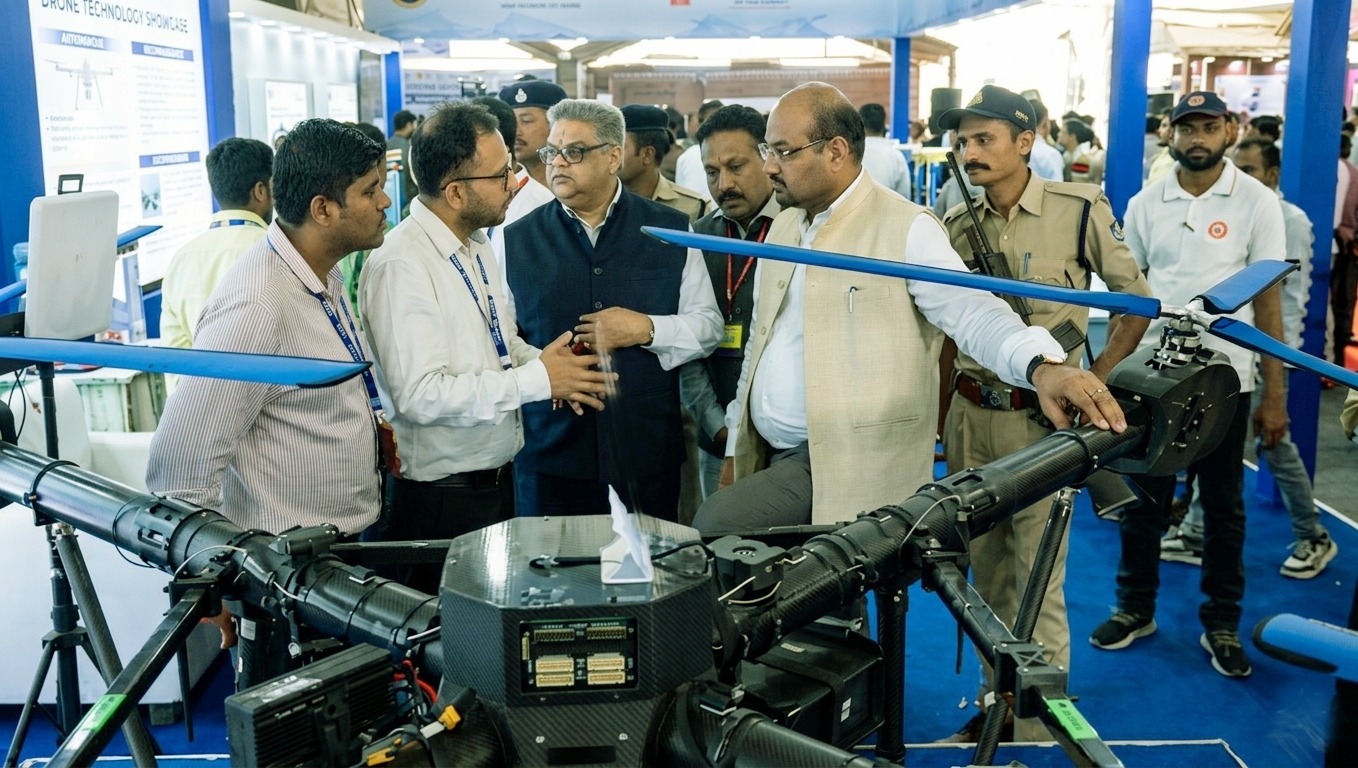
April 2026 : At the grand stage of the Unnat Krishi Mahotsav 2026, held in Raisen, Madhya Pradesh from April 11–13, 2026, a quiet yet powerful transformation in India’s fisheries sector captured national attention. Amidst vibrant exhibitions and farmer interactions, one innovation emerged as a true showstopper—the heavy payload fish transport drone, redefining how fish move from remote waters to markets.
Developed by the ICAR–Central Inland Fisheries Research Institute (ICAR-CIFRI), the Aquacopter addresses one of the most persistent challenges in inland fisheries: transporting fresh catch from remote water bodies to markets efficiently. Across India, fish landing centres are often located in geographically isolated delta regions and reservoirs, where conventional transport is slow, labour-intensive, and frequently results in significant post-harvest losses.
The live demonstration during the Mahotsav drew keen interest from farmers, policymakers, and dignitaries alike. The event was inaugurated by Hon’ble Union Minister Shri Shivraj Singh Chouhan ji, who personally visited the exhibit and lauded the innovation for its potential to address longstanding challenges in fish transportation. The drone also attracted attention from national Science Leaders Dr. Mangi Lal Jat, Hon’ble Secretary, DARE & DG, ICAR and others.
Dr. Pradip Dey, Director of ICAR-CIFRI, emphasized the broader implications of the technology stating “Our heavy payload Aquacopter drone is not merely an innovation—it is a transformative catalyst for the blue economy in inland fisheries. By enabling rapid, low-stress transport from remote water bodies to markets, it significantly reduces post-harvest losses, preserves fish quality, and enhances farmers’ incomes. This marks a decisive stride toward a smarter, more sustainable, and future-ready fisheries sector. Its success stands as a powerful testament to the synergy between scientific ingenuity and enabling policy support in advancing self-reliant rural economies.”
This is where innovation took flight.
With the capacity to carry up to 70 kg of fish payload and cover distances of up to 5 km, the drone demonstrated its potential to bridge these logistical gaps. Its ability to operate with minimal human intervention and execute efficient, point-to-point delivery—even with planned battery halts—signals a new era of smart aquaculture logistics. Supported by National Fisheries Development Board under the Department of Fisheries, this initiative stands as a model of technology-driven transformation.
With participation of thousands of farmers across India, the Mahotsav became a platform not just for showcasing innovation, but for inspiring adoption. Farmers witnessed firsthand how drones could ensure faster transport, reduced post-harvest losses, better quality retention, and improved market prices.
This pilot initiative is more than a technological advancement—it is a lifeline for remote fishers, enabling them to connect efficiently with markets and enhance their income. By reducing delays and handling stress on live fish, the drone ensures freshness and higher value realization, directly impacting livelihoods.
As India moves toward sustainable and technology-enabled agriculture, such innovations are set to play a transformative role. The success of the Aquacopter drone at Unnat Krishi Mahotsav 2026 stands as a compelling testament: when science meets grassroots challenges, the results can truly take flight—uplifting an entire sector and empowering those who depend on it.




South Africa Midfielder Jayden Adams Dies at 25, Nation Mourns Rising Football Star
Johannesburg, July 2026 : South African football has been plunged into mourning following …

South Africa Midfielder Jayden Adams Dies at 25, Nation Mourns Rising Football Star
Johannesburg, July 2026 : South African football has been plunged into mourning following the …