US State Department Announces New Sanctions On Iran-China Oil Trade Beyond The Legal Framework Of Treasury Department.

Washington DC; May 2026: In a statement today (02nd May 2026 IST), the US Department of State said that the sanctions applied to “several entities, an individual, and a vessel involved in the trade of Iranian petroleum, petroleum products, and petrochemical products”. The sanctions targeted Qingdao Haiye Oil Terminal Co, Ltd, a China-based petroleum terminal operator that the State Department said “has imported tens of millions of barrels” of crude oil under unilateral US sanctions. “Haiye has enabled the flow of billions of dollars to Tehran that has relied on sophisticated evasion schemes, accepting cargo from vessels conducting illicit ship-to-ship transfers with sanctioned vessels”, the State Department said.
The spokesperson for the Chinese embassy in Washington, Liu Pengyu, told media reporters immediately thereafter that Beijing opposed “unilateral sanctions and long-arm jurisdiction that have no basis in international law”. The sanctions on Iran’s oil were applied by the US under Trump’s first administration. Historically, only sanctions imposed by the UN Security Council were considered binding on other UN member states under international law. The US has also imposed sanctions on Chinese oil refineries and a number of Hong Kong shipping companies it says are trading Iranian oil.
The Donals Trump administration is threatening to impose sanctions on individuals or entities that attempt to get through the Strait of Hormuz by paying the Iranian toll, which the Iranians are demanding for passage. This is a serious threat because, obviously, the Treasury Department does have the power to impose these sanctions on individuals or on entities.
What the US is suggesting is they form a consortium of shipping companies, essentially, called the Maritime Freedom Construct. Apparently, this is being set up by the State Department. It will be operated by the US Central Command (CENTCOM), and the idea is that ships wanting to get passage through the Strait of Hormuz liaise with the US Navy, get an escort through it, formalise it with the United States Navy, who would obviously vet each of these individual tankers before allowing them through.
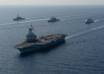
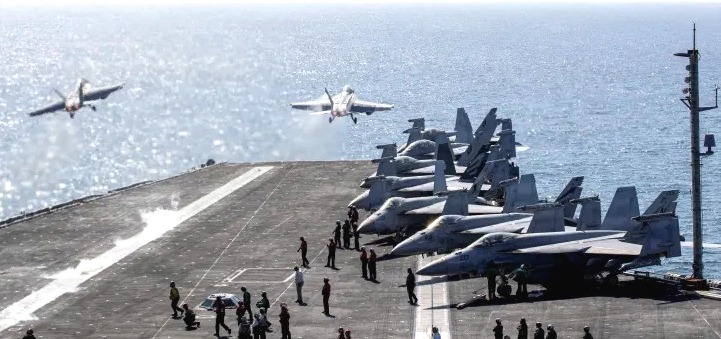
Meanwhile, the US Central Command, which is responsible for the war on Iran, says it has blocked 45 vessels attempting to breach its blockade of Iran’s ports, after it has imposed a blockade of Iranian Ports on 13th April 2026. “US forces continue to patrol international waters and enforce the ongoing naval blockade against Iran. As of now, 45 commercial vessels have been directed to turn around or return to port to ensure compliance”, CENTCOM said in a post on X.
In an official statement, The US Defence Department has estimated that Iran has been denied nearly $5bn in oil revenue since the blockade of the Gulf of Oman began on April 13. Since then, the US military has redirected more than 40 vessels carrying Iranian oil and other goods. Some 31 tankers laden with 53 million barrels of Iranian oil are now stuck in the Gulf, with a combined value of at least $4.8bn. 02 ships have been seized.
Unable to load oil onto new tankers as on-land storage facilities reach capacity, Iran has begun using older tankers as floating storage, while some are taking longer, costlier routes to deliver oil to China to avoid US interdiction.
Analysts warn Iran may be running out of options, as they (Iran) are several weeks, or perhaps as much as a month, away from running out of storage. Tanker tracker Samir Madani said Iranian tankers could eventually attempt a mass overnight “Great Escape” once storage near the Pakistani border builds up further. Acting Pentagon Press Secretary Joel Valdez said the blockade was “inflicting a devastating blow to the Iranian regime’s ability to fund terrorism and regional destabilisation”.
Team Maverick.






Baby Do Die Do Movie Review: Huma Qureshi Anchors a Stylish Neo-Noir That Turns Mumbai into Its Most Fascinating Character
Rating: ★★★☆☆ (3/5) Director: Nachiket SamantWriters: Nachiket Samant, Gaurav Sharma (Stor…

Baby Do Die Do Movie Review: Huma Qureshi Anchors a Stylish Neo-Noir That Turns Mumbai into Its Most Fascinating Character
Rating: ★★★☆☆ (3/5) Director: Nachiket SamantWriters: Nachiket Samant, Gaurav Sharma (Story: Jasmeet K. Reen, …