Bhabanipur Shocker: Mamata Loses to Suvendu Again as Bengal Politics Enters a New Era

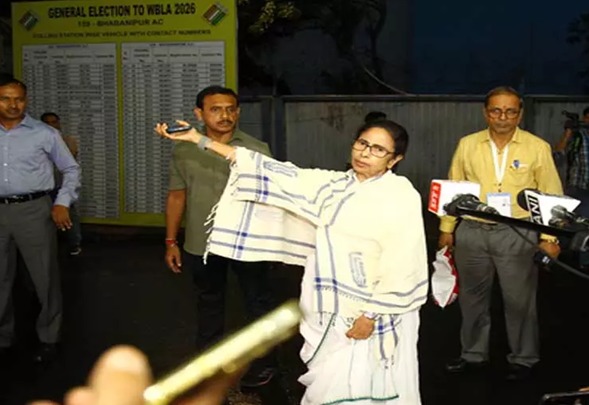
Kolkata, May 2026 : In a stunning political upset that could redefine West Bengal’s power structure, Chief Minister Mamata Banerjee has lost the high-profile Bhabanipur Assembly seat to her long-time rival Suvendu Adhikari of the Bharatiya Janata Party (BJP). Adhikari secured victory by a margin of 15,105 votes, marking his second consecutive electoral triumph over Banerjee after the closely watched Nandigram contest in 2021.
The defeat is politically significant not only because Bhabanipur has long been considered a bastion of the All India Trinamool Congress (TMC), but also because it symbolises a deeper shift in voter sentiment across the state. Banerjee had represented the constituency as an MLA and had returned to it after her 2021 loss in Nandigram, winning a by-election to retain her position as Chief Minister. This time, however, the electorate delivered a sharply different verdict.
Voting for Bhabanipur took place in the second phase on April 29, and the results announced on May 4 have once again thrust the constituency into the national spotlight. The outcome underscores a dramatic political turnaround in urban Kolkata, where the TMC had traditionally enjoyed strong support.
The rivalry between Banerjee and Adhikari has become one of the defining narratives of Bengal politics in recent years. Once a trusted aide and key strategist in Banerjee’s rise—particularly during the Singur and Nandigram movements—Adhikari’s departure from the TMC and his subsequent entry into the BJP reshaped the state’s political landscape. His back-to-back victories over Banerjee have cemented his reputation as a formidable challenger and earned him the “giant killer” tag among supporters.
Sources indicate that Mamata Banerjee is expected to address the media in a press conference in Kolkata, where she is likely to respond to the verdict and outline her party’s next steps. The press meet is being closely watched, as it may offer insights into the TMC’s strategy in the aftermath of a major electoral setback.
Bhabanipur itself has a rich and evolving political history. Established in 1951, the constituency initially saw dominance by the Congress before occasionally swinging towards Left parties. Over the decades, particularly after 2011, it became synonymous with the TMC’s rise under Banerjee’s leadership. The 2026 result, however, has broken that long-standing perception, indicating that even entrenched strongholds are no longer immune to political change.
With the BJP emerging as the dominant force in the state, attention has now shifted to the crucial question of leadership. Suvendu Adhikari is widely seen as a leading contender for the Chief Minister’s post, given his grassroots connect, organisational strength, and proven ability to challenge the TMC in its core areas. His political journey—from a key TMC insider to the BJP’s most prominent face in Bengal—adds to his credentials.
However, Adhikari is not the only name in contention. Dilip Ghosh, former state BJP president, is credited with expanding the party’s base and establishing it as a serious challenger in the 2021 elections. Samik Bhattacharya, the current state president, is regarded as a consensus-builder who has strengthened the party’s organisational structure.
Among women leaders, Agnimitra Paul, who retained her Asansol South seat, has gained prominence as a vocal and visible figure. Roopa Ganguly, a former Rajya Sabha MP with strong grassroots engagement, is also being discussed as a potential candidate, especially if the party opts for a woman Chief Minister. Additionally, Nisith Pramanik has emerged as another possible contender, reflecting the depth of leadership options within the BJP.
Ultimately, the decision on leadership will rest with the central command, particularly Prime Minister Narendra Modi and Union Home Minister Amit Shah, who are expected to play a decisive role in shaping the next government in West Bengal.
The Bhabanipur result is more than just a constituency-level upset—it signals a broader political churn in the state. It highlights shifting voter priorities, the erosion of traditional strongholds, and the emergence of a new competitive dynamic in Bengal politics. For the TMC, the loss raises questions about strategy and leadership going forward. For the BJP, it marks a potential breakthrough moment, bringing it closer than ever to forming a government in the state.
As West Bengal stands at this critical juncture, Mamata Banerjee’s defeat in Bhabanipur will likely be remembered as a turning point—one that could reshape the state’s political narrative for years to come.




Adani Group Invests ₹1.5 Lakh Crore in Record Year, Charts Infrastructure and AI-Led Growth Path
Ahmedabad, June 2026 : Adani Group Chairman Gautam Adani used the company’s Annual General…
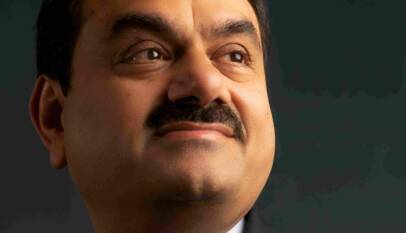
Adani Group Invests ₹1.5 Lakh Crore in Record Year, Charts Infrastructure and AI-Led Growth Path
Ahmedabad, June 2026 : Adani Group Chairman Gautam Adani used the company’s Annual General …