80 Days Into The Iran War; Donald Trump’s $40 Billion Hormuz Insurance Yet To Fetch A Buyer.

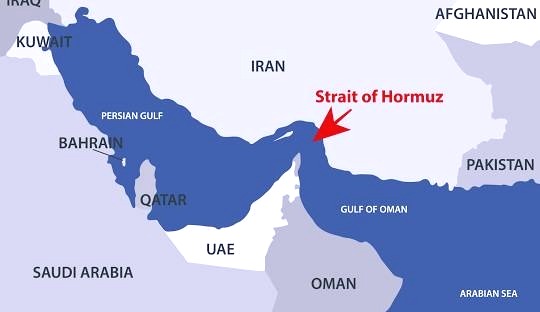
Washington DC; May 2026: When US and Israeli forces launched airstrikes against Iranian targets on February 28, 2026, the Strait of Hormuz, through which approximately 20 million barrels of oil flow each day, representing roughly 20% of global petroleum consumption, did not close because of mines or missiles alone. Within 48 hours of those initial strikes, war risk premiums surged fivefold, major marine insurers canceled existing coverage, and the Lloyd’s Market Association’s Joint War Committee redesignated the entire Arabian Gulf as a conflict zone. Tanker traffic collapsed by more than 80% before Iran’s physical blockade was even formally declared.
The narrative that took hold in the days that followed everywhere in financial markets, in the press, and apparently in the White House, was that insurers had abandoned the market. That marine war risk coverage had simply ceased to exist. That story, the professionals closest to the market say, was wrong. And it had a $40 billion consequence.
“The main takeaway here is that the reduced traffic going through the Strait has nothing to do with what insurance is available or not available. It’s purely just a captain or a shipowner not wanting to put their crew at risk”, said Steve Ogullukian, deputy global underwriting director and reinsurance director at the American P&I Club.
Howden Re data showed war risk pricing on Hormuz transits climbing from roughly 0.10–0.125% of vessel value before the conflict to around 2–3% by March 2026, which was much elevated. Capacity remained in the market. Insuring a $100 million tanker for a single Hormuz transit was running around $3 million in war risk premium. For a Very Large Crude Carrier with US nexus, Lloyd’s List was quoting between $10 million and $14 million per voyage. Those are eye-watering numbers. The Lloyd’s Market Association said so formally. Three weeks into the conflict, with the misconception still circulating, the LMA issued a market statement: “We are still seeing reports that suggest insurance coverage is cancelled or unaffordable and that this is the reason that vessels are not transiting the Strait of Hormuz. This is not accurate”, A survey of Lloyd’s marine war market participants found that 88% retained appetite to write hull war risks, and over 90% continued to offer cargo coverage.
By the time that statement was issued, the DFC program was already operational, a vague conception based on which a programme was designed to solve a problem the market said did not exist. The program contains a structural requirement that reveals its underlying logic. Coverage under the DFC facility is available only to vessels transiting under US naval escort. That convoy program has not materialised. Only 02 ships were guided through the strait in early May under the short-lived “Project Freedom” effort. No operation has followed at scale.
Chubb CEO Evan Greenberg made the program’s dependency explicit on the company’s April 22nd earnings call. The facility was designed not as a standalone commercial insurance product, but as part of a US-run convoy system. “The government wanted to support shipping through the Gulf with military convoys, but that is yet to occur”, Greenberg said.
The much hyped US Development Finance Corporation’s $40 billion maritime reinsurance program, announced by US President Donald Trump, and backed by Chubb, AIG, Berkshire Hathaway, Travelers, Liberty Mutual and Starr – as the mechanism that would restore energy flows through the Strait of Hormuz, has eventually fetched nil business. Not one dollar of coverage has been placed. Not one vessel has transited under its protection.
The reason, according to underwriters, brokers and risk professionals who work the marine war market every day, is that the program was built on a fundamental misreading of why commercial shipping stopped moving through the world’s most critical oil chokepoint. Washington concluded the problem was insurance availability. The market says the problem was, and, remains a war. The program’s failure to launch is, in one sense, the least of the industry’s concerns right now. The harder problems are accumulating for when the shooting stops.
As Insurance Business America has reported in its examination of the legal fault lines that will define thousands of Gulf insurance claims, the conflict has introduced a complication the marine war risk mechanism was not designed to handle: a conflict in which the United States has not formally declared war, in which official statements are carefully calibrated to avoid triggering certain legal thresholds, and in which the gap between what is happening on the water and what governments are willing to say is happening could determine the outcome of thousands of claims.
“We colloquially talk about it as a war, but from the United States’ official position, it’s not a war,” said Mahmoud Abuwasel, an international disputes partner at Wasel & Wasel. “That distinction matters because it directly affects whether war-risk provisions in insurance policies are triggered”.
The precedent is uncomfortable. During the Yugoslav conflict of the 1990s, insurers successfully argued before arbitration panels that the absence of a formal declaration of war was legally material — regardless of the scale or nature of the fighting. The policyholders lost.
Furthermore, the deeper issue exposed by the DFC program’s zero-dollar ledger is what happens to war risk capacity and pricing long after any ceasefire. The answer from underwriters is that the damage to actuarial models will outlast the conflict by years.
As Insurance Business America explored in its reporting on whether a ceasefire can actually reopen the insurance market, the structural reasons for caution are embedded in how war risk insurance works. Coverage must be renegotiated individually for each vessel, on a voyage-by-voyage basis, with fresh actuarial assessments made by each layer of the reinsurance chain. Capacity withdrawn at the treaty reinsurance level must be reinstated through negotiation, not by political announcement.
The war demonstrated, in ways that decades of theoretical concern had not, that the strait could be closed. That knowledge is now priced into every future actuarial model. War risk premiums in the Red Sea, it bears remembering, surged 20-fold during the Houthi crisis of 2023–25 and remained substantially elevated long after attacks declined. The Hormuz disruption is larger, more structurally significant, and will leave a deeper mark.
Team Maverick.






No compromise on security during the Kanwar Yatra, take strict action against those spreading rumours: CM Yogi
Chief Minister reviews preparations with officials of Meerut and Saharanpur divisions Issu…

No compromise on security during the Kanwar Yatra, take strict action against those spreading rumours: CM Yogi
Chief Minister reviews preparations with officials of Meerut and Saharanpur divisions Issues clear instructions …