Assam: Char-Chapori’s Have Strengthened The Assamese Linguistic Community Stirs Criticism.

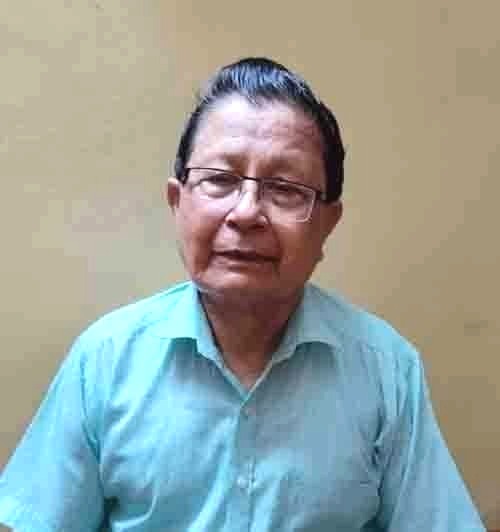
Guwahati; May 2026: Assam Sahitya Sabha President Basanta Kumar Goswami yesterday (18th May 2026) have commended while lauding the role of char-chapori inhabitants in preserving the Assamese language. Assamese-speaking Muslims from the char-chapori, or riverine, areas played a significant role in strengthening the Assamese linguistic community.
He said their continued identification as Assamese speakers in the census is crucial for safeguarding the language and cultural identity of the state. “If the Muslims of char-chapori areas do not support the Assamese language movement, Assamese people may one day become second-class citizens. We consider the people of the chars as Assamese and as sons of the soil. A large section of Assamese speakers today comes from these areas”, Goswami have said.
Goswami’s statement has triggered a major debate across Assam, drawing criticism and support from different sections of society. His remarks, however, sparked strong reactions from student bodies, literary figures and political leaders, many of whom accused him of making divisive comments by linking language identity with census politics.
AASU’s chief adviser Samujjal Bhattacharya said the organisation disagrees with Goswami’s comments relating to language and the census, though it agreed with his observation that all Muslims should not be branded as Bangladeshis. “Basanta Goswami said all Muslims are not Bangladeshis, and we agree with that. But the comments he made regarding language and the census are not acceptable to us. We will discuss the matter with the Assam Sahitya Sabha”, Bhattacharya said.
Echoing similar views, AASU president Utpal Sarma said the organisation fundamentally differs with Goswami’s position on Assamese language and cultural identity. “We differ with the Asam Sahitya Sabha President’s views regarding Assamese language and culture. His remarks are not acceptable to us and we will discuss the issue with the Sabha”, Sarma said.
The issue escalated further after scholar Gahan Mahanta launched a sharp attack on Goswami, questioning his understanding of Assam’s social and historical realities. “Basanta Goswami is a retired university professor and the president of Asam Sahitya Sabha, yet I doubt whether he understands Assamese history at all. Such statements are irresponsible and harmful. He should resign from the post immediately and apologise to the people of Assam”, Mahanta said.
Amidst criticisms from AASU, Goswami’s remarks found support from Mandia MLA Sherman Ali Ahmed, who described them as a long-overdue recognition of the Assamese identity of char-chapori Muslims. “I thank Basanta Goswami for his statement and request him to formally repeat it from the stage of Assam Sahitya Sabha. However, there is also doubt among people whether such statements are being made only because the census is approaching and later the same people will again be branded as Bangladeshis. Still, this recognition is long overdue for us”, Ahmed said.
Meanwhile, defending his position, Goswami had argued that many indigenous communities such as Bodos and Mishings often identify themselves through their own ethnic identities, while many Muslims from char areas continue to identify as Assamese speakers in official records and public life. The remarks have now opened a wider discussion in Assam over language identity, census politics and the role of different communities in shaping the state’s cultural and linguistic landscape.
A “Char” is a floating or shifting sandbar, while a “Chapori” refers to low-lying, flood-prone riverbanks. Both are constantly reshaped by the currents of the Brahmaputra and its tributaries. These regions are predominantly inhabited by Bengali-origin Muslims (often pejoratively referred to as ‘Miyas’), alongside other riverine communities who historically migrated to work in agriculture.
The riverine areas (island) of the river Brahmaputra, locally known as “Char/ Chapori” cover about 3.60 lakhs hectares of land and population of approx. 24.90 lakhs (as per Socio Economic Survey 2002-03). The chars follow a peculiar pattern of migration. They are subjected to erosion on their upstream and deposition on the downstream, due to which they migrate downstream. This affects the geometry and location of the chars during floods almost every year. These remote areas have not seen the fruits of development in any significant manner, because of limited accessibility and consequent administrative and other constraints. While certain districts of the state have been declared as “Backward” for the purpose of providing special incentives to attract industries, but in these districts, there was no systematic plan to remove backwardness to bring them at par with the rest of state. The physical, sociological and institutional constraints on development of Char Areas are many and complex. Such as virtual absence of all-weather communication with the main banks, reliable means of intra and inter char mobility, inadequate growth of transport and basic infrastructure like surface roads, health and drinking water, delivery systems for farm inputs, marketing, agro-services electricity and education.
80% of the Char population lives below poverty line. The basic objective of the Char development programme is to augment development by adopting some special schemes to be implemented directly by the Char Areas Development, Assam during the Twelve Plan. This would be achieved by a set of inter related scheme of raising procreativity of crops, self-employment and incentive for Cottage Industries and Education for Char Areas with focus on those below the poverty line for generation of additional employment opportunities and economic improvement.
The problems in the Char Areas are unique in nature, due to constant threat from flood and erosion during the rainy season. No mega developmental schemes can be taken in these areas. The land mass is segregated and cut off from each other, making it very difficult for taking any major scheme for road communication, irrigation, Power supply or setting of educational institutions.
Team Maverick.
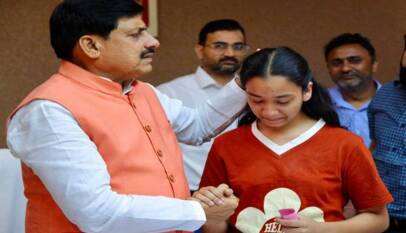
British Deputy High Commissioner Calls on Hon’ble Deputy Chief Minister Shri K V Singh Deo to Discuss UK-Odisha Partnership
Bhubaneswar, July 2026 : Dr. Andrew Fleming, British Deputy High Commissioner, Kolkata, ca…
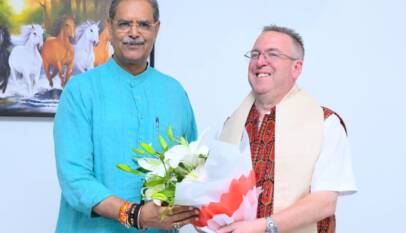
British Deputy High Commissioner Calls on Hon’ble Deputy Chief Minister Shri K V Singh Deo to Discuss UK-Odisha Partnership
Bhubaneswar, July 2026 : Dr. Andrew Fleming, British Deputy High Commissioner, Kolkata, called on …