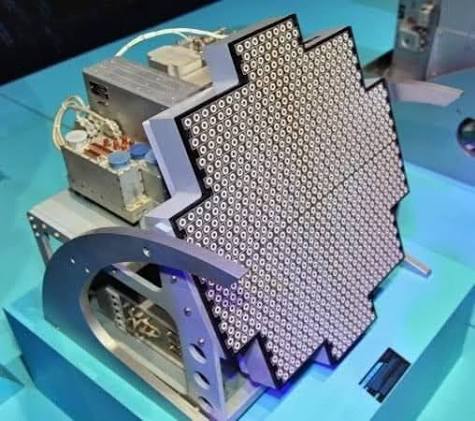
DRDO Set to Test Indigenous Photonic Radar, Boosting India’s Next-Generation Air Defence

New Delhi, July 2026 : The Defence Research and Development Organisation (DRDO) is preparing to conduct trials of its indigenous photonic radar system, a cutting-edge sensor technology expected to significantly enhance India’s air defence capabilities. Designed for deployment across multiple military platforms, including the Advanced Medium Combat Aircraft (AMCA) MK-2, the radar represents a major technological milestone in the country’s pursuit of self-reliance in advanced defence systems.
Unlike conventional radar systems that rely on electronic components, the new photonic radar uses microwave photonics, replacing traditional semiconductor-based subsystems with laser sources and photonic integrated circuits. This innovative architecture enables the generation and processing of radar signals with exceptional precision while reducing electromagnetic interference, resulting in improved detection capability and greater resistance to electronic warfare measures.
One of the radar’s most significant strengths is its ultra-wide bandwidth, exceeding 10 GHz, which allows it to detect and track extremely small targets with radar cross-sections as low as 0.0001 square metres at distances of up to 150 kilometres. Such capability is considered crucial for identifying stealth aircraft, low-observable drones, and other advanced aerial threats designed to evade conventional X-band radar systems.
According to defence sources, the radar prototype has already cleared site acceptance testing and has entered the airborne integration phase. It is being installed on a modified HAL Tejas MK-1A fighter aircraft, which will serve as the flying test-bed for evaluating its performance under real operational conditions. The system has also successfully completed anechoic chamber trials, and all necessary flight instrumentation has been integrated ahead of the upcoming flight tests.
The radar incorporates artificial intelligence-based signal processing modules that enable rapid real-time analysis of incoming data. These AI-powered algorithms enhance target discrimination and improve the radar’s ability to detect low-observable platforms even in complex electronic warfare environments. Defence experts believe the system’s ability to penetrate radar-absorbent material coatings while delivering centimetre-level resolution could make it an effective counter to stealth technologies.
DRDO has steadily advanced the programme over the past three years. In 2024, researchers successfully validated the core microwave photonics signal-generation technology and initiated antenna integration trials. By 2025, a fully functional ground-based prototype had been demonstrated, followed by successful site acceptance testing. The current phase focuses on airborne validation, with flight trials in 2026 expected to confirm the radar’s multi-band stealth detection capabilities.
The system employs an optical heterodyning technique, in which two laser beams interact to generate highly stable radio frequency signals. This approach delivers superior resolution, significantly lower phase noise, and improved reliability compared to conventional electronic radar systems.
Beyond fighter aircraft, the photonic radar is being designed for integration into naval platforms, airborne surveillance systems, and future space-based applications. Its compact, energy-efficient design supports distributed photonic links and multi-band operation, enabling advanced networked radar configurations with reduced electromagnetic signatures.
The development is closely aligned with the Government of India’s Atmanirbhar Bharat initiative, aimed at strengthening indigenous defence manufacturing and reducing dependence on imported technologies. Successful deployment of the photonic radar would place India among a select group of nations, including the United States, China, and Israel, that are actively developing next-generation photonic radar technologies.
Defence analysts believe the indigenous photonic radar has the potential to transform India’s surveillance and air defence architecture. By combining ultra-high resolution, enhanced resistance to jamming, and advanced stealth detection capabilities, the system could become a key component of India’s future sensor ecosystem, significantly improving situational awareness and strengthening the country’s ability to counter emerging aerial threats.
(The content of this article is sourced from a news agency and has not been edited by the Mavericknews30 team.)








Parliament Paralysed for Second Day as Opposition Protests Over NEET Leak, Student Crackdown
New Delhi, July 2026 : Parliament remained deadlocked for the second consecutive day of th…

Parliament Paralysed for Second Day as Opposition Protests Over NEET Leak, Student Crackdown
New Delhi, July 2026 : Parliament remained deadlocked for the second consecutive day of …