In A Bid To Bolster Naval Shipbuilding Industry, US Partners With South Korea.

Seoul/Washington DC; July 2026: Saronic and Samsung Heavy Industries have formed a strategic partnership to accelerate autonomy-capable maritime vessels while strengthening the United States shipbuilding industrial base. The collaboration aligns with the US’s push to rebuild critical naval manufacturing capacity and sustain long-term maritime superiority.
The agreement was unveiled in Washington, DC, during the launch of the Korea-US Shipbuilding Partnership Center, an initiative supported by the US Department of Commerce and South Korea’s Ministry of Trade, Industry and Energy. It combines Saronic’s expertise in autonomous maritime systems with Samsung Heavy Industries global shipbuilding capabilities to advance next-generation vessels while reinforcing industrial cooperation between the United States and South Korea.
The partnership combines two highly complementary areas of expertise. Saronic contributes its experience in autonomous surface vessels, software architectures, and manufacturing methods adapted for scalable production. Samsung Heavy Industries brings decades of experience in designing large commercial vessels, operating highly automated shipyards and managing industrial-scale shipbuilding. Together, both companies intend to explore the development of future vessels for government and commercial customers while modernising US production infrastructure through robotics-based manufacturing and advanced industrial processes.
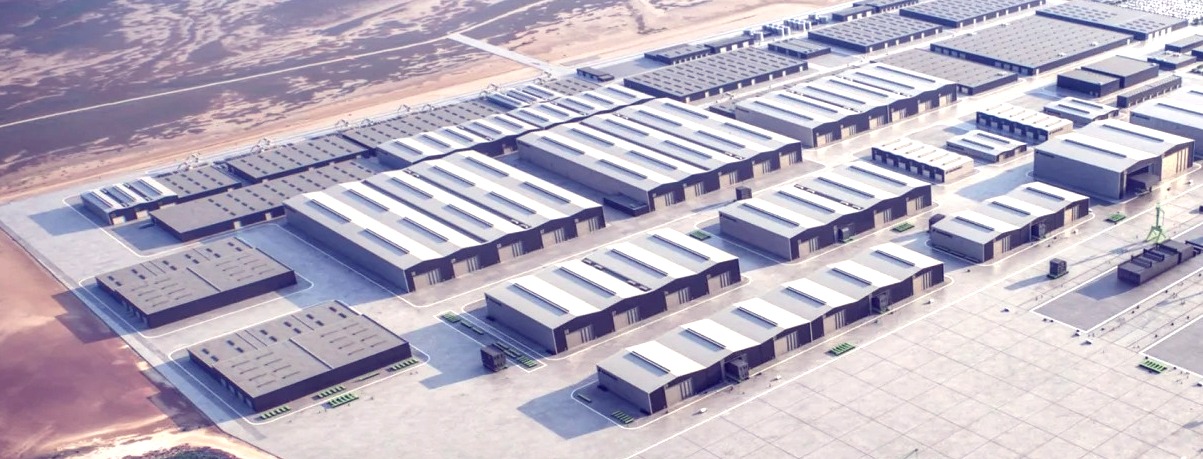
Vide a press release, Saronic stated that the cooperation will also focus on AI-enabled digital shipbuilding solutions and robotics-based process automation across its future shipyards. The company added that Samsung Heavy Industries will participate in efforts to accelerate the production of next-generation autonomy-capable maritime platforms. The announcement builds upon Saronic’s broader industrial expansion strategy, which includes the construction of the $3.2 billion Port Alpha shipyard in Brownsville, Texas, expected to begin operations in 2028, as well as an additional $300 million investment to expand production capacity at its Franklin, Louisiana, facility.
Beyond the announcement itself, the partnership addresses one of the most persistent weaknesses of the American maritime sector. While the United States continues to design some of the world’s most sophisticated naval platforms, its ability to build ships rapidly has steadily declined over the past three decades. The reduction of commercial shipbuilding, shrinking supply chains and shortages of skilled labor have all constrained production capacity. Rebuilding American shipbuilding therefore requires far more than opening new shipyards. It means recreating an entire industrial ecosystem, including suppliers, workforce expertise, production infrastructure and manufacturing know-how capable of sustaining high output over time.
This is where Samsung Heavy Industries brings considerable value. The South Korean company is recognised worldwide for constructing LNG carriers, container ships, offshore platforms and other large commercial vessels using advanced modular construction techniques. Its expertise extends to robotic welding, digital shipyard management, automated production lines, and optimised logistics, allowing complex vessels to be assembled more efficiently while maintaining high quality standards. Rather than shifting production overseas, the partnership seeks to transfer these industrial practices into American shipyards, enabling domestic production to benefit from decades of South Korean manufacturing experience.
For Saronic, the agreement represents an important step beyond its current role as a developer of autonomous vessels. Although no specific program has been announced under the partnership, it is expected to build upon the company’s existing family of unmanned surface vessels. These include the 6-metre Spyglass, designed for maritime surveillance and security missions, the 14-metre Cutlass, intended for intelligence gathering, force protection and maritime patrol operations, and the larger Corsair, unveiled earlier in 2026 to answer the US Navy’s growing interest in longer-endurance autonomous surface platforms. All three vessels are based on an open architecture that can integrate mission-specific payloads such as electro-optical sensors, ISR equipment, secure communications systems or electronic warfare payloads depending on operational requirements.
The cooperation nevertheless extends well beyond today’s unmanned surface vessels. Both companies refer to the development of ‘autonomy-capable’ ships, a concept that does not necessarily describe fully crewless vessels. Instead, these platforms may operate with reduced crews while automating navigation, ship management or selected mission functions, or perform certain tasks under remote supervision. Such an approach addresses one of the major challenges currently facing many Western navies, namely expanding fleet size despite persistent manpower shortages and rising operating costs.
These capabilities could reshape the way naval forces conduct a range of missions. Autonomy-capable vessels are well suited for intelligence collection, maritime surveillance, force protection, mine countermeasures, logistics support and long-endurance patrols while exposing fewer sailors to danger. Their lower operating costs also make it possible to deploy larger numbers of platforms across a theater of operations. Within the US Navy’s Distributed Maritime Operations concept, these vessels could increase fleet resilience by dispersing naval assets, complicating an adversary’s targeting process and allowing high-end destroyers, frigates and amphibious ships to concentrate on missions requiring greater combat capability.
As China’s shipbuilding industry now surpasses that of the United States by a substantial margin in both commercial output and industrial capacity, Washington increasingly views shipbuilding as a strategic capability rather than simply an industrial sector. A modern navy depends not only on advanced warships but also on the ability to build, repair, and replace them rapidly during prolonged crises. In that context, the agreement between Saronic and Samsung Heavy Industries goes far beyond cooperation between two companies. It reflects a broader strategy of leveraging allied industrial expertise to rebuild domestic production capacity, strengthen the American maritime industrial base and reinforce long-term defense cooperation between the United States and South Korea in an increasingly contested maritime environment.
Team Maverick.







Chandrababu Naidu Reviews Preparations for PM Modi’s August 1 Inauguration of Bhogapuram International Airport
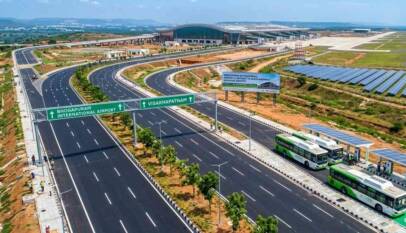
Amaravati, July 2026 : Andhra Pradesh Chief Minister N. Chandrababu Naidu on Monday conduc…
Chandrababu Naidu Reviews Preparations for PM Modi’s August 1 Inauguration of Bhogapuram International Airport
Amaravati, July 2026 : Andhra Pradesh Chief Minister N. Chandrababu Naidu on Monday conducted …