Lok Sabha Passes Tough Anti-Paper Leak Bill After Stormy Debate; Stricter Punishments, Fast-Track Courts to Safeguard Public Examinations

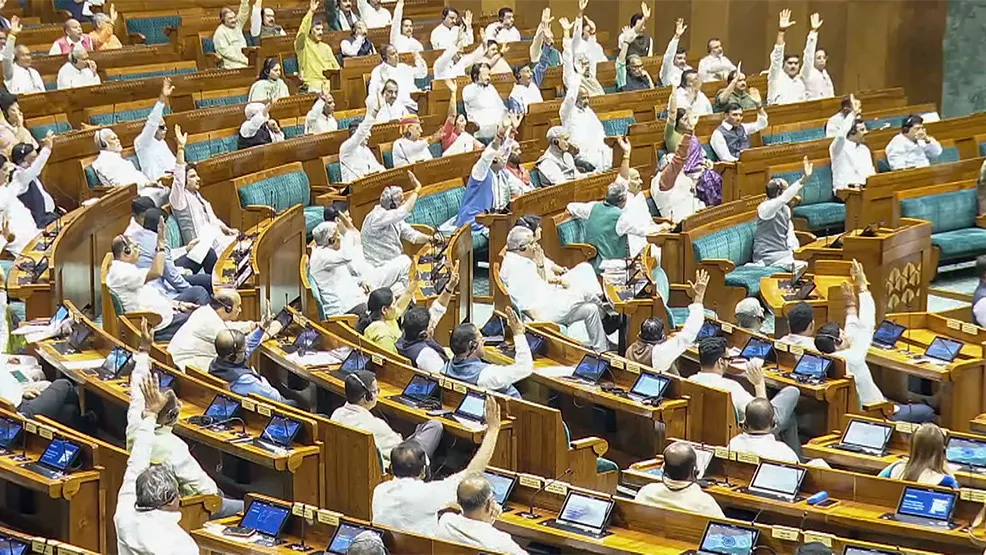
New Delhi, July 2026 : After two days of intense debate marked by sharp political exchanges, allegations and counter-allegations, the Lok Sabha on Wednesday passed the Public Examinations (Prevention of Unfair Means) Amendment Bill, 2026 by a voice vote. The legislation seeks to tighten the legal framework against paper leaks, organised examination fraud and other unfair practices by introducing harsher punishments and a fast-track judicial mechanism aimed at protecting the credibility of India’s public examination system.
The Bill amends the Public Examinations (Prevention of Unfair Means) Act, 2024, with the government asserting that the new provisions will ensure greater transparency, accountability and integrity in examinations while safeguarding the interests and future of millions of students.
The amended legislation introduces stringent penalties for those involved in examination malpractices. Offenders can now face imprisonment of up to 10 years, fines of up to ₹10 crore, confiscation of illegally acquired assets and prosecution through specially designated fast-track courts. The courts will be required to conclude trials and deliver judgments within three months, ensuring speedy justice in cases involving paper leaks and organised examination fraud.
The passage of the Bill comes amid widespread public concern over repeated incidents of question paper leaks in competitive examinations and follows the nationwide outrage triggered by the alleged NEET examination irregularities.
The issue gained further momentum after the large-scale ‘Sansad Chalo’ protest organised by the Cockroach Janta Party (CJP) in New Delhi on July 20. Hundreds of students gathered at Jantar Mantar demanding action against those responsible for examination fraud and calling for the resignation of then Union Education Minister Dharmendra Pradhan, who eventually stepped down from office on July 25.
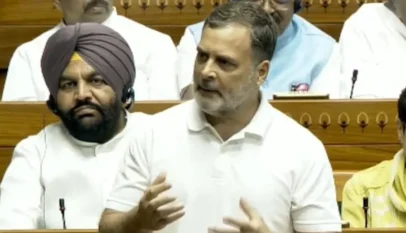
During the debate, Leader of Opposition Rahul Gandhi strongly defended the students who participated in the protests, describing their movement as a peaceful expression of the aspirations of India’s youth.
“I was reassured by what the future generation of this country did on our streets. This was not anger, violence or hatred. It was an expression of the future generation of India. Every political party must respect this expression, including my friends in the BJP,” Gandhi said.
He argued that even the children of BJP leaders would sympathise with the protesting students if asked about the movement.
“There is nothing wrong with what happened, and every Indian should be proud of these young people,” he added.
Rahul Gandhi also narrated an interaction with a student protester, saying she described a true student as someone with an open mind who constantly seeks knowledge, unlike those who believe they already know everything.
However, the debate quickly turned confrontational after Gandhi accused the Rashtriya Swayamsevak Sangh (RSS) of exercising undue influence over India’s education system. He alleged that educational institutions had increasingly come under ideological control and claimed that students were being prevented from thinking independently.
The Congress leader further criticised the handling of the student protests, alleging excessive police action and accusing Union Home Minister Amit Shah of ordering the use of force against demonstrators.
These remarks triggered strong protests from the treasury benches.
Responding immediately, Parliamentary Affairs Minister Kiren Rijiju demanded that Rahul Gandhi either substantiate his allegations with evidence or apologise to the House.
“You cannot level such serious allegations against the Home Minister without producing any proof. Parliament cannot function on the basis of unfounded accusations,” Rijiju said.
Replying to the debate on behalf of the government, Union Minister of State for Personnel Dr. Jitendra Singh rejected the Opposition’s allegations and defended the government’s approach to tackling examination fraud.
He said Rahul Gandhi appeared to have misunderstood basic administrative procedures regarding law and order.
“When Rahul Gandhi says that Amit Shah ordered action against students, he has failed to provide any evidence. No Union Minister issues such operational orders. Such decisions are taken by the District Magistrate, Sub-Divisional Magistrate or other competent civil authorities. This is elementary administrative knowledge,” Singh said.
He also rejected claims regarding the police response to the protests.
“There was no firing. Only tear gas was used. Rahul Gandhi also claimed that the Home Minister travels with thirty vehicles and that he was abroad. Neither claim is supported by facts. Amit Shah has not travelled abroad. Statements made without evidence are unbecoming of the Leader of the Opposition,” Singh remarked.
Defending the legislation, Singh said the government had carefully considered suggestions from multiple stakeholders before finalising the amendments.
“We have incorporated several recommendations received from various stakeholders while strengthening the Bill,” he informed the House.
Explaining the revised provisions, Singh said the maximum penalty for service providers involved in examination fraud has been increased from ₹1 crore to ₹5 crore.
Similarly, directors and senior management officials found guilty can now face imprisonment ranging from five to ten years, along with fines of up to ₹5 crore, compared to the earlier ceiling of ₹1 crore.
The government has also enhanced penalties for other individuals involved in organised examination fraud. Earlier punishments of three to five years’ imprisonment and fines up to ₹10 lakh have now been revised to five to ten years in prison and fines of up to ₹50 lakh.
Officials responsible for supervising examination processes will also face stricter punishment, with imprisonment ranging from five to ten years and fines reaching ₹5 crore if found complicit.
One of the most significant changes relates to organised criminal syndicates involved in paper leak rackets. The amended law increases the minimum imprisonment from five years to seven years, while the maximum fine has been enhanced dramatically from ₹1 crore to ₹10 crore. The government believes these tougher penalties will act as a powerful deterrent against organised examination fraud.
Several prominent members from both the treasury and Opposition benches participated in the debate. Among them were Congress MP Priyanka Gandhi Vadra, Samajwadi Party President Akhilesh Yadav, BJP MPs Anurag Thakur and Tejasvi Surya, and NCP leader Supriya Sule, each presenting differing perspectives on the proposed amendments.
While the Opposition questioned whether harsher punishment alone could eliminate examination irregularities and demanded broader systemic reforms, the NDA maintained that strict criminal provisions were necessary to dismantle organised paper leak networks and restore public confidence in India’s examination process.
With the Bill now passed by the Lok Sabha, the government has taken a major legislative step towards strengthening the integrity of public examinations. The proposed amendments seek not only to impose severe consequences on those involved in examination fraud but also to reassure millions of students that merit, transparency and fairness will remain the cornerstone of India’s education and recruitment system.



ISRO Successfully Tests Indigenous Ship-Borne Tracking System for Gaganyaan Mission
New Delhi, July 2026 : The Indian Space Research Organisation (ISRO) has successfully vali…

ISRO Successfully Tests Indigenous Ship-Borne Tracking System for Gaganyaan Mission
New Delhi, July 2026 : The Indian Space Research Organisation (ISRO) has successfully validated …