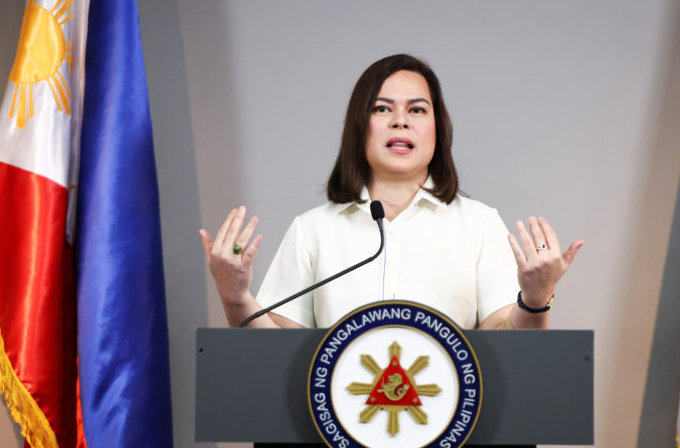
AI Avatars Stir Debate in Philippines Amid Vice President’s Impeachment Crisis

Viral deepfake videos spark controversy as Senate proceedings stall and political tensions deepen
Manila : In a dramatic turn of events following the impeachment of Philippine Vice President Sara Duterte, two AI-generated videos have gone viral on social media—one supporting her and one against—fueling debate, confusion, and concern about the future of political discourse in the country.
The videos, featuring a schoolboy in a white uniform and an elderly fish vendor, appear to represent contrasting public sentiment on Duterte’s impeachment, but neither individual is real. Both were created using artificial intelligence, demonstrating how AI tools are rapidly transforming public messaging—even on sensitive political issues.
The House of Representatives impeached Duterte in February, citing corruption, graft, and an alleged assassination plot against President Ferdinand Marcos Jr., her former running mate. If convicted, she would face permanent disqualification from public office. However, on June 10, the Senate, convened as an impeachment court, abruptly referred the case back to the House, citing constitutional concerns—a move that has stirred public outcry and confusion.
One video, shared widely by Duterte ally Senator Ronald Dela Rosa, features a digital schoolboy questioning the motives behind the impeachment. “Why is the vice president being targeted?” the avatar asks, implying political persecution. Dela Rosa praised the video, saying the youth “have a better understanding of what is happening” than many adults.
Duterte’s brother, Mayor Sebastian Duterte of Davao, added that the clip showed that so-called “liberals” lack support from younger generations. When it was revealed that the video featured an AI-generated character, supporters remained unfazed. “There is no problem with sharing AI videos in my support, as long as it’s not commercialized,” Vice President Duterte told reporters.
The counter-video, created by Bernard Senosip, a 34-year-old content creator, features an AI-generated elderly woman accusing senators of double standards. “When the poor steal, you jail them immediately. But when the vice president steals millions, you defend her,” she says in Tagalog. This clip, like the schoolboy video, also carried a faint watermark from Google’s Veo, a video-generation platform.
Senosip told AFP he used AI to help citizens express opinions without being personally attacked. “As long as you know your limits and are not misleading your audience, I think it’s fine,” he said, adding that his TikTok upload clearly indicated it was AI-generated—unlike the Facebook version.
While neither video represents real individuals, both have been viewed millions of times, reflecting their significant impact on public opinion. AFP fact-checkers noted AI telltale signs, including visual anomalies like unnatural hair textures, awkward smiles, and blurry signage in the background.
Critics argue the spread of such videos—especially when disclosure is unclear—risks misleading the public. The creators, however, defend their work as a modern form of political expression amid growing restrictions and fear of online backlash.
Notably, AFP and other media organizations receive funding from Meta, Google, and TikTok to help identify and combat misinformation on their platforms.
As the Philippines navigates this high-stakes political crisis, the use of AI avatars may signal a new era of campaign messaging, raising urgent questions about authenticity, accountability, and ethical boundaries in digital politics.





Israel, Lebanon Agree on Ceasefire Framework Amid Continued Cross-Border Hostilities
Washington/Beirut, June 2026 : Israel and Lebanon on Wednesday agreed to move forward with…

Israel, Lebanon Agree on Ceasefire Framework Amid Continued Cross-Border Hostilities
Washington/Beirut, June 2026 : Israel and Lebanon on Wednesday agreed to move forward with …