Nepal Waives Climbing Fees for 97 Remote Peaks to Ease Everest Crowding and Boost Local Economies

Nepal will waive climbing permit fees for 97 peaks in two of its most remote provinces in a bid to encourage mountaineers and tourists to explore beyond the country’s well-trodden routes. The move is part of a broader strategy to tackle overcrowding on Mount Everest, where, in contrast, fees are set to rise sharply from $11,000 to $15,000 starting September 2025.
The fee waiver will apply to peaks ranging from 5,870 metres to 7,132 metres, with 77 located in Karnali Province and the remaining 20 in Sudurpaschim Province. These mountains, which include Sudurpaschim’s Saipal (7,030m), Api (7,132m), and Api West (7,076m), could gain new significance if a proposed law requiring Everest aspirants to first summit a Nepalese peak over 7,000 metres comes into force.
Tourism officials hope the measure will not only draw climbers to these lesser-known regions but also create jobs and stimulate economic activity in areas that rank among Nepal’s least developed.
“These are some of the most remote parts of Nepal,” said Himal Gautam, Director at the Department of Tourism. “Despite their breathtaking beauty, the number of visitors is very low because access is so challenging. We hope the new provision will change that.”
For decades, Karnali and Sudurpaschim have remained off the mainstream tourist map. Rugged and largely untouched, they are framed by jagged peaks and deep valleys, dotted with isolated settlements, and connected by scant roads and arduous trails. Basic services are minimal, and both provinces sit near the bottom of Nepal’s Human Development Index.
Balancing Everest’s Popularity and Preservation
In January, Nepal announced that from September 2025, the cost of an Everest climbing permit in the peak spring season will rise to $15,000—a 36 percent increase from the long-standing $11,000 fee. Off-season climbs will also see significant hikes: $7,500 for the autumn season (September–November) and $3,750 for the winter months (December–February).
Permit fees remain a vital source of income for Nepal. Mountaineering and trekking contribute over four percent of the national economy, with Everest alone accounting for more than three-quarters of the $5.92 million in climbing fees collected in 2024. That year, Everest generated $4.52 million in revenue.
However, Everest’s surging popularity has come at a cost. In recent years, the world’s tallest mountain—standing at 8,849 metres—has faced severe overcrowding, environmental strain, and a troubling number of fatalities. In April 2024, Nepal’s Supreme Court ordered the government to limit the number of permits for Everest and other major peaks to address these challenges.
Opportunities for Remote Provinces
In contrast to the lucrative Everest corridor, employment opportunities in Karnali and Sudurpaschim are scarce, and living conditions are harsh—particularly in winter. The impacts of climate change, including shifting weather patterns and ecological changes, are making life even more difficult for residents.
Tourism entrepreneur and Nepal Tourism Board member Rajendra Lama welcomed the fee waiver but stressed that infrastructure and awareness must improve for it to succeed.
“Policy alone is not enough,” Lama said. “We need coordinated efforts between public, private, and community sectors, along with aggressive publicity. Only then will Karnali and Sudurpaschim find their place on the mountaineering map. Researchers could also use this chance to study climate change impacts in these regions.”
Nepal has a total of 3,310 mountains above 5,500 metres, ranging from accessible trekking routes to technically challenging climbs. Of these, 461 are officially open for commercial expeditions, and 102 remain unclimbed. Fifteen are classified as trekking peaks under 6,000 metres.
Currently, climbers tend to focus on around 25 peaks in the northeast and central regions, leaving many equally scenic mountains under-visited. The government hopes that by removing permit fees for the selected 97 peaks, mountaineers will be encouraged to venture into the northwest Himalayas along the border with China.
A Strategic Tourism Shift
Nepal has also raised fees for smaller mountains—effective September—from $250 to $350, underscoring the selective nature of the waiver. By targeting some of the country’s most inaccessible and impoverished areas, the government aims to spread the benefits of tourism more evenly while reducing pressure on the high-profile Everest region.
Gautam said the waiver is intended to promote mountaineering in “unexplored yet scenic areas” and help improve economic conditions for the people living there. Mountain climbing and trekking remain among Nepal’s main tourist draws, generating jobs, supporting local businesses, and injecting much-needed cash into the national economy.
Whether the new policy will bring a surge of climbers to Karnali and Sudurpaschim remains to be seen. Success will depend on more than waived fees—it will require better transport links, reliable services, and global promotion. For now, Nepal is betting that adventure seekers, drawn by the allure of unspoiled peaks and the chance to train for Everest, will take the road—and the climb—less travelled.



Dharmendra Pradhan Resigns as Union Education Minister Amid Nationwide Protests Over Exam Irregularities
New Delhi, July 2026 : Union Education Minister Dharmendra Pradhan on Saturday resigned fr…
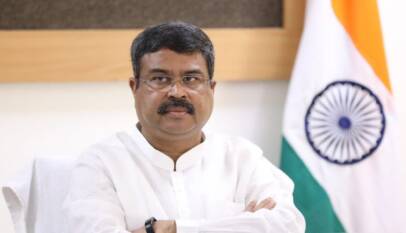
Dharmendra Pradhan Resigns as Union Education Minister Amid Nationwide Protests Over Exam Irregularities
New Delhi, July 2026 : Union Education Minister Dharmendra Pradhan on Saturday resigned from …