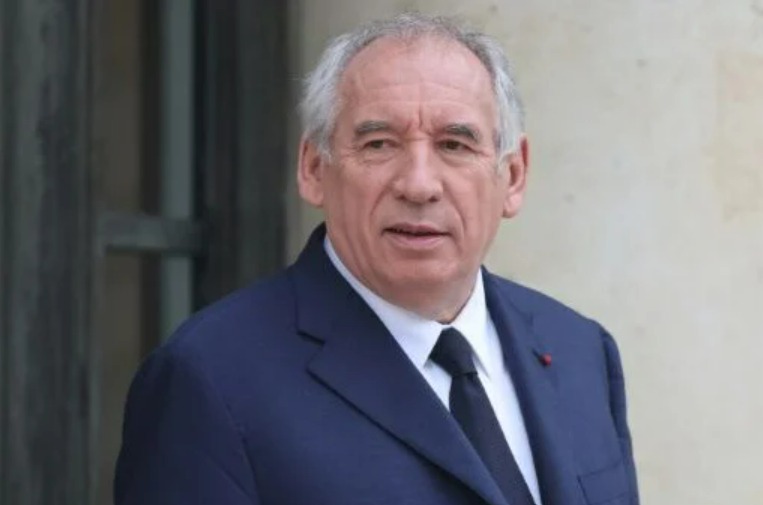
France Braces for Political Turmoil as Parliament Prepares to Oust Prime Minister Bayrou

Paris, Sept 2025 : France is once again facing political upheaval as parliament is expected to oust Prime Minister François Bayrou on Monday, barely nine months after he took office. The move would deepen uncertainty in one of the European Union’s most influential member states and force President Emmanuel Macron into another difficult political gamble.
Bayrou shocked even close allies last week when he announced a confidence vote in an attempt to end months of deadlock over his austerity budget. The plan envisions nearly €44 billion ($52 billion) in spending cuts to reduce France’s mounting debt burden. But opposition parties across the spectrum have signaled they will vote against the minority government, making Bayrou’s survival virtually impossible. To remain in office, he would need the backing of a majority of the 577 members of the National Assembly—a threshold well out of reach.
If the vote goes against him, Bayrou would become the second French prime minister in succession to lose his post through a parliamentary showdown. His predecessor, Michel Barnier, was forced out in December after lasting just three months. Bayrou is also the sixth prime minister to serve under Macron since 2017, underscoring the instability that has plagued the president’s second term.
Bayrou’s Final Stand
In recent days, Bayrou has shown little illusion about his chances. In multiple television interviews, he stopped short of predicting survival and instead questioned whether France had fully grasped “the seriousness of the situation it finds itself in.”
He is scheduled to address lawmakers at 1300 GMT on Monday in what will likely be a last-ditch appeal, with the vote expected to follow around 1700 GMT.
Macron’s Dilemma
For President Macron, the fallout will be immediate and consequential. After Bayrou’s likely defeat, the president will face a stark choice: appoint a seventh prime minister capable of negotiating a compromise with parliament, or dissolve the National Assembly and call snap elections. Both options carry high risks.
Snap elections could easily backfire, given Macron’s declining popularity and his weakened centrist bloc. But continuing to cycle through prime ministers without stabilizing governance could erode public trust even further. Macron himself cannot run for a third presidential term in 2027, limiting his political horizon.
Polls underscore the depth of discontent. An Odoxa-Backbone survey for Le Figaro found that 64 percent of French respondents would prefer Macron to resign rather than appoint another prime minister. Meanwhile, an Ifop poll for Ouest-France put his disapproval rating at 77 percent, the worst of his presidency.
Domestic Strains and International Profile
The political drama comes as Macron seeks to raise his international standing by spearheading European efforts to end Russia’s war on Ukraine. Speaking after a recent summit on the conflict, he appealed for unity at home, urging France’s political forces to show “responsibility” and provide “stability.”
“The reshaping of the world is changing many things for our Europe. In this context, France must continue to move forward,” Macron said.
But domestic tensions are rising. A left-wing coalition called Block Everything has announced a day of action on September 10, while major trade unions are preparing strikes on September 18. The protests threaten to add social unrest to the political crisis already unfolding in Paris.
Possible Alliances
Some analysts believe Macron may now seek cooperation with the Socialist Party (PS), once dominant in French politics but weakened in recent years. At a meeting of centrist allies last week, Macron reportedly urged them to explore a partnership with the Socialists, though participants were unanimous in opposing snap elections.
Socialist leader Olivier Faure has openly expressed interest in becoming prime minister and has even drafted his own alternative budget. However, Socialist backing alone may not guarantee parliamentary stability. Other left-wing groups remain skeptical of aligning with Macron’s centrist bloc.
“It would be workable if the Socialist Party says: ‘We’re breaking with the left alliance and governing with the central bloc,’” said one close Macron ally. “For now, the president is keeping his cards close to his chest.”
Uncertain Road Ahead
As France awaits the outcome of Monday’s vote, the stakes could not be higher. A failed confidence motion will topple yet another government and plunge the country deeper into political fragility. For Macron, the decision that follows may shape not only the remainder of his presidency but also France’s role in a rapidly changing Europe.
Team Maverick





Trump Marks America’s 250th Independence Day with Patriotic Address, Highlights Military Strength, Economy and Future Vision
Washington, July 2026 : US President Donald Trump delivered a wide-ranging address during …
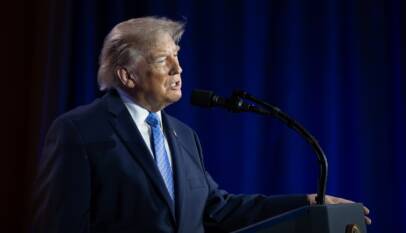
Trump Marks America’s 250th Independence Day with Patriotic Address, Highlights Military Strength, Economy and Future Vision
Washington, July 2026 : US President Donald Trump delivered a wide-ranging address during the …