WHO says rebuilding Gaza’s shattered health system critical to a lasting peace.

As indirect talks in Egypt seeking to end Gaza’s two-year war continue, the United Nation’s World Health Organization (WHO) says rebuilding the devastated health system is critical in securing a lasting peace and stability.
Dr. Hanan Balkhy, WHO Director for the Eastern Mediterranean, said Gaza’s health services had been “shattered” after two years of conflict and “on the brink of total collapse. When the fighting stops, a new struggle will begin in rebuilding Gaza’s health system and rescue an entire population from the edge of famine and despair”, she told reporters at a press conference on Wednesday. Reconstruction will cost over $7 billion, according to WHO estimates, covering humanitarian response, early recovery and long-term rebuilding.
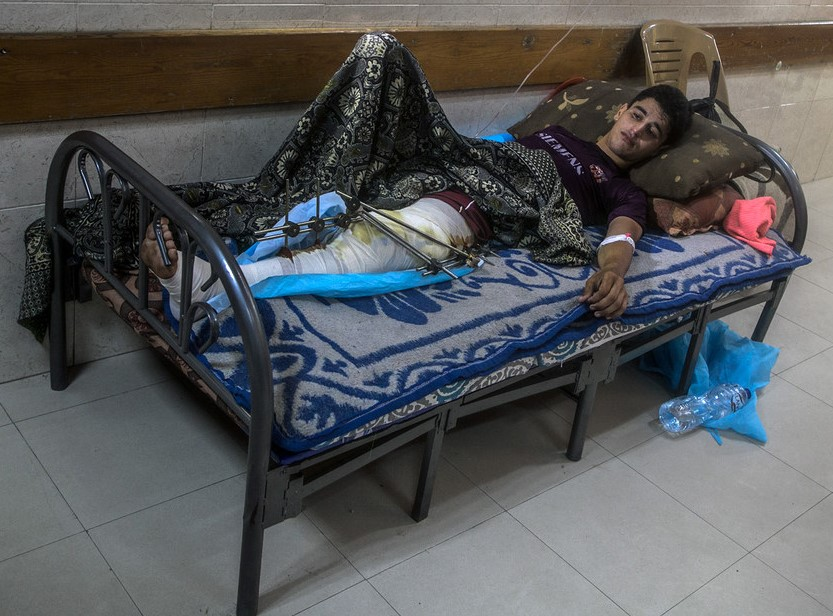
“Rebuilding Gaza’s health system will not only save lives today; it will restore dignity, stability and hope for the future”, Dr. Balkhy said. Two years into the war, the humanitarian toll remains staggering. Dr. Balkhy said more than half a million are “trapped in famine-like conditions”, while another million are severely food-insecured. Since January, 455 people, including 151 children, mostly under five, have perished from malnutrition, according to Palestinian health authorities.
The UN Children’s Fund (UNICEF) painted an equally grim picture, describing Gaza as “a hellish war that has devastated children”. In a statement, Executive Director Catherine Russell said, “in the last two years, a staggering 64,000 children have reportedly been killed or maimed across the Gaza Strip, including at least 1,000 babies. Famine persists in Gaza City and is spreading to the south, where children are already living in dire conditions”.
UNICEF called for an immediate ceasefire and for Israel to ensure full protection of civilians under international law. “Every child killed is an irreplaceable loss. For the sake of all children in Gaza, this war must end now”, Catherine Russell reiterated.
Dr. Balkhy said WHO had delivered 17 million litres of fuel to keep Gaza’s hospitals and ambulances running, but far more is needed. Essential supplies ranging from antibiotics to wound dressings must reach all parts of the territory without delay. Of Gaza’s 176 primary healthcare centres, only about a third remain partially functional. WHO has warned that the collapse of vaccination, maternity and mental health services has compounded the risk of outbreaks. More than 1,700 health workers have been killed since October 2023.
On the political front, top US envoys and other leading intermediaries from Qatar and Türkiye arrived in Egypt’s Sharm el-Sheikh resort for a third day of indirect talks on Wednesday between Israeli and Hamas representatives.
Despite the ongoing talks, Israeli military operations have continued in Gaza City’s Rimal and Zaitoun neighbourhoods, according to the UN aid coordination office, OCHA thereby making the already dire humanitarian situation even more perilous. “Our partners on the ground report that many people are unable to leave the north due to insecurity”, UN Spokesperson Stéphane Dujarric told the press at a regular briefing in New York. People are sleeping out in the open and struggling to survive, amid severe food and shelter shortages.
A new UN analysis found that 83% of structures in Gaza City have been damaged, with around 81,000 housing units affected.
Team Maverick






The Ukrainian Alchemist Who Tricks Russian Missiles Into Thinking They’re Flying Over Peru.
Kyiv; July 2026: As Russia escalates its recent strikes on Ukraine killing several, and da…

The Ukrainian Alchemist Who Tricks Russian Missiles Into Thinking They’re Flying Over Peru.
Kyiv; July 2026: As Russia escalates its recent strikes on Ukraine killing several, and …