Prime Minister Modi Inaugurates Final Phase of Mumbai Metro Line-3; City’s Commuting Revolution Begins

Mumbai witnessed a historic day for its commuters on Wednesday as Prime Minister Narendra Modi inaugurated the final phase of the much-anticipated Mumbai Metro Line-3, also known as the Aqua Line, during his visit to Maharashtra. The metro line, spanning 33.5 kilometers from Aarey JVLR in the western suburbs to Cuffe Parade in South Mumbai, is now fully operational, promising to transform daily commuting and significantly reduce travel times across the city.

Following the inauguration, Metro operations on the entire corridor officially began on Thursday morning. According to officials from the Mumbai Metro Rail Corporation (MMRC), the first trains departed from both terminal stations—Aarey JVLR and Cuffe Parade—at 5:55 AM. The metro corridor, commonly referred to as the “Aqua Line,” now connects 27 stations across the city, including a mix of 26 underground stations and one at-grade station.
Prior to this milestone, operations on the Aqua Line were limited to the stretch between Acharya Atre Chowk and Aarey JVLR. With the inauguration of the 10.99-kilometer Phase 2B section, which runs from Acharya Atre Chowk to Cuffe Parade, Mumbai now has its first fully underground metro corridor that links South Mumbai to its western suburbs. Prime Minister Modi highlighted the significance of this development on social media platform X, stating, “Phase 2B of Mumbai Metro Line-3 is a significant addition to Mumbai’s infrastructure. Metro connectivity is essential for the city’s development. This project will have a positive impact on the lives of Mumbai’s people.”
The new metro line is expected to cut travel times dramatically. Commuters will now be able to reach the Domestic Airport from Cuffe Parade in just 45 minutes, compared to the 1.5 hours typically required by road. Similarly, travel from Kalbadevi to Bandra Kurla Complex (BKC) will take only 30 minutes by metro, while journeys between Aarey and Colaba will require just one hour, down from roughly two hours on road. Trips from Worli to Cuffe Parade can now be completed in 15 minutes, and BKC to Worli in less than 15 minutes, compared to around 30 minutes by road. Overall, the entire stretch from Andheri to Cuffe Parade on Metro Line-3 will take approximately 45 to 50 minutes, potentially cutting commuting times in half during peak hours.
In addition to reducing travel times, the Aqua Line offers passenger-friendly stations, particularly at Vidhan Bhavan and Cuffe Parade, ensuring a comfortable and convenient commuting experience. The new metro line also provides direct connectivity to both terminals of Chhatrapati Shivaji Maharaj International Airport—Domestic Terminal T1 and International Terminal T2—making it an important transit link for air travelers.
Mumbai Aqua Line | Key Details:
- Total stations: 27 (26 underground, 1 at-grade)
- Phase 1: Aarey JVLR, SEEPZ, MIDC-Andheri, Marol Naka, Sahar Road, CSMIA-T2, Santacruz Metro, Bandra Colony, BKC
- Phase 2: BKC, Dharavi, Shitala Devi Mandir, Dadar, Shree Siddhivinayak Temple, Worli, Acharya Atre Chowk
- Phase 2B (newly inaugurated): Acharya Atre Chowk, Science Museum (Nehru Science Centre), Mahalaxmi, Mumbai Central, Grant Road, Girgaon, Kalbadevi, CSMT Metro, Hutatma Chowk, Churchgate, Vidhan Bhavan, Cuffe Parade
- Single journey fares range from ₹10 to ₹70 depending on distance
- First train: 5:55 AM from both terminals; last train: 10:30 PM, completing journey by 11:25 PM
The fully operational Aqua Line not only improves the city’s commuting efficiency but also strengthens Mumbai’s infrastructure, supporting its role as India’s financial and cultural capital. With its strategic connectivity and reduced travel times, the metro is expected to ease road congestion, provide a reliable public transit option, and contribute significantly to the city’s sustainable urban mobility plans.
Commuters across the city are now set to experience a seamless, faster, and more convenient journey from the western suburbs to South Mumbai, including major hubs such as Churchgate, CSMT, Worli, and Bandra Kurla Complex. This marks a landmark achievement in Mumbai’s metro development, promising to transform urban travel in one of India’s busiest cities.
The inauguration of the final phase of Mumbai Metro Line-3 signifies a milestone in the city’s public transportation network, heralding a new era of efficient, safe, and eco-friendly commuting for Mumbai residents and visitors alike.
Russia Claims Su-57 Scores First Air-to-Air Kill in Ukraine Conflict Using Advanced RVV-SDM Missile
Moscow/Kyiv, Aug 2026 : Russia has claimed that its fifth-generation Su-57 stealth fighter…
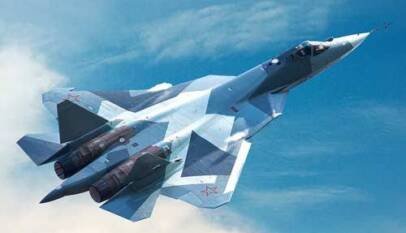
Russia Claims Su-57 Scores First Air-to-Air Kill in Ukraine Conflict Using Advanced RVV-SDM Missile
Moscow/Kyiv, Aug 2026 : Russia has claimed that its fifth-generation Su-57 stealth fighter has …