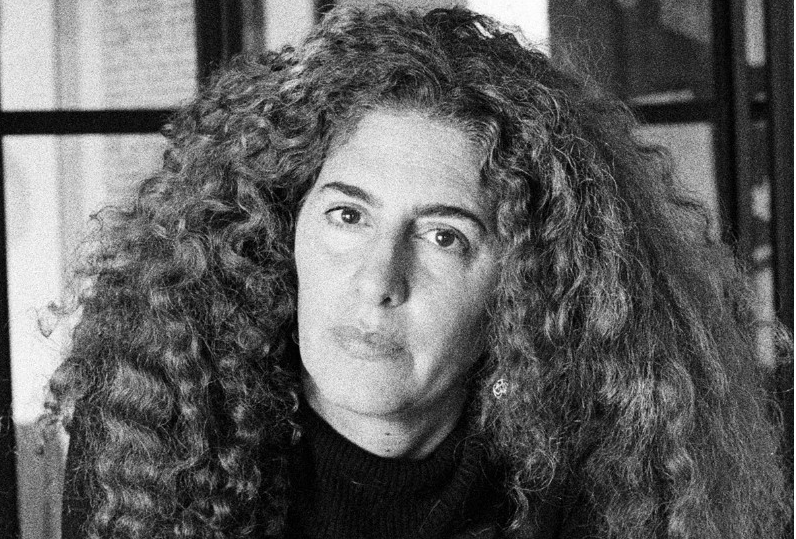
Director Annemarie Jacir reiterates ‘We don’t want a State, we just want to Live’, as she waits for the release of her Epic ‘Palestine 36’.

The veteran film-maker candidly affirmed that Palestine 36 is her fourth feature to be selected as Palestine’s Oscar entry. And although a period film, it does not belong to the past. While years have passed since the executions, widespread detentions and demolished villages under Britain’s 30 years rule, she argues that history is alive. At one point in the film, a young Palestinian man is tied to the front of a vehicle by British soldiers, as a human shield. While filming the scene in Nablus, a city in the West Bank, the very same day Israeli soldiers strapped a wounded Palestinian man to a military vehicle during a raid in Jenin. “Everything that is going on now was set up back then in 1936; everything that the Israeli army does, in fact, is all taken from that moment”, says Jacir.
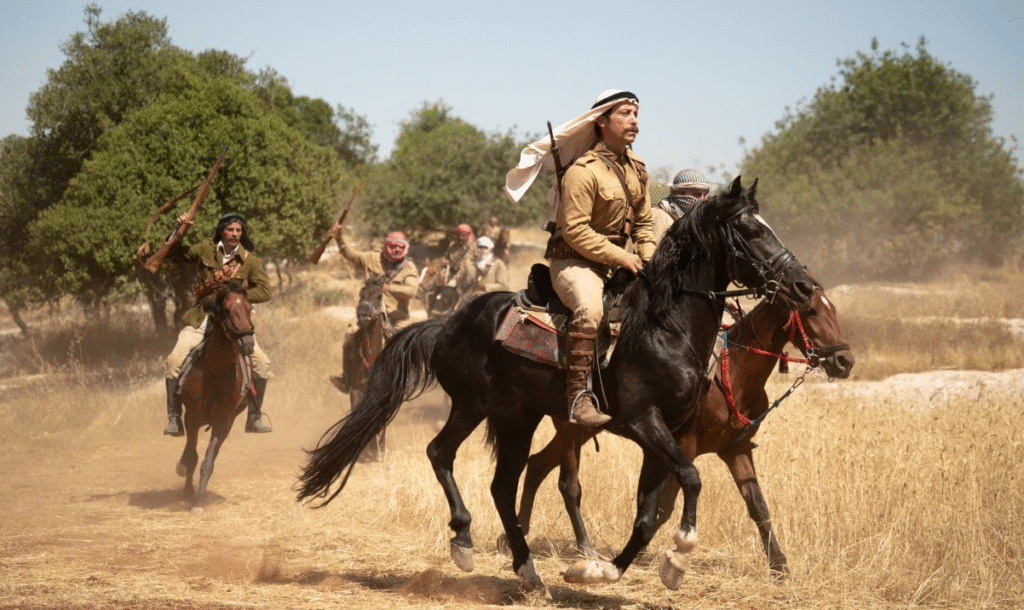
The 10-year project has been “so difficult to come to life” and is a gift, she says, from a cast and crew who persevered despite living through “the darkest moments of our history”.
Jacir has a gift for transporting Palestinians’ experiences of exile and rebellion on to the screen, notably with “When I Saw You”, her second feature, which is set in the aftermath of the 1967 Israeli invasion of the West Bank, and more recently, Wajib (winner of 36 international awards).
Palestine 36, however, is macabrely applicable to the present moment. A few days ago, alongside other nations, the UK moved to recognise Palestinian statehood. Weeks earlier, global genocide scholars backed a resolution stating that Israel’s actions in Gaza met the legal definition of the crime. More than 65,000 Palestinians, a figure believed by academics to be an underestimate, have been killed since the attacks of 07th October. In the occupied West Bank, forced displacements of Palestinians have intensified since.
“There’s a genocide,” Jacir says. “I don’t want a state. I don’t give a shit about a state. We just want to live. That’s what Palestinians want. We want to have a life”. Jacir’s father, born in 1936, survived the 1948 Nakba, supposedly the mass expulsion of Palestinians from their homeland after the creation of Israel, and speaks nonstop of the trauma and dispossession of the past. Jacir’s own backyard in Bethlehem is littered with canisters from Israeli weapons, tear gas, bullets, all labelled ‘Made in the US’. “There’s no respite for any generation of Palestinians. It never stops. Time is going quickly”, she tells, “and yet we’re going nowhere”.
Palestine 36 is stamped by Jacir’s resolve. From the start she was adamant about filming in Palestine, but production was shut down days before it was due to start, following the 7 October attacks. The foreign team were evacuated and it took hours for Palestinian crew members to return to their homes amid total lockdown. Forced to relocate to Jordan for 13 months, they were later able to return, but found one location, an entire village that they had painstakingly restored, including planting tobacco and cotton those had been overrun by settlers. There was also a risk of actors being misidentified if seen in military fatigues or rebel outfits. “It’s a very tense situation, there’s no way we were going to put anybody’s life in danger”.
Over two years, production stopped and started four times. The financial hit was massive. As the situation worsened, producers proposed filming in Cyprus, Greece or Malta instead, but for Jacir it was worth fighting to film in Palestine. “It’s so critical that Jerusalem is Jerusalem in the film. It’s not somewhere else. These places are real, they exist. We do feel this can all be taken away, it’s being taken away”.
While filming in the occupied West Bank, the Palestinian director was conscious it could be the last time they were there, just as she was aware of her own privilege at being on land many are unable to return to. The work felt all the more critical since this was the only feature film to shoot in Palestine in the past two years. Did filming in proximity to Israel’s ongoing assault on Gaza change her relationship to the art of film-making, I wonder? “Artistically, the project changed. I couldn’t help but react to that”.
While the film is large in its historic scope, covering the three years Arab revolt, what everyone are left with is an emotional story of everyday people struggling to live. We find characters at a turning point, each life interwoven as skilfully as tatreez, which is a hand stitched embroidery central to Palestinian culture, which was top of mind for Jacir in the writing process. Each character was a thread for her to cross and intertwine, ultimately leaving us with a portrait of resistance in the face of imperialism.
This is evidenced too in the film’s casting, with a mix of actors, from its animated lead, first-time feature film actor Karim Daoud Anaya, to Succession’s Hiam Abbass and Game of Thrones’s Liam Cunningham, and in its use of colourised archival footage. Wanting the film to “feel alive”, Jacir says it was important to blend fiction with reality. The footage also took on further meaning after certain locations became inaccessible as the war worsened.
History unspools in the farming village of Al Basma, which is a fictional place modelled after the villages of Lifta and Al-Bassa, and the bustling Jerusalem. As the number of Jewish immigrants escaping antisemitism in Europe rises, so too do Palestinian concerns over loss of land under British mandate. What follows is a farmer led revolt that mobilises Palestinians from all classes. The British respond with martial law and the deployment of thousands of troops. Palestinians are imprisoned and executed, leaders are exiled and homes are scorched.
In one scene, a young girl Afra (Wardi Eilabouni in her screen debut) finds a gun hidden in blanket folds near her sleeping grandmother, who catches her mid-act. She tells the girl she will teach her how to use it, “but you must know you have something more powerful than the entire British empire”. Afra is perplexed: what is it? Her grandmother takes her hand. “You will know on your own”, she tells Afra sagely. In another scene, we see Kareem (another debut, by Ward Helou) being told to bite his father’s finger, while his father does the same to one of Kareem’s. Kareem withdraws in pain. “I won. Do you know why?” his father asks. “Because I endured longer, not because I’m stronger. You need to endure so you can win in the end”.
The two scenes are connected by their sense of hope, something according to Jacir is important to hold on to. But in response to the ongoing devastation in Gaza, she reined in the lighter moments. Suddenly, being playful or smart or intellectual hit a wrong note. “It’s not the time for lightness. It’s not the time for poetry. It’s not the time for being abstract and experimental”, she says.
Just like the characters in Palestine 36, none knows what will happen next. At the end of the film Afra is seen to be running through Jerusalem in a tatreez dress, toward some future unknown. There’s no telling where she is going, or what is happening, but as news of a fragile ceasefire breaks, Jacir’s message of endurance feels urgent rather than historical. “It’s just about continuing”, she said.
“Palestine 36” will be released in UK and Ireland cinemas on 31st October.
Team Maverick



Chandrababu Naidu Reviews Preparations for PM Modi’s August 1 Inauguration of Bhogapuram International Airport
Amaravati, July 2026 : Andhra Pradesh Chief Minister N. Chandrababu Naidu on Monday conduc…

Chandrababu Naidu Reviews Preparations for PM Modi’s August 1 Inauguration of Bhogapuram International Airport
Amaravati, July 2026 : Andhra Pradesh Chief Minister N. Chandrababu Naidu on Monday conducted …