India’s Horticulture Sector to get Dutch Technology push for Pesticide Free, Climate Smart Greenhouses.

India’s horticulture industry is entering a new phase as Dutch innovators step in to support the country’s move toward cleaner, climate-smart food production. Through a public-private partnership called HortiRoad2India, the Netherlands aims to help Indian farmers grow pesticide-free, high-value crops using advanced greenhouse systems powered by artificial intelligence.
The consortium, which brings together Dutch technology firms, research institutes, and agri-investors, has spent 05 years studying India’s farm systems. The result is a detailed support plan that combines modern greenhouse design, training, and financial access through local banks.
“We have created a pragmatic and holistic package for India”, said Tiffany Meijer, Project Manager for International Trade in the Dutch horticulture sector and co-lead for the program. “Our model includes both mid-tech and high-tech greenhouse solutions that offer better climate control and resource efficiency compared to traditional polyhouses”.
Under the initiative, high-value crops such as strawberries, coloured capsicum, cherry tomatoes, micro-greens, and lettuce will be grown in glass greenhouses. Tomatoes, which have a large domestic market, will be produced in mid-tech setups. These controlled systems are designed to cut water use by up to 96% compared to open-field farming and raise yields up to 30 times higher, especially for tomatoes.
“We want to generate clean food that doesn’t need washing”, said Desh Ramnath, Director and coordinator of HortiRoad2India. He explained that the system relies on biological pest control and disease-resistant hybrid varieties, reducing the need for chemical sprays or genetically modified seeds.
The Dutch group plans to set up city-based greenhouse clusters near Bengaluru, Chennai, and Punjab to keep food closer to urban consumers. This model reduces spoilage, transport costs, and emissions linked to long-distance delivery. To deal with post-harvest losses, one of India’s biggest agricultural problems, the program will also include cold-storage networks, according to Ivo Meijer, Senior Manager for International and Economic Affairs in the Dutch government.
Dutch Consul General to South India, Ewout de Wit, said the project would raise farmer incomes and improve food security. “With this technology, production can be set up near ports, markets, or consumption hubs wherever it best supports domestic supply or export”, he noted.
Indian growers are already showing strong interest. Ramakrishna, a strawberry farmer from Bengaluru, said the Dutch system gives him room to grow. “Demand is far higher than what I can currently supply. This model will help me scale production significantly”, he said.
Dutch entrepreneur Pieter Jan Robbermont called on Indian investors, especially those from the technology sector, to support greenhouse ventures. He believes local investment will speed up the shift toward sustainable food production. As both the nations strengthen their agricultural ties, the collaboration reflects a shared goal, producing cleaner food, improving livelihoods, and cutting resource waste through smarter farming.
Team Maverick




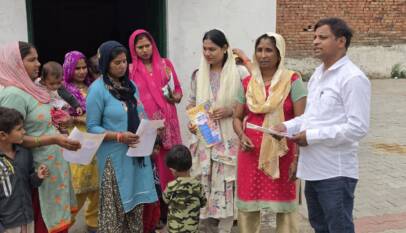

Mission Shakti 6.0: Over 37,000 Girls Learn Practical Banking and Health Skills
Lucknow, March 2026 : Under the ‘Mission Shakti’ campaign, a total of 37,685 girls across …
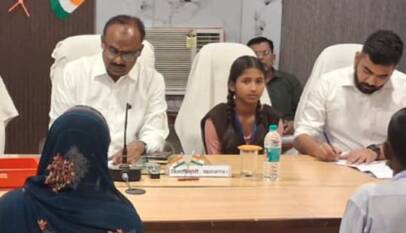
Mission Shakti 6.0: Over 37,000 Girls Learn Practical Banking and Health Skills
Lucknow, March 2026 : Under the ‘Mission Shakti’ campaign, a total of 37,685 girls …