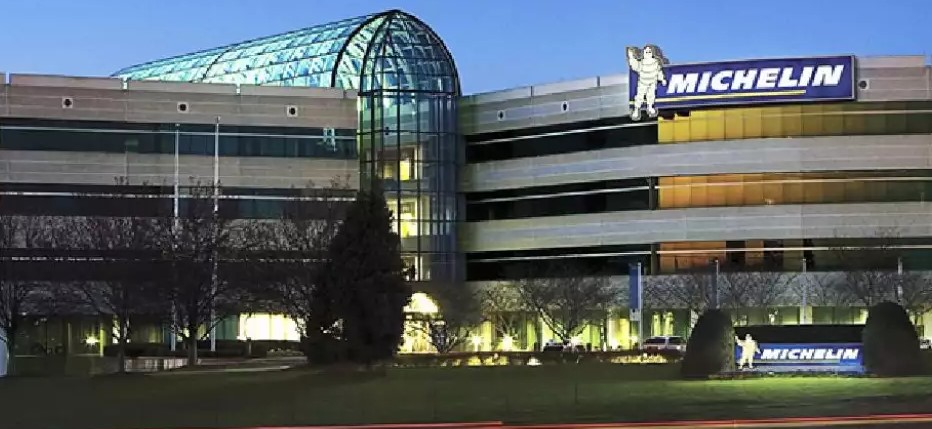
Michelin Tires Resorts to Vocal For Local in Mitigating Chinese Competition.

December 2025: Tires from brands like Michelin, Bridgestone, or Pirelli those once stood in stacks, now faces a horrendous competition from innumerable unknown brands, with names barely uttered. These are Chinese tires that, for the first time ever, now dominate more than half of the sales in Mexico. It is the Chinese tires those which now dominate more than half of the Mexican market, driven by prices up to 40% lower, compelling their Western competitors in strengthening local production and innovation to stem the decline.
Following the Car Sector, where transition was swift and visible with new dealerships on every corner, SUVs at unbeatable prices, and a consumer eager to try them out. Now, in tires, the revolution has been more discreet, but equally impactful. Today, around 45% of passenger vehicle tires are Chinese, a percentage that rises to 80% in the case of truck tires, according to data from the National Chamber of the Rubber Industry in 2024.
The comparison is unsettling for traditional brands. Michelin, Bridgestone, and Pirelli those who are facing an army of unknown brands that play on the advantage of low prices. In tires, the price gap can be as much as 40%. This difference explains why Chinese tire manufacturers are springing up everywhere.
The shift in consumer behavior has been immediate. Faced with inflation and tight budgets, tires have gone from being an aspirational product to a pragmatic purchase. “Obviously, you become more selective about how you spend your money. And tires aren’t exactly the most eye-catching product”, admits Rebekka Hein, Michelin’s brand manager for Mexico and Central America.
The consequence is that global giants are reducing their market share. The three brands refrain from discussing market share figures, but all three acknowledge the blow. During the same period, Asian manufacturers without formal local representation, the so-called non-pool manufacturers, who have experienced their catapulting sales.
Bridgestone warns that the consumer’s decision may have a hidden cost. “The lower price of a tire is a determining factor for the consumer to make the purchase; however, the long-term expense can be much higher“, says Miguel Pacheco, President of Bridgestone Latin America North.
The company seeks to counteract this trend through education and awareness campaigns, highlighting the impact a good tire has on safety, comfort, and efficiency. The challenge is significant, because the flood of low-cost Asian products relies precisely on the perception that “all tires are the same”.
Michelin emphasizes that tires are among the most complex industrial products, as they must balance rigidity and flexibility to ensure comfort while also withstanding high speeds and heavy braking. The company points out that the key lies in the compounds used, and, in the research conducted to define blends and designs that improve grip and performance under adverse conditions.
This knowledge is gained both from development centers and from participation in sporting competitions. “We spent eight years in Formula E because we needed to acquire knowledge of the requirements of the new electric vehicles, because they are heavier and have much more torque”, Hein explains. In addition, Michelin maintains a presence on other high-performance platforms. With its BF Goodrich brand, it participates in the Baja 1000 for the off-road segment, while in motorcycling it continues in MotoGP until 2027, when it will migrate to a new series closer to real-world street driving conditions.
The problem, manufacturers agree, is that consumers still don’t perceive the true value of a high-end tire. “There’s very little awareness about the importance of a tire and the quality characteristics you should consider when buying one“, says Hein.
Meanwhile, manufacturers see their plants as a hub. Bridgestone’s plant in Cuernavaca, with a capacity of 24,000 tires per day, plays a key role in supplying both automakers and the aftermarket. The company has optimized processes and strengthened its supply chain to withstand price pressures without sacrificing standards. Furthermore, it maintains a balanced portfolio; with the Bridgestone brand, it serves the premium segment, while with Firestone, it offers more affordable options, thus diversifying its market coverage.
Michelin is following the same path, reinforcing its “local to local” strategy. The León plant, which produces around 13 million tires a year, exports more than 80%, mainly to the United States, although it also serves the aftermarket in Mexico and some other regions. The goal is to balance this mix to strengthen its local presence without neglecting its global commitments.
The company is also seeking to protect itself against tariff volatility through a greater effort to regionalize its supply chain. While natural rubber will continue to depend on producing countries like Brazil, Michelin is working on zero-deforestation and sustainable harvesting projects. For other inputs, such as steel and synthetic components, the strategy is to locate suppliers within the Americas to reduce logistics costs, improve the carbon footprint, and mitigate regulatory risks.
At the same time, brands are looking toward new specialized segments. Pirelli launched its Elect line, specializing in tires for electric cars, and the Cyber Tyre, capable of collecting and processing data from sensors inside the tire and communicating in real time with the vehicle’s electronics. “Our priority is to anticipate the mobility of the future, offering high-tech products that differentiate Pirelli in the market”, says Enrico Verdino, CEO of Pirelli Mexico.
Michelin has developed tires specifically designed for electric vehicles, combining energy efficiency, low noise, and durability. The company integrates advanced sensors and materials that optimize torque transfer and battery range without compromising safety. Bridgestone, meanwhile, is developing models that reduce noise and optimize energy consumption.
The dispute, however, is not only technological. It is also being fought in the halls of regulation. “It is very important that there are clear and fair rules that ensure fair competition”, Pacheco warns.
For multinationals, the challenge is twofold: defending their premium position and convincing consumers that cheap can end up being expensive. For the Chinese, however, as long as a price difference exists, the trend will continue.
Team Maverick.







Trump Says US, Israel Agree to Hold Off Iran Strikes Pending Rapid Deal
Washington, Aug 2026 : US President Donald Trump said Saturday that the United States and …
Trump Says US, Israel Agree to Hold Off Iran Strikes Pending Rapid Deal
Washington, Aug 2026 : US President Donald Trump said Saturday that the United States …