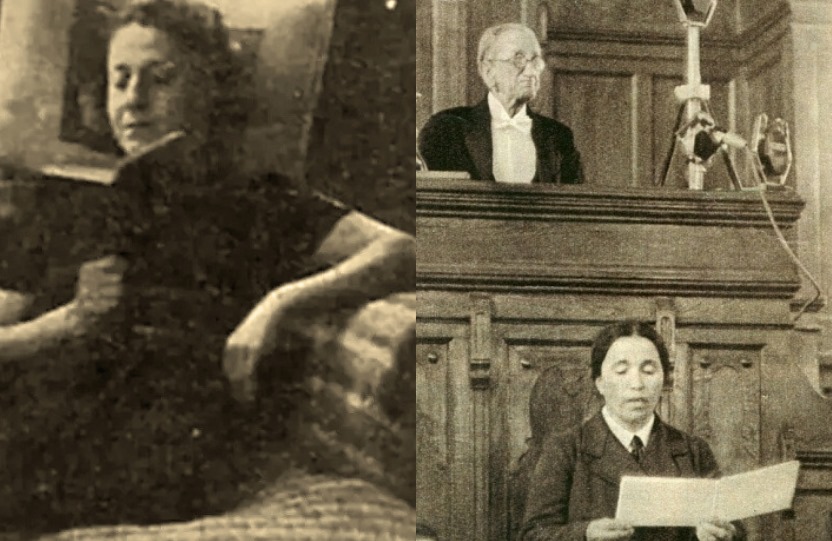
December 05, 1934: Women’s Right to Vote and Be Elected.

Istanbul; December 2025: On December 05, 1934, as a result of women’s struggle, Turkey granted women the right to vote and be elected; 11 years before France, 12 years before Italy, and 36 years before Switzerland could levy the same in force. This wasn’t just a legal regulation. It was a declaration of the Republic’s understanding of equality, which recognized women as subjects. It was a revolutionary step, demonstrating that Atatürk believed women were not only citizens of this country but also its founding force.
Looking back on that decision today, the world still feel proud, but deep in hearts it also aches, because even nearly a century later, this won right hasn’t translated into true representation. Women as someone who dreams of a political arena where labour, merit, and knowledge are valued, but who has repeatedly experienced the invisible thresholds, closed doors, and cold walls of politics.
December 5th is now a day of celebration as much as it is a day of reckoning. Why has the path Atatürk paved become so narrow today? Why is representation still so limited? We cannot move forward without asking these questions.
“There is no revolution without women”: The legacy of Nezihe Muhiddin –
To understand the spirit of December 5th, it’s essential to remember the women’s movement behind this right. One of the most powerful figures in this struggle is undoubtedly Nezihe Muhiddin. She worked to establish the Women’s People’s Party, organized for women’s political rights, and stood tall against all odds, a testament to her courage.
In the first issue of Kadın Yolu magazine, she had written:
“Women’s acquisition of political rights is a matter of civilization. Our revolution cannot succeed without giving Turkish women the rights they deserve.
There can be no revolution without women”.
After the right was granted on December 05, 1934, Nezihe Muhiddin ran as an independent candidate in Istanbul in 1935. But she was not elected. One of the Republic’s most visionary women encountered an obstacle at the first bend in the road she had paved. This is not just a historical note; it was a snapshot of the present day. The difficulties women face in politics in Türkiye continue to persist. The right was gained, but the doors to exercising it remained ajar.
Nezihe Muhiddin’s disappointment is still palpable within politics today. The threshold of politics is much higher, much stricter, than it appears from the outside. Sometimes a door opens, then quietly closes without anyone noticing. You work hard, you produce, you work. Yet, politics, especially for women, remains a field that requires “entry permits”.
This isn’t a complaint. It’s the observation of someone who has chosen to fight. But millions of young women retreat before even approaching that door. That’s why the issue of representation is no longer just a women’s issue, but a democracy’s.
The problem is not in the ballot box, but in the system. The low representation of women in Turkey is often attributed to “voter preference”. However, the research is clear:
• Female candidates are not disadvantaged by voters.
• Party identity, not the candidate’s gender, is the determining factor in voting.
• Society supports women’s increased participation in politics.
So, where’s the problem? It’s in the party’s internal mechanisms. It’s in the architecture that narrows women’s paths and creates invisible barriers during the candidacy process. The ballot box is open, but the door to entering politics is closed. The situation is even more striking in local government. The number of female mayors in all 81 provinces is almost non-existent. The situation remains the same even in the local area, the most visible face of democracy.
Today, democracies are measured by the breadth of representation. Politics without women shrinks, social priorities are underrepresented, language becomes harsher, and accountability weakens. Empowering women in politics isn’t just a demand for equality. It’s a demand for a higher-quality democracy.
So, what’s the way out? The problem cannot be solved by individual efforts. Structural transformation is essential.
- Candidate selection processes must be transparent. Leader-centric structures do not produce representation.
- A zipper system should be implemented. This method, in which male and female candidates rotate, has rapidly increased representation in many countries.
- Quotas should be made mandatory in local politics. The absence of women at the provincial and district levels is a serious governance weakness.
- Support mechanisms should be established for entering politics. Equality is impossible without addressing economic barriers and caregiving burdens.
The light of 1934, the responsibility of 2025 –
Turkey was at the forefront of democracies in 1934. Today, we must complete that step. Because representation is still limited. Women are in the background not because they are failing, but because politics is not designed for women. Changing this order is a requirement of the legacy left to us by the Republic. Women’s full and equal participation is the most accurate indicator of Türkey’s level of democracy.
This is not just a matter of women’s future, but of Türkey’s future. And December 5th reminds us every year: Rights are not given, they are taken. But no right can truly gain its power unless the doors are opened.
Yes, Turkish women were at the forefront of the world in 1934. But they are still lagging behind in representation in 2025. Still, I believe: The women of this country will be both the subjects and carriers of change.
Team Maverick.







Netanyahu Meets Trump at White House for Eighth Bilateral Talks Amid Regional Tensions
Jerusalem/Washington, July 2026 : Israeli Prime Minister Benjamin Netanyahu arrived at the…

Netanyahu Meets Trump at White House for Eighth Bilateral Talks Amid Regional Tensions
Jerusalem/Washington, July 2026 : Israeli Prime Minister Benjamin Netanyahu arrived at the White House …