Europe Will Suspend Imports Of Russian Gas.

December 2025: The European Union has made a decision that will definitively transform the energy map. The ambassadors of the European Union countries gave the green light on Wednesday to the bloc’s plan to phase out imports of Russian gas by the end of 2027, a spokesman for the Danish EU Presidency said, clearing one of the last legal hurdles before the ban can become law.
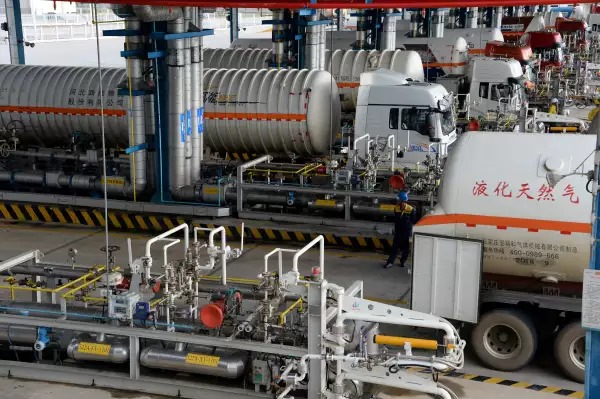
The EU reached an agreement last week on a law to cut ties with Russia, formerly Europe’s main gas supplier, following Moscow’s invasion of Ukraine in 2022. The agreement states that the EU will end imports of Russian liquefied natural gas by the end of 2026 and of pipeline gas by the end of September 2027.
The ban on Russian gas still needs to be formally approved at a meeting of EU Countries’ ministers and by the European Parliament before becoming law. Parliament will vote next week, while EU ministers are expected to formally approve the ban early next year. EU officials expect both countries to approve the agreement with a comfortable majority, despite opposition from Hungary and Slovakia.
The gas export ban is the result of a consensus between the European Parliament, which advocated for a faster ban, and the 27 EU member states that requested a little more time. “We have done it“, said European Commissioner for Energy and Housing, Dan Jorgensen. He has further stressed:
“We have finally and definitively turned off the tap on Russian gas. Europe has chosen energy security and independence. We will never return to our dangerous dependence on Russia. We will never return to volatile supplies and market manipulation. We will never return to energy blackmail or to exposing ourselves economically. We have finally and definitively turned off the tap on Russian gas. Europe has chosen energy security and independence. We will never return to our dangerous dependence on Russia. We will never return to volatile supplies and market manipulation. We will never return to energy blackmail or to exposing ourselves economically”.
Russia has immediately criticised the decision, saying the measure would “accelerate” the decline of the EU economy by forcing the bloc to resort to more expensive alternatives.
In the case of gas supplied by pipelines, the ban on long-term contracts, which sometimes last for decades, will come into effect on September 30, 2027, provided that gas reserves are sufficient. At the latest, it will be applied by November 01st of 2027. In the case of liquefied natural gas (LNG), long-term contracts will be prohibited from January 1, 2027, Von der Leyen announced.
And in the case of short-term contracts, the ban will come into effect on April 25th, 2026 for LNG, and on June 17th of the same year for gas delivered by pipeline. This timetable must be ratified by the EU Member States and by Parliament.
European companies will be able to cite the EU ban as a case of “force majeure” to legally justify breaking these contracts. Since the start of Russia’s war of aggression against Ukraine, the European Union has reduced its dependence on fossil fuels from Russia.
Natural gas is a key input for industry and for the daily lives of Europeans. This fuel is used primarily for electricity generation, domestic heating, and industrial processes. Around 30% of EU households are heated with gas. European Union’s gas demand fell by 19% between 2021 and 2024.
While pipeline gas imports from Russia decreased, imports of liquefied natural gas (LNG) from the United States and Norway, countries the bloc considers more reliable partners, increased. “The share of Russian pipeline gas in EU imports fell from over 40% in 2021 to around 11% in 2024. For pipeline gas and LNG combined, Russia accounted for less than 19% of total EU gas imports in 2024“, the European Council states on its website.
Norway was the EU’s main gas supplier in 2024, providing over 33% of all gas imports. Other suppliers included the United States, Algeria, Qatar, the United Kingdom, Azerbaijan, and Russia. During this period, the EU became the world’s largest importer of LNG. In 2024, the bloc imported more than 100 billion cubic metres. The EU’s largest LNG importers are France, Spain, the Netherlands, Italy, and Belgium.
Member countries have invested in expanding their LNG infrastructure. The bloc’s LNG import capacity increased by 70 billion cubic metres between 2023 and 2024, and an additional 60 billion cubic meters are expected to become available between 2025 and 2030.
Part of those LNG imports are re-exported to other countries, according to the European Commission.
These changes may deepen in the coming years, to cover the market that Russia still occupies.
“If they are going to veto Russian gas, what are they going to do? Southern Europe will import more gas, and North Africa will import more gas”, says Luis Miguel Labardini, partner at the firm Marco y Asociados, specialising in the energy sector.
However, the gas produced in the Mediterranean, in countries like Algeria, is insufficient to meet European needs, so the United States, the world’s largest producer of this fuel and with the largest surpluses, will play a key role.
The United States is already the largest supplier of LNG to the EU, accounting for almost 45% of total LNG imports. Imports from the United States in 2024 were more than double those of 2021.
As the main buyer of Russian natural gas and oil, China has helped keep the Russian economy afloat, battered by hundreds of US sanctions. “I believe China can buy all the gas that the Russians stop selling to Europe. Despite being a major hydrocarbon producer, China does have a natural gas deficit”, says Labardini. China is already building pipelines to transport gas from Russia.
US President Donald Trump is pressuring China and India to stop buying hydrocarbons from Russia in order to reduce the revenue Moscow uses to finance the war in Ukraine. But China has defended its purchases of Russian fuel as “legitimate” and has called Trump’s pressure an attempt at “intimidation”.
However, Russia may lose out with its partnership with China. Russia is becoming increasingly vulnerable to China. Russia’s dependence on the Chinese market will only grow, as apprehended by certain industry experts. There is a very important geopolitical connotation. The world is going to be divided between the Chinese, on one side, and the United States on the other. Russia, in some way, is going to be subject to Chinese policy decisions, although that is clearly not what the Russians were seeking.
Team Maverick.






Dalai Lama Reaffirms Mission of Compassion, Plans Extended Stay in Ladakh
Dharamsala, July 2026 : Tibetan spiritual leader His Holiness the Dalai Lama on Thursday e…

Dalai Lama Reaffirms Mission of Compassion, Plans Extended Stay in Ladakh
Dharamsala, July 2026 : Tibetan spiritual leader His Holiness the Dalai Lama on Thursday …