Pakistan’s Nuclear Program Raised Alarm in Candid Putin–Bush Talks, Reveal Declassified Transcripts

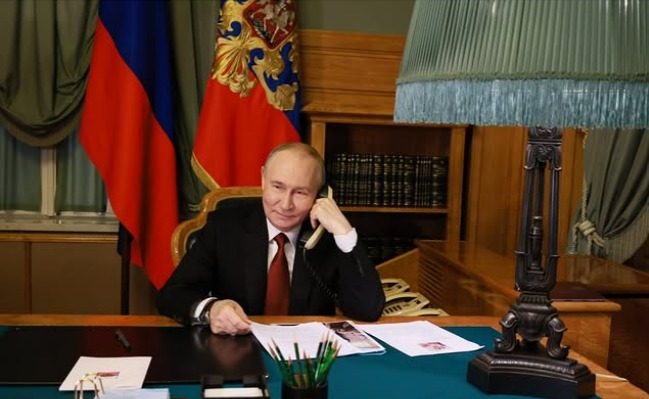
Washington, Dec 2025: Pakistan emerged as a major nuclear proliferation concern during private discussions between Russian President Vladimir Putin and then U.S. President George W. Bush, according to newly declassified transcripts that shed light on the depth of anxiety shared by the two leaders over Islamabad’s control of its atomic assets. The documents, released by the National Security Archive following a successful Freedom of Information Act lawsuit, reveal unusually frank exchanges that contrast sharply with the restrained public diplomacy of the time.
The transcripts capture a September 29, 2005, Oval Office meeting in which Putin directly warned Bush that uranium of Pakistani origin had been discovered in Iranian centrifuges. The revelation reinforced long-standing suspicions about links between Pakistan’s nuclear establishment and illicit proliferation networks, particularly those associated with the infamous A.Q. Khan network.
Bush responded by agreeing that the discovery was deeply troubling, describing it as a clear violation that made Washington “nervous.” According to the records, Putin immediately echoed the concern, replying, “It makes us nervous, too,” before pointedly adding, “Think about us,” a remark underscoring Moscow’s fear that such nuclear leakage posed a direct threat to Russian security as well.
The conversation reflects a rare moment of convergence between the two powers, who often found themselves at odds publicly but appeared aligned in private over the dangers of uncontrolled nuclear proliferation. Both leaders discussed the broader implications of sensitive nuclear material slipping beyond state control and the catastrophic consequences such breaches could entail.
Bush told Putin that he had personally confronted then-Pakistani President Pervez Musharraf about the issue. He explained that the United States had exerted strong pressure on Islamabad after uncovering the activities of Abdul Qadeer Khan, widely regarded as the architect of Pakistan’s nuclear weapons program. Bush noted that Khan and several of his associates had been jailed or placed under house arrest, but he made clear that Washington remained dissatisfied.
“We want to know what they said,” Bush told Putin, signalling frustration over what U.S. officials believed were incomplete disclosures by Pakistani authorities. The exchange suggests that even years after the exposure of the A.Q. Khan network, serious doubts lingered at the highest levels about whether its full reach had been uncovered or whether all illicit transfers had truly ceased.
Putin, meanwhile, questioned why Pakistan did not face the same sustained international pressure applied to other states accused of nuclear violations. In a strikingly blunt assessment, he referred to Pakistan as “just a junta with nuclear weapons,” revealing Moscow’s scepticism about Western tolerance toward Islamabad despite its controversial proliferation history.
The Russian leader contrasted Pakistan’s treatment with that of Iran and North Korea, both of which were subjected to intense scrutiny and sanctions. The transcripts show that Bush did not challenge Putin’s characterisation, instead acknowledging that Pakistan’s role in illicit nuclear transfers remained a serious and unresolved concern for the United States.
The two leaders also discussed intelligence suggesting continued cooperation between Pakistani elements and foreign nuclear programs. Putin said Russian experts believed interactions related to Iran’s uranium enrichment efforts had persisted, while Bush confirmed that U.S. intelligence assessments pointed in the same direction.
Although Pakistan was officially a key U.S. ally in the post-9/11 war on terror, the transcripts reveal that behind closed doors, Washington and Moscow viewed Islamabad’s nuclear stewardship with deep suspicion. The documents indicate that Pakistan’s nuclear program was not seen as an isolated issue, but as part of a broader pattern involving weak controls, opaque decision-making, and the risk of catastrophic leakage.
Throughout the discussion, Putin repeatedly raised concerns about the dangers of nuclear weapons in the hands of regimes lacking democratic accountability, while Bush emphasised the urgency of preventing any further spread of sensitive technology. Their exchange highlights how proliferation fears often transcended geopolitical rivalries when the stakes involved global security.
The National Security Archive said the records provide “previously unavailable evidence” of the extent to which U.S. and Russian leaders privately shared concerns about Pakistan, even as their public statements at the time were far more measured.
Pakistan developed its nuclear arsenal outside the framework of the Nuclear Non-Proliferation Treaty and has long faced international scrutiny, particularly after revelations in the early 2000s that the A.Q. Khan network had supplied nuclear technology to Iran, North Korea, and Libya. The newly released transcripts offer a rare glimpse into how seriously those revelations continued to resonate in the highest corridors of power years later.
(The content of this article is sourced from a news agency and has not been edited by the Mavericknews30 team.)





Alvarez, Lautaro Fire Argentina Past 10-Man Switzerland in Extra Time, Set Up Blockbuster World Cup Semi-final Against England
Score: Argentina 3 (Alexis Mac Allister 10′, Julian Alvarez 112′, Lautaro Mart…

Alvarez, Lautaro Fire Argentina Past 10-Man Switzerland in Extra Time, Set Up Blockbuster World Cup Semi-final Against England
Score: Argentina 3 (Alexis Mac Allister 10′, Julian Alvarez 112′, Lautaro Martinez 120+1′) beat …