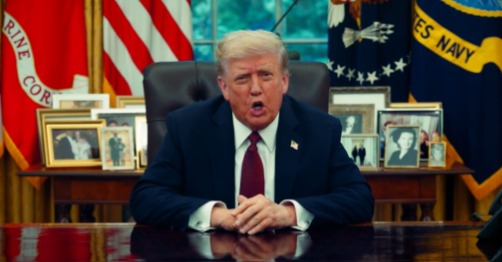
Trump’s Tariffs Are Working: Trade Deficit Narrows To Narrowest Since 2009.

January 2026: The U.S. trade deficit in goods and services declined by nearly 45% from September 2025 to October 2025, as the Trump administration’s tariff policies continued to rebalance trade, data from the Commerce Department showed on Thursday.
Imports fell by 3.2% to $331.4 billion, while exports rose by 2.6% to $302.0 billion. Because imports declined and exports increased, the U.S. trade deficit shrank by a sharp 39.0%, indicating that the Trump administration’s trade policies are working to bring U.S. trade into better balance.
At $29.4 billion, the U.S. trade deficit has fallen to the lowest since 2009, when the economy was reeling from the financial crisis and the bursting of the housing and mortgage bubble. Unlike 2009, however, the deficit in recent months has fallen sharply amid economic strength.
This is the third straight monthly decline in the trade deficit, suggesting that changes to U.S. tariff policy are driving deep changes in the global economy. The three-month moving average, which smooths out short-term volatility, is down $31.3 billion year-over-year.
Adjusted for inflation, the goods deficit fell 19.8% in October, with real exports up 3.9% and real imports down 4.2%.
Many economists questioned President Trump’s focus on trade deficits, with some going so far as to suggest that the tariffs would backfire and actually widen the trade deficit. That view alongside forecasts that tariffs would cause inflation to move significantly higher has been challenged by months of data showing declining deficits and little-to-no broad pricing pressure from tariffs.
One reason the sweeping tariffs Trump imposed on imports from countries around the world this year have not had the predicted effects is that, rather than retaliating with tariffs of their own, other countries have been lowering their tariffs and non-tariff barriers. The trade war many economists assumed would result from U.S. tariff hikes never developed. Instead, countries have sought to strike deals with the Trump administration in order to see smaller tariff increases on their exports.
Many of President Trump’s tariffs went into effect in early August. The trade deficit shrank in each subsequent month. In late August, the Trump administration closed the “de minimis” loophole that allowed foreign producers to avoid tariffs by shipping goods in batches worth less than $800.
The economy has been growing rapidly in recent months, recovering from a small contraction in the first quarter that bridged the Biden and Trump administrations. In the second quarter, the economy expanded at a 3.8% annual pace. In the third quarter, it grew at a 4.3% pace.
The sharp decline in the trade deficit in October was driven in part by an unusual swing in pharmaceutical trade. Imports of pharmaceutical preparations fell by $14.3 billion in October, while exports declined by $0.9 billion. The Commerce Department did not provide an explanation for the sharp monthly movements. Even excluding pharmaceuticals, however, the trade deficit would have shown significant improvement, with imports of consumer goods falling $14.0 billion overall and exports of industrial supplies rising $10.2 billion.
Team Maverick.







Mandaviya Hails India’s Winning Start at Commonwealth Games as Bowlers Shine in Glasgow
Glasgow, July 2026 : Union Minister for Youth Affairs and Sports Dr. Mansukh Mandaviya on …

Mandaviya Hails India’s Winning Start at Commonwealth Games as Bowlers Shine in Glasgow
Glasgow, July 2026 : Union Minister for Youth Affairs and Sports Dr. Mansukh Mandaviya …