Mumbai, November 26, 2026: Eighteen years have passed since the night of November 26, 2008, when Mumbai became the target of one of the deadliest terrorist attacks in India's history. Yet, for the families who lost loved ones, the survivors who carry the memories and the city that witnessed those terrifying 60 hours, the passage of time has not erased the pain.
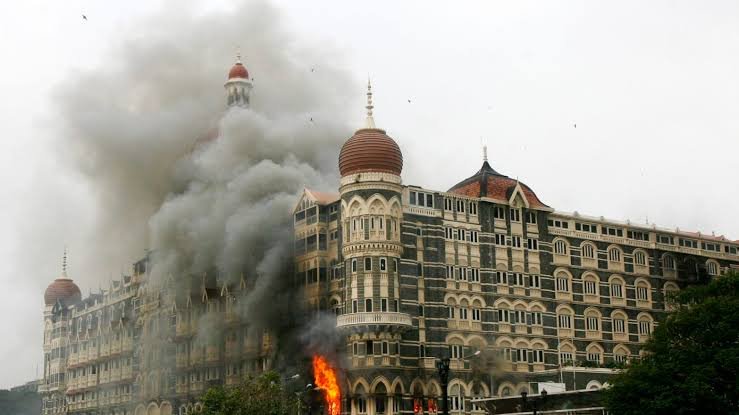
The images remain etched in the nation's collective memory: the Taj Mahal Palace Hotel engulfed in flames, gunfire echoing through the corridors of the Chhatrapati Shivaji Maharaj Terminus (CSMT), anxious families waiting for news and security personnel moving into danger to save others. What began as an ordinary Wednesday evening turned into a nightmare that held Mumbai and the country in suspense until November 29.
Ten heavily armed terrorists who had arrived by sea from Pakistan launched coordinated attacks at several locations across Mumbai. Their targets included CSMT, the Taj Mahal Palace Hotel, the Oberoi-Trident complex, Leopold Cafe, Nariman House and Cama Hospital, among other places. The violence claimed 166 innocent lives, including Indian citizens and foreign nationals, and left more than 300 people injured.
But behind every casualty figure was a human story: a parent who never returned home, a child who lost a loved one, a family whose future changed in a matter of minutes and an individual whose final moments became part of a national tragedy.
Ordinary People Caught in an Extraordinary Nightmare
At CSMT, one of India's busiest railway stations, commuters were going about their daily routines when gunmen opened fire on unsuspecting passengers. Men, women and children who had simply been returning home suddenly found themselves fighting for survival.
At Leopold Cafe, a popular meeting place for residents and visitors, an evening of conversation and meals gave way to terror. Inside the hotels and Nariman House, guests, staff members and residents were trapped as gunmen moved through the buildings.
Hotel employees, police personnel and ordinary citizens displayed extraordinary courage. Several staff members at the Taj and Oberoi helped guests find shelter, guided them through unfamiliar passages and remained with them despite the danger. Their actions demonstrated that bravery is not confined to people wearing uniforms.
The tragedy was not limited to Mumbai. Families across India and several other countries waited anxiously for news of relatives and friends. For many, the wait ended in devastating loss.
The Officers Who Walked Towards Danger
Among the most enduring memories of 26/11 is the courage shown by Mumbai Police and other security personnel who confronted the attackers in extremely difficult circumstances.
Hemant Karkare, then chief of the Maharashtra Anti-Terrorism Squad, Additional Commissioner of Police Ashok Kamte and senior police officer Vijay Salaskar were killed while responding to the attacks. Their deaths became symbols of the sacrifice made by officers who placed their duty above their own safety.
Assistant Sub-Inspector Tukaram Omble displayed remarkable courage when he confronted terrorist Ajmal Kasab and helped capture him alive. Despite being unarmed against a gunman, Omble held on to the attacker, enabling other policemen to overpower him. He lost his life in the process, but his actions played a crucial role in securing the only surviving terrorist for investigation and trial.
The sacrifice of police constables, railway police personnel and other members of the security forces deserves equal remembrance. Many performed their duties under fire, helping evacuate civilians, protect vulnerable locations and prevent further loss of life.
Major Sandeep Unnikrishnan of the National Security Guard also laid down his life during the operation to rescue people trapped inside the Taj Mahal Palace Hotel. His courage and commitment became an enduring source of inspiration. NSG personnel, including Havildar Gajender Singh, also made the supreme sacrifice during the operations.
Sixty Hours of Courage and Determination
As the scale of the attacks became clear, the response involved the Mumbai Police, the Army, the Navy's Marine Commandos and the National Security Guard. NSG commandos were flown to Mumbai from their base in Manesar, Haryana, and launched operations at the major hostage locations.
The counter-terror operation, known as Operation Black Tornado, involved dangerous searches through smoke-filled rooms, narrow corridors and buildings where hostages were still trapped. Security personnel had to distinguish between attackers and civilians while confronting heavily armed terrorists.
The operations continued for nearly three days. The final phase at the Taj ended on the morning of November 29, bringing the siege to a close. Hundreds of people were rescued from the targeted buildings, but the cost of the operation and the tragedy that preceded it remained immense.
The response also exposed serious gaps in India's security preparedness and led to changes in coastal security, intelligence coordination and counter-terror arrangements. The attacks became a turning point in the country's approach to internal security.
The Families Who Continue to Carry the Loss
Eighteen years later, remembrance must extend beyond ceremonial tributes and annual statements. For the families of those killed, anniversaries can reopen wounds that never fully heal. Children have grown up without parents, spouses have had to rebuild their lives and parents have learnt to live with the absence of sons and daughters.
The survivors, too, continue to carry memories of fear, loss and uncertainty. Some witnessed the violence directly; others survived because a stranger, a colleague or a security officer helped them reach safety.
Their stories remind us that terrorism does not merely take lives. It disrupts families, changes communities and leaves emotional scars that can last for generations.
Remembering Is Also a Responsibility
On this eighteenth anniversary, Mumbai remembers every innocent person who lost their life and every officer and security personnel who made the supreme sacrifice while protecting others. Their names and stories deserve to remain part of the country's history, not as distant statistics but as reminders of individual lives, courage and humanity.
The people who died at railway stations, restaurants, hotels and homes were not merely victims of an attack. They were people with dreams, responsibilities, relationships and plans for the next morning. The men and women who fought to protect them were not simply performing a duty; they were defending the lives of strangers at extraordinary personal risk.
The true tribute to the victims of 26/11 lies in remembering them with dignity, supporting the families who continue to live with their loss and ensuring that the lessons of that tragedy are never forgotten.
Eighteen years have passed, but the message of 26/11 remains clear: hatred and violence can wound a city, but they cannot erase its courage, compassion and resilience.
Mumbai remembers. India remembers. And the nation bows its head in gratitude to all those who lost their lives and to the heroes who stood between terror and the innocent.
Team Maverick
Disclaimer: This article has been written solely to remember and pay tribute to the victims of the 26/11 Mumbai terror attacks and honour the courage and sacrifice of the security personnel and ordinary citizens who lost their lives. It is not intended to hurt, offend or disrespect the sentiments of any individual, family, community or organisation. The writer has made every effort to maintain a respectful and sensitive tone while recalling this tragic chapter in India's history.