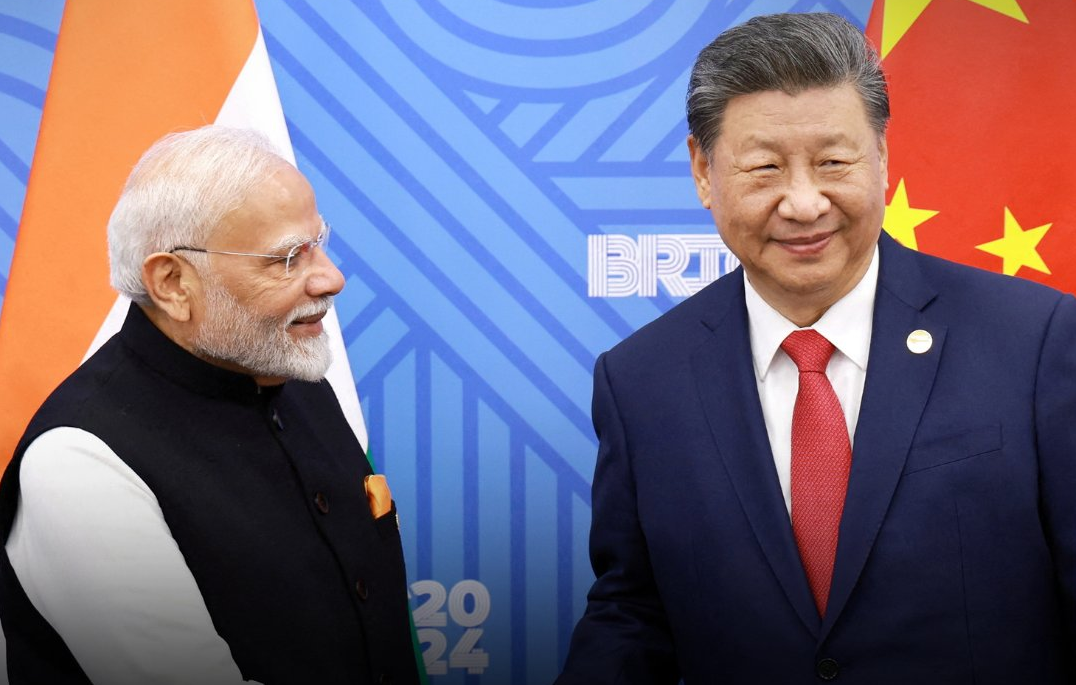
New Delhi, Sept 2026 : Prime Minister Narendra Modi and Chinese President Xi Jinping are scheduled to meet in New Delhi on Saturday evening, with bilateral trade and investment issues expected to feature prominently in their discussions.
A key issue likely to come up during the meeting is India's widening trade deficit with China, even as bilateral commerce continues to expand. India has been seeking greater balance in its trade relationship with Beijing while also strengthening domestic manufacturing and reducing vulnerabilities in critical supply chains.
India's exports to China increased 36.62 per cent to $19.47 billion in 2025-26, compared with $14.25 billion in the previous financial year. However, imports from China rose 16.03 per cent to $131.63 billion from $113.46 billion.
As a result, India's trade deficit with China widened to $112.16 billion in 2025-26, compared with $99.21 billion in 2024-25. Overall merchandise trade between the two countries increased 18.31 per cent to $151.10 billion during the year.
China has also overtaken the United States to become India's largest trading partner, highlighting the growing importance of economic ties between the two Asian economies.
The widening trade gap has been a persistent concern for India. The deficit stood at $83.2 billion in 2023-24, $73.3 billion in 2022-23 and $44 billion in 2021-22. The trend has strengthened calls for measures to promote more balanced and sustainable trade between the two countries.
However, the trade imbalance cannot be viewed solely through the lens of consumer products entering the Indian market. A significant share of India's imports from China comprises industrial inputs, components and capital goods required by Indian manufacturers.
According to a report by the Global Trade Research Initiative (GTRI), four major categories — electronics, machinery, computers and organic chemicals — account for approximately 66 per cent of India's imports from China. China supplies around 43 per cent of India's electronics imports and nearly 40 per cent of its machinery and computer imports.
These products form an important part of India's manufacturing ecosystem and support domestic production, investment and employment.
India also remains heavily dependent on China for several critical minerals. More than 40 per cent of India's imports of six key critical minerals come from China, creating vulnerabilities for sectors such as renewable energy, electric vehicles and defence.
Any disruption or restriction in the supply of these materials could affect Indian industries and lead to significant supply-chain challenges. The GTRI has warned that such structural dependence exposes India's clean energy, electronics and pharmaceutical sectors to potential disruptions involving critical raw materials.
While India is expected to raise concerns over trade imbalances and supply-chain dependence, China is likely to seek greater access to India's rapidly expanding market.
Beijing has been seeking an easing of investment restrictions to enable Chinese companies to participate more actively in India's growth story. The discussions between Modi and Xi could therefore provide an opportunity for both sides to explore greater economic engagement while addressing concerns related to trade balance, market access and investment.