New Delhi, Nov 2026 : Prime Minister Narendra Modi on Thursday urged Indian businesses to look beyond the domestic market and make greater use of India's recent trade agreements and the momentum of the government's reform agenda to expand their global presence.
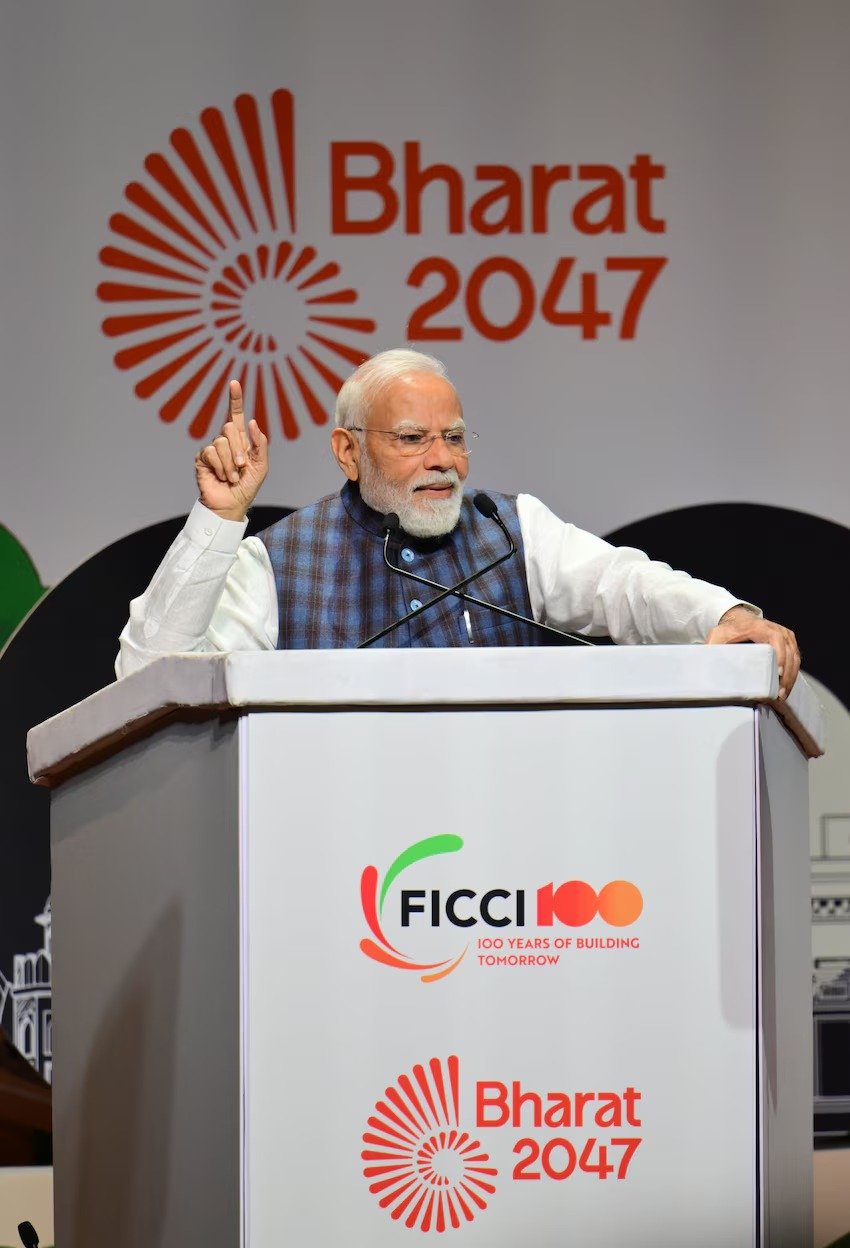
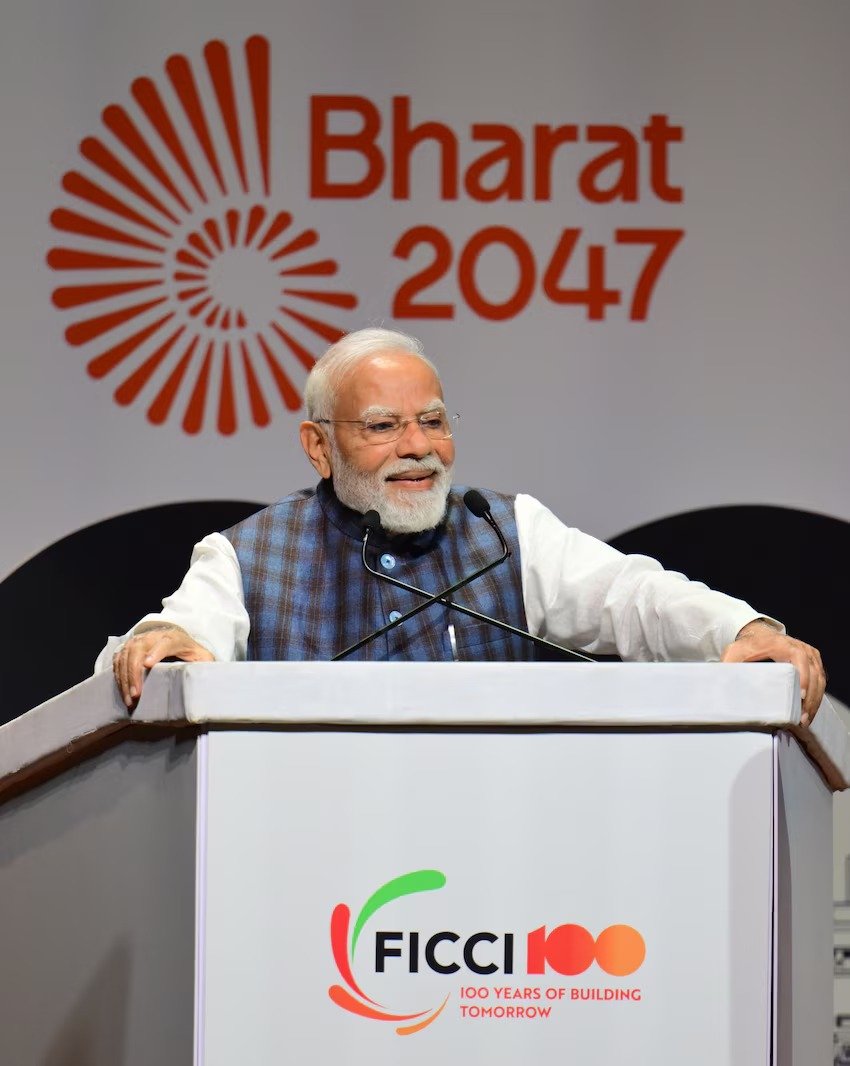
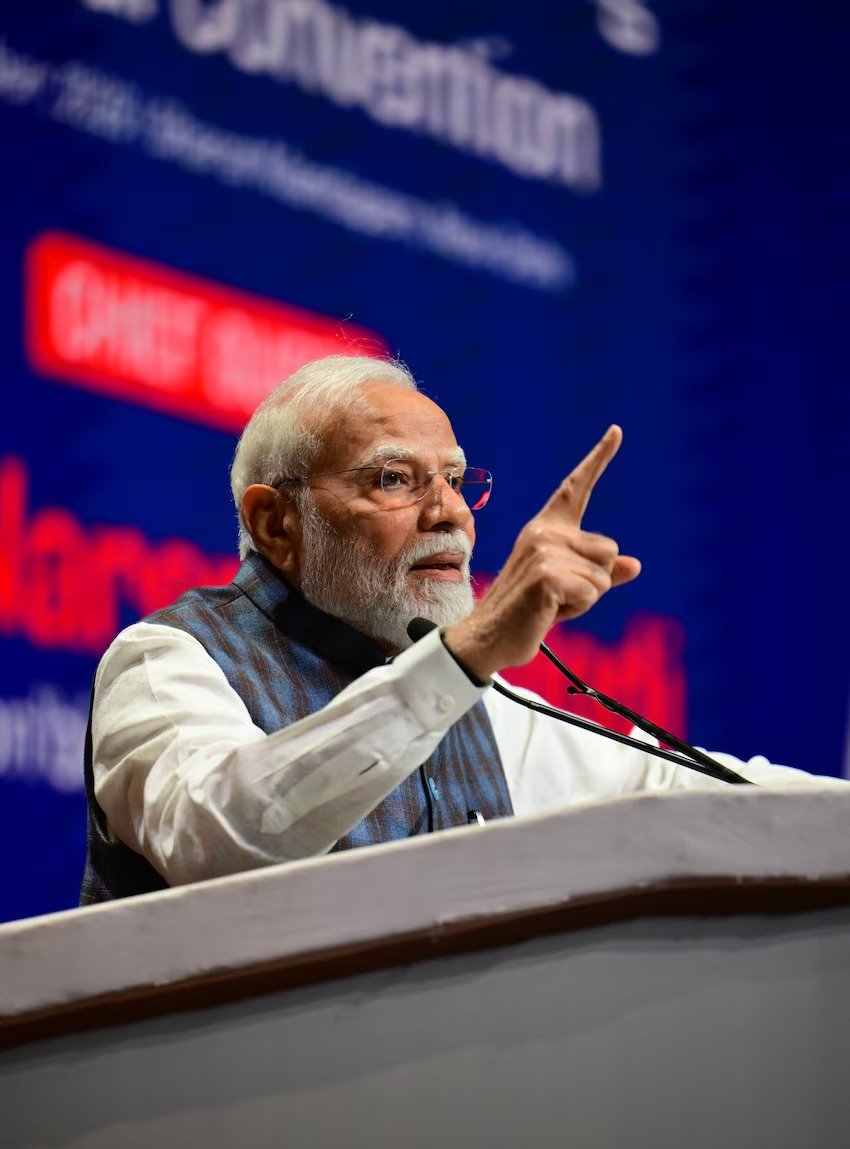
Addressing the Annual General Meeting and Annual Convention of the Federation of Indian Chambers of Commerce and Industry (FICCI) at Bharat Mandapam, Modi said the government was open to suggestions from industry and encouraged businesses to understand international customer requirements, meet global quality standards and develop strong distribution networks.
"Our domestic market should not be our comfort zone, as it must give us the confidence to compete in global markets," the Prime Minister said, calling on industry leaders to identify opportunities in overseas markets and build the capabilities required to capture them.
The event also marked the centenary celebrations of FICCI. Congratulating the industry body on completing 100 years, Modi said the organisation had remained alert to changing economic conditions, evolved with the times and contributed to India's economic journey.
Referring to the country's development progress, the Prime Minister said India was witnessing one of the fastest rates of economic growth, while the pace of poverty reduction was also unprecedented.
He emphasised that national development depended on recognising the contributions of farmers, small entrepreneurs, industry, wealth creators and taxpayers. In this context, he highlighted several reforms introduced by the government to support businesses and improve purchasing power.
Modi cited the reduction in the basic corporate tax rate from 30 per cent in 2014 to 22 per cent, the exemption of income up to Rs 12 lakh, simplification of tax returns and refunds, and reductions in Goods and Services Tax (GST) rates on several products. These measures, he said, were intended to stimulate demand and directly benefit industry and businesses.
The Prime Minister also identified pharmaceuticals as a sector with considerable potential for expanding domestic manufacturing. While India had established strength in finished medicines, he said the country needed to develop greater capabilities in producing active ingredients. He urged companies to invest in new technologies and large-scale manufacturing facilities to strengthen global competitiveness.
Calling for similar efforts in the minerals sector, Modi asked industry to identify imported grades, develop the technologies required for domestic production and build expertise across the mineral value chain.
He also highlighted opportunities in agricultural exports. Despite India's scale, its share in global agricultural exports remains around 2 to 2.5 per cent. However, the share of processed food in India's agri-food exports has increased from 13 per cent to over 20 per cent in 12 years.
The Prime Minister urged industry to formulate a joint strategy aligned with international demand, increase investment in agriculture and establish reliable procurement systems and product lines for overseas markets.
His message to industry was clear: use domestic strengths, invest in manufacturing capabilities and convert India's reform momentum into greater participation in global trade.