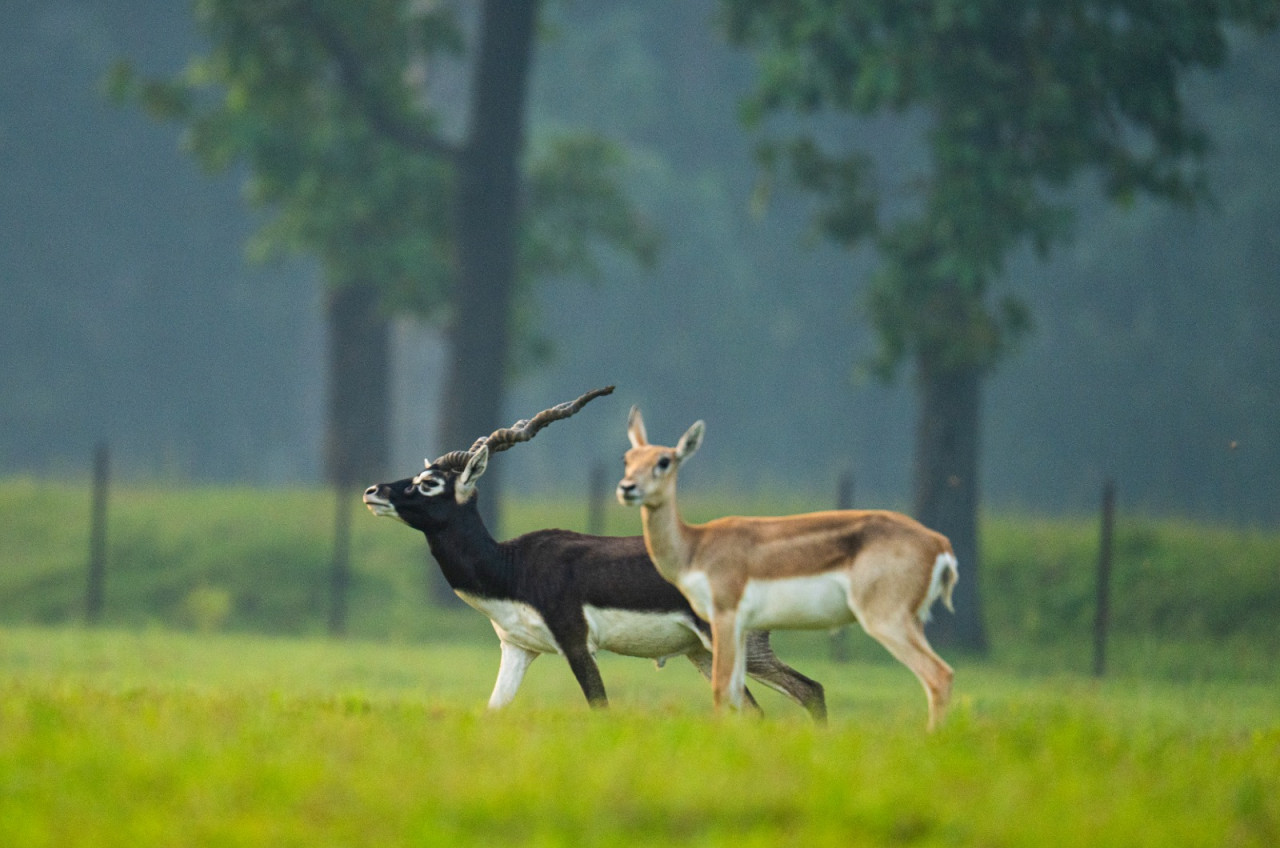
Barnawapara Sanctuary in Chhattisgarh Emerges as a Model for Blackbuck Revival

Raipur, April 2026: The Barnawapara Wildlife Sanctuary in Chhattisgarh has emerged as a remarkable example of successful wildlife conservation, with the near-extinct population of blackbucks in the region now rebounding to nearly 200. This achievement has gained national recognition after Prime Minister Narendra Modi highlighted the state’s conservation efforts in his popular radio programme Mann Ki Baat.
Calling it a matter of pride for the state, Chief Minister Vishnu Deo Sai said that the mention in Mann Ki Baat has not only strengthened Chhattisgarh’s identity but also boosted the morale of those working tirelessly at the grassroots level for wildlife protection. He made these remarks after listening to the 133rd episode of the programme at Vinayak City in Bhatagaon, Raipur.
Located in Balodabazar-Bhatapara district and spread across approximately 245 square kilometres, Barnawapara Wildlife Sanctuary has become a symbol of conservation success. Once nearly devoid of its flagship species—the blackbuck—the sanctuary has now transformed into a safe habitat for around 200 of these graceful antelopes.
There was a time when blackbucks had almost disappeared from the region due to habitat loss and encroachment, particularly after the 1970s. For nearly five decades, the species remained locally extinct in the area. However, the situation began to change after the ninth meeting of the State Wildlife Board in April 2018 approved a reintroduction plan.
Under a carefully designed strategy involving scientific management and continuous monitoring, efforts were made to reintroduce and protect the species. As a result, the population steadily increased, eventually reaching close to 200. This revival story, acknowledged by the Prime Minister, stands as a testament to sustained conservation work.
The journey, however, was not without challenges. In the early stages, around eight blackbucks died due to pneumonia, prompting authorities to improve management practices. Forest officials introduced measures such as laying sand layers in enclosures for better ground conditions, improving drainage systems to prevent waterlogging, enhancing waste management, and appointing a dedicated veterinary doctor.
These consistent efforts led to stabilisation and gradual growth in the population. Improved nutrition, regular health monitoring, and a favourable habitat have helped the blackbucks adapt successfully. The current population level indicates that the species is thriving and could potentially be reintroduced into open forest areas in the future.
The presence of blackbucks in the sanctuary’s open grasslands highlights the possibility of restoring species to their natural habitats even after long periods of local extinction. What was once a silent landscape is now a thriving ecosystem, showcasing a powerful story of ecological revival.
About the Blackbuck:
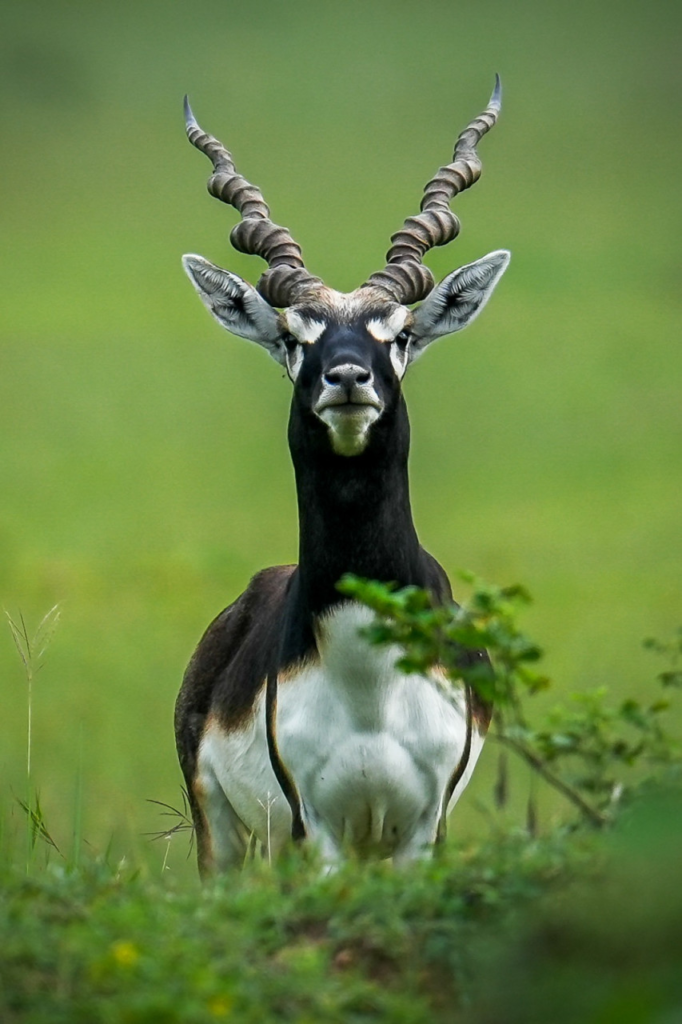
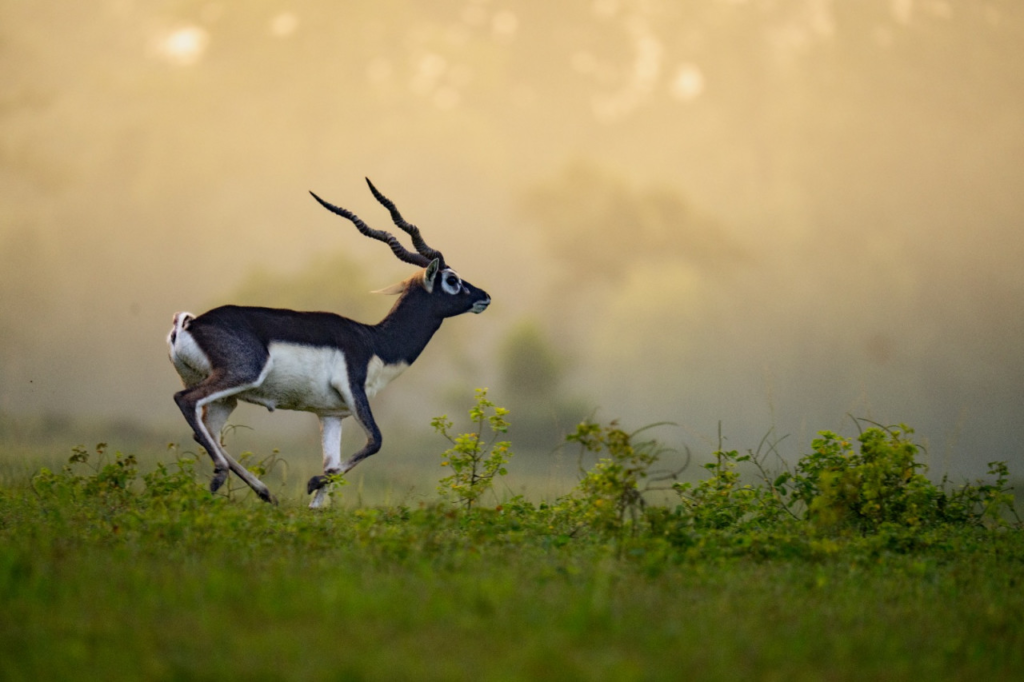
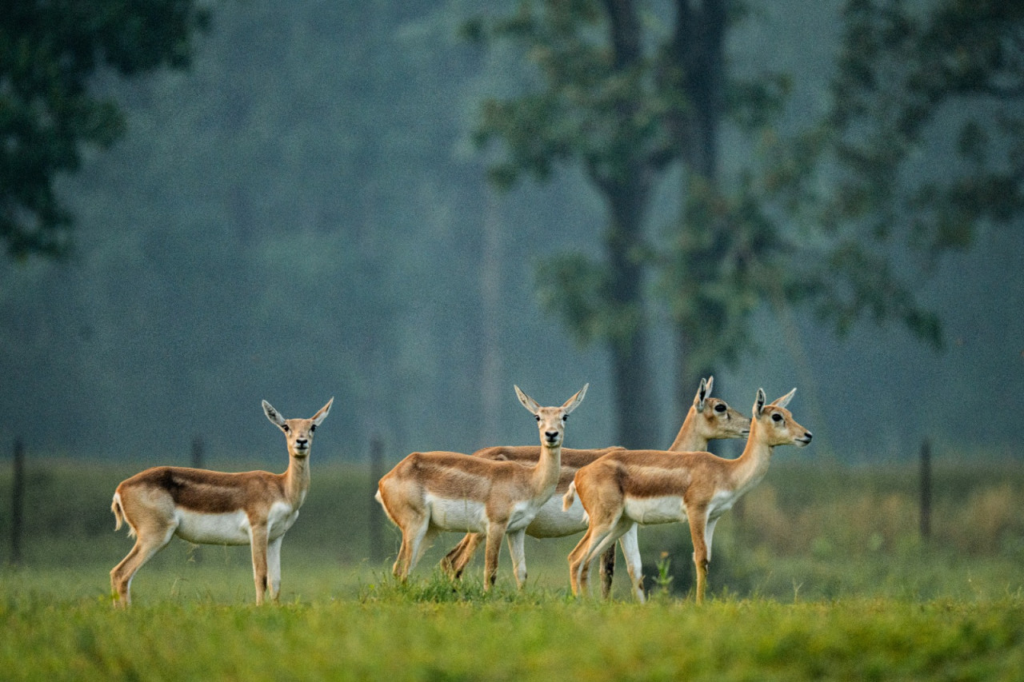
The blackbuck (Antilope cervicapra) is an antelope species native to the Indian subcontinent and is considered vulnerable. Male blackbucks are characterised by their dark brown to black coloration, long spiral horns, and white underparts. Females are lighter brown in colour and usually do not have horns.
These animals primarily inhabit open grasslands and are active during the day. Their diet mainly consists of grasses and small plants. Blackbucks typically stand between 74 and 84 centimetres tall. Males weigh between 20 and 57 kilograms, while females weigh between 20 and 33 kilograms. The males’ distinctive spiral horns, which can grow up to 75 centimetres long, make them easily identifiable.





BJP Workers Are Full-Time Politicians, Rahul Gandhi Is Part-Time: Nitin Nabin in Telangana
Hyderabad, June 2026 : Bharatiya Janata Party (BJP) national president Nitin Nabin on Mond…
BJP Workers Are Full-Time Politicians, Rahul Gandhi Is Part-Time: Nitin Nabin in Telangana
Hyderabad, June 2026 : Bharatiya Janata Party (BJP) national president Nitin Nabin on Monday …