Japan Set To Replace Its Nuclear Reactors By The Year 2050.

Tokyo; June 2026: Japan’s Ministry Of Industries today (Saturday – 06th June 2026) has proposed replacing 02 to 05 aging nuclear reactors by the 2040s, and a total of 11 to 14 by the 2050s, setting such a numerical target for the first time since the 2011 Fukushima nuclear disaster. The Ministry of Economy, Trade and Industry presented the targets at a ministry panel meeting, aiming to encourage investment and secure personnel in the nuclear industry.
The plan comes as Japan expects electricity demand to grow with the spread of artificial intelligence. But with nuclear plant construction costs soaring globally, it remains uncertain whether replacements will proceed as the government hopes.
Japan’s nuclear policy has already shifted from reducing reliance on nuclear power in the wake of the tsunami-triggered Fukushima Daiichi nuclear disaster in March 2011 to making maximum use of it. Under the government’s basic energy plan revised in 2025, Japan is aiming to source 20% of its electricity from nuclear power in fiscal 2040 to help meet energy needs.
Achieving the goal, however, would require replacing existing plants as restarting existing reactors alone would not be enough to meet the target.
Today (06th June)’s proposed numbers likely reflect electric power industry estimates that by the 2040s, Japan will see a shortfall of 5.5 million kilowatts of power, roughly equivalent to the amount generated by five reactors.
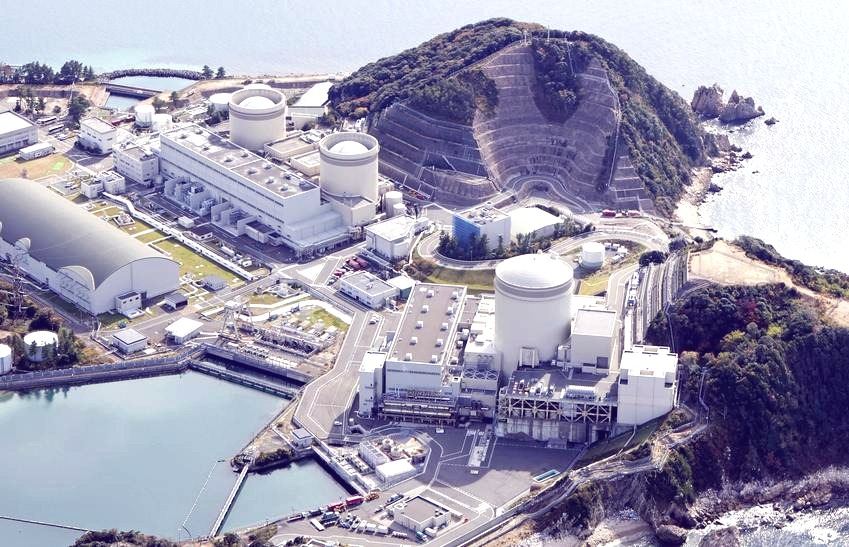
Reactor operating lifespans are capped at 60 years and some plants in Japan have already been running for around 50 years. There are now 24 reactors undergoing decommissioning work at 11 nuclear power stations. Some of the replacement reactors could be built at the Mihama power station in Fukui Prefecture and the Sendai complex in Kagoshima Prefecture.
However, the Japanese Government has not clearly addressed the following:
- What actions are to be taken for disposing all the irradiated material?
- what will happen to old plant?
- How much would be the cost for cleaning up the old one?
- How much the new one will cost?
- is it 100% private money or public money?
Yesterday, (Friday – 05th June 2026), at a meeting of the Nuclear Energy Subcommittee under the Advisory Committee for Natural Resources and Energy, committee member ASANO Kenji, Senior Research Scientist of the Socio-economic Research Center at the Central Research Institute of Electric Power Industry (CRIEPI), welcomed the Ministry of Economy, Trade and Industry’s revised draft of its “Future Nuclear Policy Direction and Action Guidelines” for providing greater detail on measures to improve the business environment for nuclear power.
However, he argued that the proposed measures remain insufficient, emphasizing the need for a clearer framework for government risk-sharing to support private-sector investment decisions. Asano has praised the draft for clearly identifying the risks associated with nuclear investment and for positioning business environment improvement as a central policy pillar. He noted that the document explicitly addresses major challenges, including high upfront capital costs, lengthy project lead times, uncertainty in future revenues due to electricity market fluctuations, and risks related to backend fuel cycle activities and licensing procedures.
He also welcomed the inclusion of measures such as improvements to Japan’s Long-term Decarbonized Power Source Auction system, lessons learned from the Regulated Asset Base (RAB) model adopted for the Sizewell C project in the United Kingdom, potential revisions to the nuclear liability compensation framework, and efforts to facilitate local consensus-building and licensing procedures. According to Asano, these measures reflect discussions that have taken place within the subcommittee in recent years.
At the same time, he argued that the proposed measures are still insufficient to achieve the level of nuclear development envisioned in the government’s long-term energy strategy.
While recognising the importance of exploring government-backed financing mechanisms that make use of the state’s creditworthiness, Asano cautioned that “simply increasing borrowing capacity is not enough to justify investment in nuclear power”. He described nuclear generation as “one of the largest-risk assets in Japan for power producers” under the country’s liberalised electricity market framework.
Asano pointed to the combination of enormous upfront investments exceeding 01 trillion yen, construction periods lasting more than a decade, and business models that generate no revenue until operations begin. He further noted that nuclear projects face additional risks stemming from regulatory changes, backend fuel cycle obligations, nuclear liability requirements, and local consent processes. “Even when compared with other industries, there are very few assets that combine such massive scale, such long time horizons, and such intertwined political, social, and technological risks”, he said.
He also stressed that the market does not adequately compensate for these risks. Because electricity is traded as a largely homogeneous commodity regardless of generation source, it is difficult for nuclear operators to reflect nuclear-specific risks in electricity prices. Although mechanisms exist to recognize the value of decarbonisation and generation capacity, he argued that “the enormous risks unique to nuclear power are not fully monetised”.
As a result, Asano said, power companies have little incentive to carry such risks on their balance sheets in a competitive market environment. In many cases, he suggested, choosing not to invest in nuclear power is easier to justify to corporate boards and capital markets than proceeding with investment.
According to Asano, the core issue lies in the gap between the public benefits expected from nuclear power, including energy security, decarbonization, power system resilience, and economic security, and the extent to which those benefits are reflected in the revenues of nuclear operators. “Nuclear power may be necessary from a public policy perspective, but it remains difficult to justify as a rational investment target for private companies. Bridging this gap is the essence of business environment reform”, he emphasised.
Asano argued that the solution is not a return to the traditional cost-of-service regulatory model. Instead, he called for a policy framework that would reposition nuclear power from being treated as a high-risk private-sector asset to being recognized as national infrastructure that contributes to energy security, decarbonisation, resilience, and economic security.
He proposed that the government clearly define mechanisms under which it would assume portions of risks that exceed what private companies can reasonably bear, including risks associated with construction delays, regulatory changes, backend obligations, and nuclear liability compensation.
Concluding his remarks, Asano stressed that for large-scale and stable power sources such as nuclear energy, “the objective should not be to ask private companies to invest out of a sense of mission. Rather, it is essential to establish a system under which investment can be explained as a rational business decision”.
Team Maverick.




Chief Minister Bhajan Lal Sharma Conducts Surprise Inspection of OPD Services at SMS Hospital
Directs Officials to Improve Healthcare Services; Calls for Diagnostic and Medicine Counte…
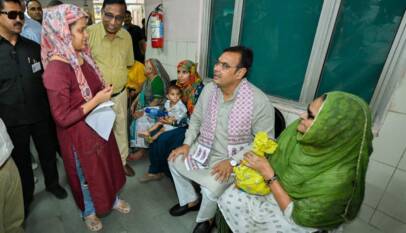
Chief Minister Bhajan Lal Sharma Conducts Surprise Inspection of OPD Services at SMS Hospital
Directs Officials to Improve Healthcare Services; Calls for Diagnostic and Medicine Counters Within Departmental …