In New Zealand Councils Wants Government To Pay More For Natural Hazard Protections.

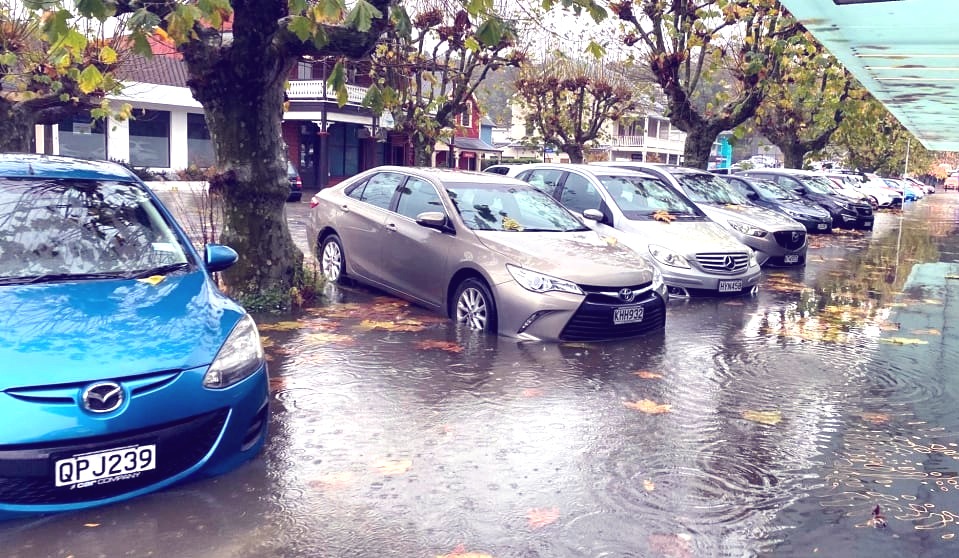
Wellington; April 2026: In New Zealand ‘Councils’ are calling on the government to spend more of the bill for improving New Zealand’s disaster resilience in the wake of last week’s devastating storms. A $100,000 Mayoral Relief Fund has been launched to support Wellingtonians affected by Monday’s (20th April 2026) severe weather, with the city calling on Wellingtonians for further donations.
The fund will be administered by the Wellington City Mission, who is still helping people affected by the flood. Missioner Murray Edridge expected their support would be needed for weeks, if not months yet.
“The problem with the weather becoming better, and we’re delighted that it is, is that all of us start to move on with our lives, and yet we’ve got people who are in really significant trauma and loss. Many of them will be uninsured or underinsured and they just need the support of the community around them”.
Advice from the Ministry for the Environment and Department of the Prime Minister and Cabinet reveals this country spends on average 0.6% of its annual gross domestic product (GDP) on responding to natural hazards, nearly twice as much as the OECD country average. “Since 2010, New Zealand has spent $64 billion on hazard-related costs. Of that, 97% was spent on response and recovery and only 03% on reducing risk”, the Long Term Insights Briefing (LTIB) document said.
It is the Mayor of Gisborne, alongside President of Local Government New Zealand Rehette Stoltz who has said: “severe storms, floods, landslides, and coastal hazards were increasingly frequent and damaging. It is becoming a national issue, with a reported 46 storms in the past 12 months alone. Previously it was a more localised issue, now we’re seeing it happen everywhere across Aotearoa. Our infrastructure is getting battered and as a nation we need to stop and plan”.
Meanwhile, encountering a storm in every 08 days, the country’s biggest insurer calls for systemic response. Mayor Stoltz said research suggested more than 750,000 New Zealanders live in flood prone areas, and that meant $235b worth of residential buildings were at risk. “Every dollar spent on disaster preparedness saves at least $4 in response and recovery”, Stoltz said, while further adding, “policies and plans for responding to climate risks were taking years to progress and councils wanted clarity from the government on who was responsible for doing, and paying for, what? We are operating in a system where everyone is looking at keeping rates as low as possible. The Government has made it a real priority to try and make sure that councils focus on core infrastructure. What we are saying is that lots of these issues are not local issues, these are national issues, so we don’t want all of that cost to be borne by ratepayers”.
More than 5000 people lodged claims with AMI, State and NZI – the three insurance brands underwritten by IAG. The number of respondents who had taken steps to protect their homes against natural hazards had doubled since the 2022 survey, a surge from 40% to 80%. Almost 60% said they had experienced storm-related anxiety. Clear, durable co‑funding arrangements between central and local government were critical, Stoltz said. “Doing nothing not only puts undue pressure on public finances in the long run but comes with significant risk to New Zealanders”.
Minister of Local Government Simon Watts said the government remained committed to working with councils and local communities to determine the best way forward for people living in areas exposed to climate risks. ”I want to acknowledge everyone who has been impacted by the extreme weather, not only this week but the weeks prior, and recognise the disruption and damage these events cause”, he said. “Decisions of this nature are best made at the local level, and councils have a leading role. I encourage communities to work with their local councils, and we know that is already happening in some areas”.
Simon Watts further stated, that the changes government was planning to make to the Climate Change Response Act 2002 would build stronger consistency across the country when it came to adaptation planning. ”These changes will ensure councils are preparing adaptation plans for priority areas, which will help build resilience”, he said, while asserting further, “‘Planning for how we will share the costs of adapting to climate change over time is an important part of the work we are doing. It is a complex area and one where it is important to take the time to get things right. This is why we plan to make further decisions about this in the next term of Government”.
Watts said it was important that the government took time to work through all of those issues to ensure the framework could endure. ”We are moving as quickly as we can, but speed cannot come at a cost of quality and accuracy’,’ he said.
Watts reiterated, “A key part of this work is the New Zealand Flood Map. This map will ensure that people have good information about flood risks. It will allow people and businesses to plan ahead and make decisions about where to build that lower risk and boost resilience’.’
“‘We plan to share the first version of the map with the public next year, with some early releases of data before the end of this year. ‘While we build the framework, officials are actively looking for areas that should be accelerated to support the recovery”, Watts concluded.
Team Maverick.







Alvarez, Lautaro Fire Argentina Past 10-Man Switzerland in Extra Time, Set Up Blockbuster World Cup Semi-final Against England
Score: Argentina 3 (Alexis Mac Allister 10′, Julian Alvarez 112′, Lautaro Mart…

Alvarez, Lautaro Fire Argentina Past 10-Man Switzerland in Extra Time, Set Up Blockbuster World Cup Semi-final Against England
Score: Argentina 3 (Alexis Mac Allister 10′, Julian Alvarez 112′, Lautaro Martinez 120+1′) beat …