Energy Will Define India’s Resilience in the 21st Century: Sagar Adani

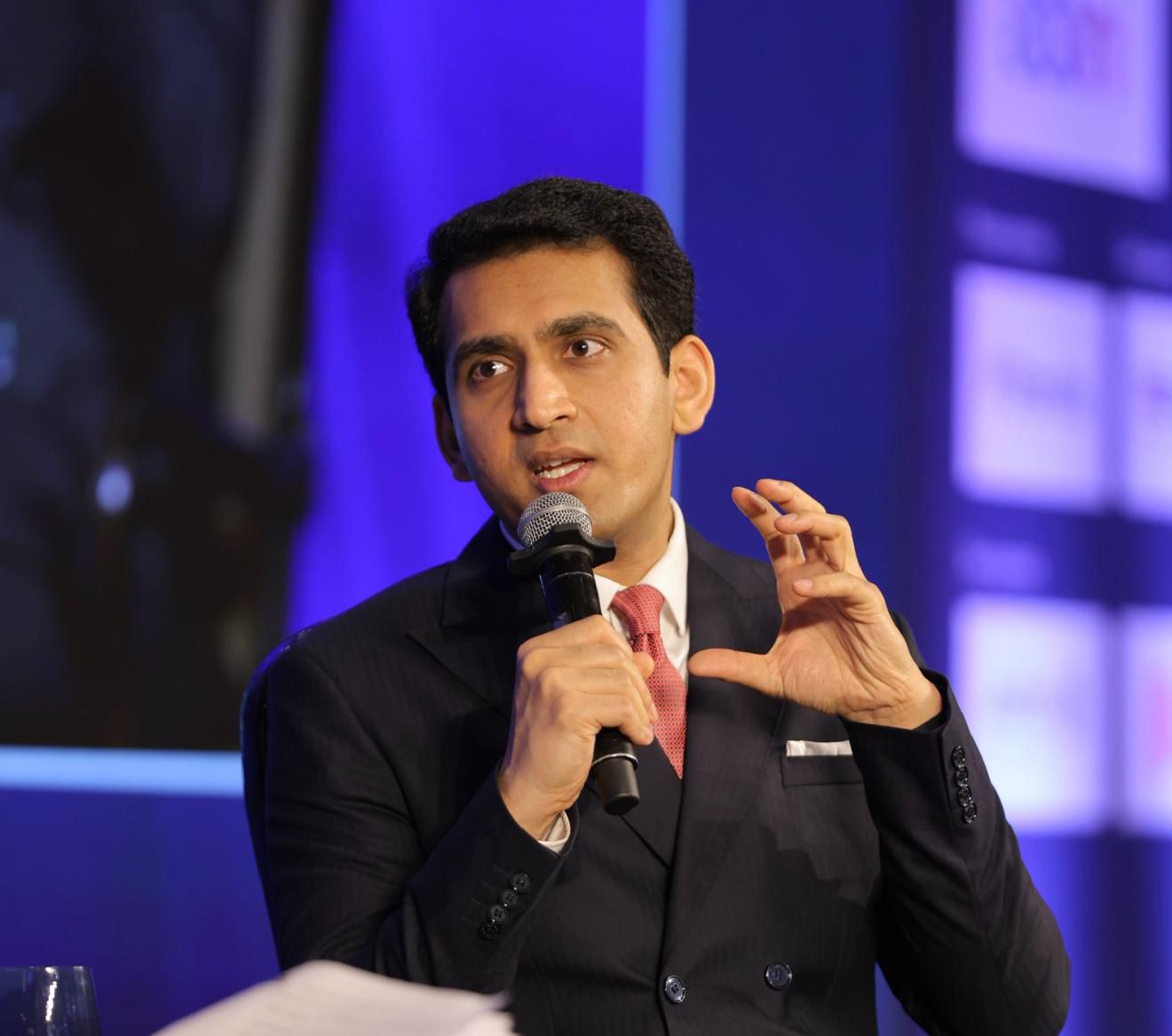
New Delhi, April 2026 : In a rapidly evolving global landscape marked by geopolitical uncertainty and economic volatility, Sagar Adani on Tuesday underscored the central role of energy in shaping national resilience, asserting that access to reliable and affordable energy will define the trajectory of nations in the 21st century.
Delivering a keynote address at The Economist Resilient Futures Summit in New Delhi, Adani said the concept of resilience has moved beyond theoretical discussions and is now a lived reality affecting economies and societies worldwide.
“Resilience today is no longer confined to classrooms or strategic simulations. It is real, immediate, and impacting all of us,” he said, pointing to recent global disruptions that have exposed vulnerabilities in supply chains and energy systems. According to him, conflicts in one part of the world can now trigger cascading effects across continents, particularly through energy markets.
In this context, Adani noted that the fundamental question for nations is no longer limited to the pace of economic growth but extends to their ability to withstand disruptions. He stressed that this question holds particular significance for India, which is currently navigating a critical phase of its development journey.
Describing India as a nation driven by aspiration, Adani highlighted the visible transformation across sectors—from youth entering new-age industries to farmers adapting to modern practices and entrepreneurs building scalable enterprises. However, he cautioned that aspiration alone cannot sustain growth without a strong foundational backbone.
“That foundation is energy,” he said, adding that nearly every major development challenge India faces—be it water security, food production, digital infrastructure, or economic stability—ultimately converges on energy availability.
He elaborated that water security depends on energy-intensive processes such as desalination and distribution, while agriculture relies heavily on energy for irrigation, fertilisers, and logistics. Similarly, India’s ambitions in artificial intelligence, data centres, and digital technologies are contingent on robust and reliable power infrastructure.
Adani argued that if resilience is the objective, then ensuring abundant, affordable, and dependable energy must be the starting point.
Highlighting the scale of the challenge, he pointed out that India’s per capita energy consumption remains significantly lower than global benchmarks—about one-third of the global average and roughly one-fifth of China’s. To achieve its goal of becoming a developed nation by 2047, India would need to undertake what he described as a “structural leap” rather than incremental expansion.
This transformation, he said, would require the addition of nearly 2,000 gigawatts of energy capacity over the next two decades—an ambitious target that must be achieved while maintaining affordability, accessibility, and environmental sustainability.
Drawing comparisons with global examples, Adani observed that countries that have successfully built resilience at scale have prioritised energy security. Many developed economies have either achieved energy independence or established strong strategic partnerships to secure their energy needs.
He cited China as a case study, noting that despite limitations in oil and gas resources, it has systematically built domestic capacity across coal, hydro, nuclear, and renewable energy, alongside developing strategic reserves and supply chains. This approach, he said, has translated into industrial strength, economic stability, and global competitiveness.
For India, Adani outlined a clear roadmap centred on electrification and reduced dependence on imported energy. He emphasised the need to build an energy ecosystem anchored in domestic resources, describing electrification as the most viable path to long-term stability.
However, he cautioned that scaling electrification would require a massive expansion in electricity generation. While renewable energy will play a critical role and storage technologies are expected to evolve, challenges such as land constraints and intermittency cannot be overlooked.
To address these issues, Adani advocated a diversified energy strategy that leverages all available sources, including renewables, hydroelectric power, efficient thermal energy, and nuclear power.
“Without firm and scalable baseload power, the transition cannot succeed,” he said, adding that such an approach is not optional but essential for India’s growth.
Adani also acknowledged the role of government policy and leadership in enabling this transformation. He noted that over the past decade, India has witnessed a consistent and execution-focused policy environment that has accelerated infrastructure development, expanded renewable capacity, strengthened transmission networks, and encouraged long-term investments.
This continuity, he said, has been a key factor in building confidence and enabling large-scale projects.
Speaking about the role of industry, Adani said that the Adani Group sees itself as a long-term builder of India’s energy backbone. He highlighted that under the leadership of Gautam Adani, the Group has committed over $100 billion towards energy transition initiatives—one of the largest such commitments by any private entity globally.
Importantly, he stressed that these investments are not isolated efforts but part of an integrated strategy aimed at building a comprehensive energy ecosystem.
This includes the development of large-scale renewable energy projects, investments in energy storage solutions, expansion of transmission infrastructure, and the creation of green hydrogen ecosystems. Additionally, the Group’s presence in ports, logistics, airports, and data centres is aligned with a broader vision of creating interconnected systems that drive resilience.
“Resilience is never built in silos. It is built through integration,” Adani said, explaining how energy, logistics, and digital infrastructure must work in tandem to create sustainable growth.
He added that when these systems function cohesively, they not only enable economic expansion but also enhance the ability of nations to withstand external shocks.
In his concluding remarks, Adani reiterated that the demand for energy in India is no longer a matter of debate. The critical question, he said, is how quickly the country can build the required capacity.
“Resilience is not built through intent alone—it is built through execution,” he said, emphasising the importance of speed, scale, and purpose in infrastructure development.
He further noted that India’s success in delivering abundant, affordable, and clean energy will have implications beyond its borders. With a population of over 1.4 billion people and a rapidly growing economy, India’s trajectory will play a significant role in shaping global stability.
“If India gets this right, it will not only secure its own future but also contribute to stabilising the global economy,” he said.
Adani concluded by stating that India’s journey is not isolated, and its progress will increasingly influence global outcomes.
“That is the opportunity. And that is our collective responsibility,” he said.
Team Maverick





Taiwan Reaffirms South China Sea Claims After Philippines Submits Scarborough Shoal Chart to UN
Taipei, Aug 2026 : Taiwan on Sunday reaffirmed its sovereignty claims over islands in the …

Taiwan Reaffirms South China Sea Claims After Philippines Submits Scarborough Shoal Chart to UN
Taipei, Aug 2026 : Taiwan on Sunday reaffirmed its sovereignty claims over islands in …